


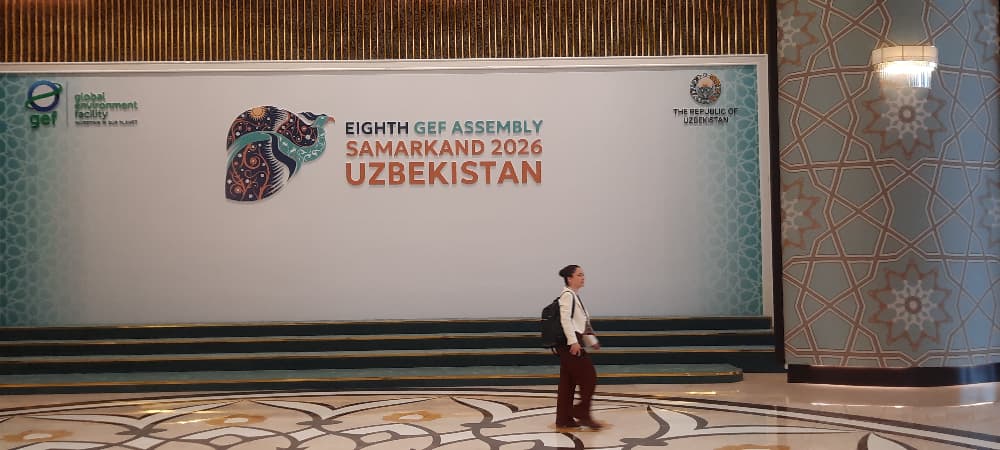
Uzbekistan. As global leaders gather in Samarkand, Uzbekistan, for the 8th Global Environment Facility (GEF) Assembly, questions about who benefits from climate and environmental financing remain central.
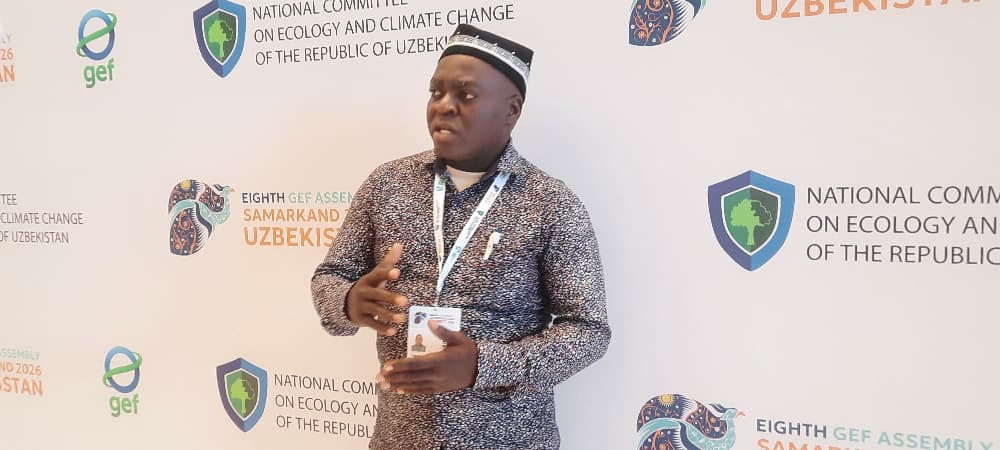
Habitat Media’s Reporter sat down with Tumaini Marijani, Regional Focal Point for the GEF Civil Society Organisation Network and Chairperson of the Tanzania Climate Change Stakeholders Forum, to discuss access to climate finance, clean energy, biodiversity conservation, agriculture, youth engagement and the future of environmental governance in Tanzania.
Q: One of the concerns often raised by communities is the difficulty of accessing climate and environmental funding. How serious is this challenge in Tanzania?
Tumaini Marijani: It is a very serious challenge. There are funding opportunities available through programmes such as the GEF Small Grants Programme, but many local communities, village groups and small NGOs are not aware that these opportunities exist.
Even when they are aware, the application procedures are often too technical and difficult for grassroots organisations. The process from application to final submission is not always friendly to local communities or newly established organisations.
We need to simplify access. One way is to translate funding calls into Kiswahili and ensure they reach district councils, ward offices and community organisations. A village environmental group should have the same opportunity to understand and apply for funding as a large organisation in Dar es Salaam.
The media also has a major role. Many farmers and community groups will never visit the GEF or UNDP websites. Journalists can help bridge that gap by informing communities about available opportunities.
Q: What role should the government play in supporting local communities to access these funds?
Marijani: Government support is very important. Local authorities already work with youth groups, women groups and community organisations. They can help build awareness and capacity so communities understand how environmental financing works.
The government could also integrate information about environmental funding opportunities into existing programmes that support youth and women.
Another area is participation in international forums. When you come to events like this GEF Assembly, you meet donors, implementing agencies and development partners directly. We need policies that allow more youth representatives, women leaders and community organisations to participate in such global platforms.
I have seen strong representation from some neighbouring countries. Tanzania should also invest more in connecting local actors to international opportunities.
Q: Tanzania continues to lose large areas of forest every year. What practical solutions do you see?
Marijani: We have to recognise the reality facing rural communities. Many people depend on charcoal and firewood because they have no affordable alternatives.
That is why we are advocating for subsidies on clean cooking energy, particularly LPG, biogas and solar technologies. We cannot simply tell people to stop using charcoal when they cannot afford the alternatives.
At the same time, we need to rethink tree-planting programmes. Instead of focusing only on timber trees, we should promote fruit trees. When farmers know they can earn income from fruits, they are more likely to protect those trees.
Environmental conservation and livelihoods must go together. If people see direct economic benefits, conservation becomes sustainable.
Q: Across East Africa, climate change is disrupting agriculture and livestock production. How prepared are communities for the future?
Marijani: We still have a long way to go. My background is in agricultural economics and agribusiness, and one thing I strongly advocate is treating farming as a business.
We know that Tanzania experiences rainy seasons followed by dry seasons. Yet very little rainwater is harvested. Every household should be encouraged to harvest rainwater. Communities should invest in water storage systems, including charco dams and community reservoirs.
For livestock keepers, we need to promote fodder conservation. During the rainy season, grass should be harvested and stored as hay or silage for use during drought periods.
This can reduce conflicts over grazing land and minimise long-distance livestock movements in search of pasture and water.
Innovation is key. Small-scale irrigation technologies, especially drip irrigation, can help farmers produce more food while using less water.
Q: Biodiversity loss is becoming a global concern. How serious is the situation in Tanzania?
Marijani: It is extremely serious. Unfortunately, many people do not yet appreciate the urgency of the problem.
We need a national conversation about biodiversity and ecosystem protection. Parliament, policymakers, environmental activists and the media all have a role to play.
If we fail to protect our ecosystems today, future generations may inherit a very different Tanzania. Some ecosystems that we take for granted could disappear completely.
This is why awareness, education and capacity building are so important.
Q: Can local communities play a bigger role in conservation?
Marijani: Absolutely. In fact, some of the best conservation examples come from local communities.
A good example is the Mkumbawana Pari Museum in Mbambua Village, Mwanga District, Kilimanjaro Region. Local communities have protected forests and water sources there for generations using indigenous knowledge.
The government recently recognised this initiative because it demonstrates that conservation does not always require advanced technology or large budgets.
Communities understand their environments. We should learn from them and invest in strengthening their capacity.
Q: What role can alternative energy sources such as briquettes and biogas play?
Marijani: They can make a huge difference.
Many rural households have livestock. The manure from cattle, goats and sheep can be used to produce biogas for cooking and other household needs.
Similarly, simple technologies now exist for producing briquettes from agricultural waste such as rice husks.
The challenge is not technology; it is awareness, training and affordability. Government and development partners should support the widespread adoption of these technologies because they reduce pressure on forests while creating economic opportunities.
Q: You have been advocating for reforms in global climate finance. What changes are needed?
Marijani: One of our key proposals is that a greater share of climate finance should go directly to civil society organisations.
Currently, funding often passes through multiple agencies before reaching communities. This increases costs and can slow implementation.
We are advocating for up to 20 percent of GEF funding to be channelled directly to civil society organisations because they work closest to local communities.
Another important reform relates to green financing. Environmental investments should not be treated the same as conventional commercial investments.
Someone planting trees or restoring ecosystems may wait many years before seeing financial returns. Therefore, green investments require special financial policies, lower-interest financing and targeted subsidies.
Q: Finally, what message would you like policymakers and development partners to take away from this Assembly?
Marijani: My message is simple: communities must be at the centre of environmental action.
The people most affected by climate change are often the people with the least access to resources. If climate finance, conservation programmes and environmental policies do not reach the grassroots, we will struggle to achieve lasting results.
The future of environmental protection depends on empowering local communities, supporting youth and women, investing in practical solutions and ensuring that climate finance reaches those who need it most.
This story was produced as part of a reporting fellowship to the Eighth GEF Assembly supported by Internews’ Earth Journalism Network.