


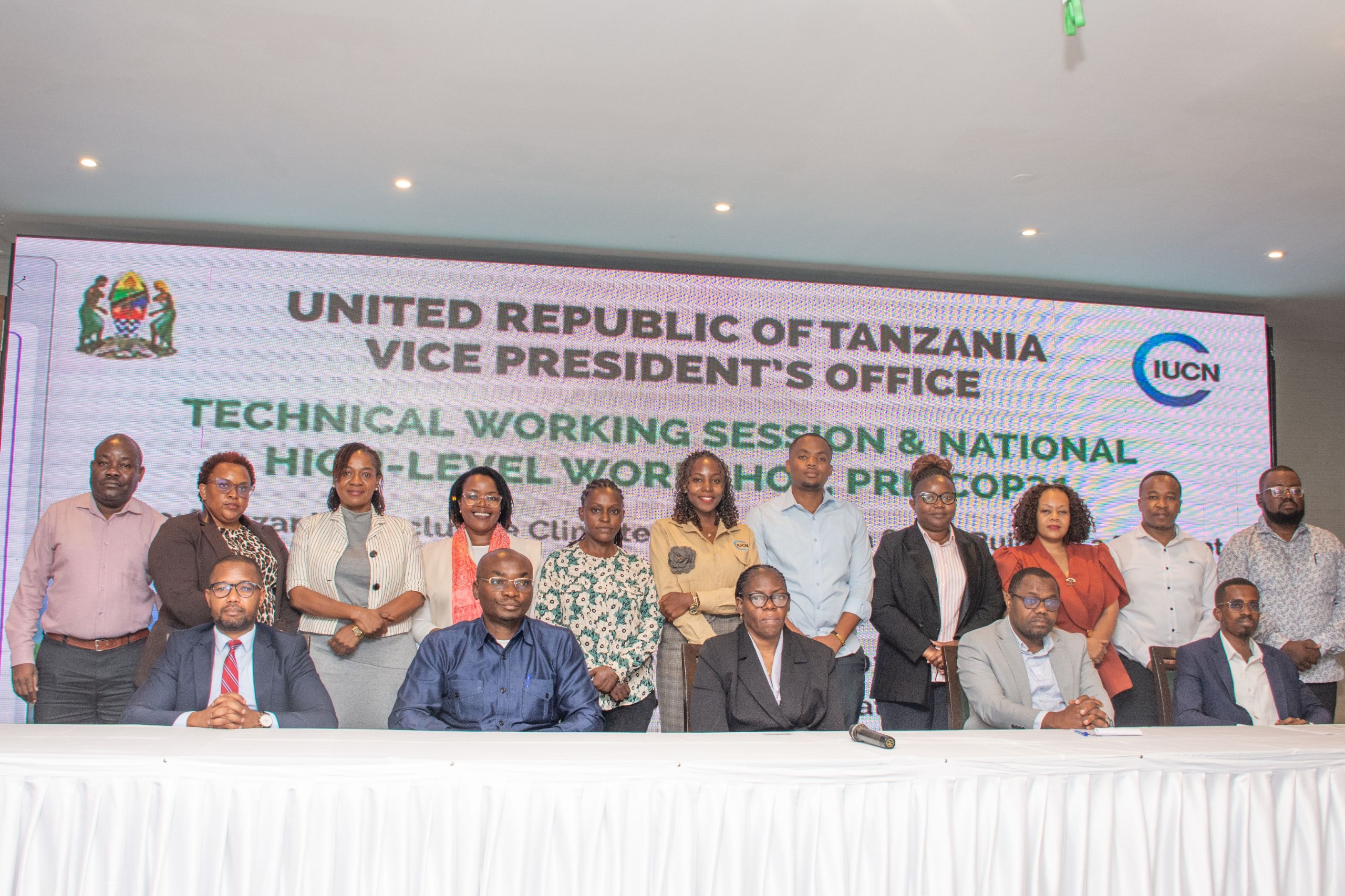
Kemilembe Mutasa (centre), Director of Environment in the Vice-President’s Office, poses for a group photo with experts from public institutions, the private sector and development partners during a technical meeting held in Dar es Salaam on October 27, 2026, to discuss Tanzania’s preparations for the 31st Conference of the Parties to the United Nations Framework Convention on Climate Change (COP31).
By Habitat Media Reporter
Dar es Salaam. Tanzania is targeting Sh7.3 trillion to finance environmental programmes and climate change interventions, with experts urged to develop a clear national position ahead of the COP31 climate summit.
The funding is expected to support environmental management reforms under the country’s Development Vision 2050, as Tanzania prepares to engage in international negotiations on climate finance.
The call was made by the Permanent Secretary in the Vice-President’s Office, Dr Richard Muyungi, in a speech read on his behalf by Director of Environment Kemilembe Mutasa during the opening of a meeting of experts discussing Tanzania’s preparations for COP31.
The summit is scheduled to take place in Antalya, Türkiye, from November 9 to 20, 2026.
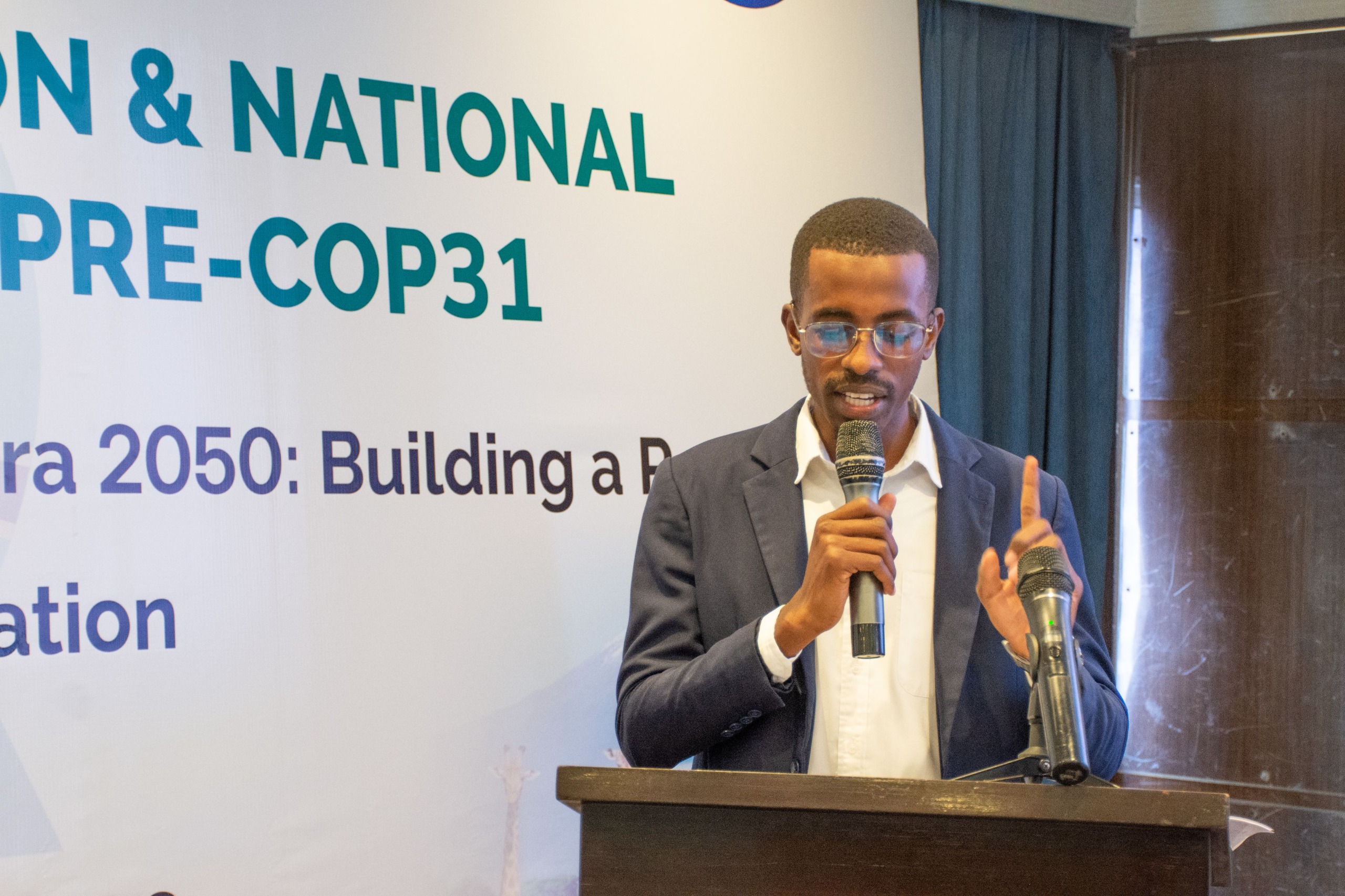
Dr Muyungi said the meeting presents an important opportunity for Tanzania to mobilise resources for environmental protection and climate action, particularly as the country pursues its long-term development ambitions.
“The environmental management transformation programme towards Vision 2050 has identified funding needs of Sh7.3 trillion. As we prepare for the summit, it is our responsibility to ensure these funds are secured through negotiations at the meeting,” he said.
He urged Tanzanian delegates to prioritise the interests of the country’s population and speak with one voice during the negotiations, saying a unified position would strengthen Tanzania’s representation and influence.
Dr Muyungi cited Tanzania’s leadership of the African Group of Negotiators on Climate Change (AGN) during COP30 in Brazil as an important achievement. In that role, the country helped coordinate Africa’s common position on key issues, including climate finance and the implementation of international agreements.
He also highlighted the establishment of a climate negotiation training centre for young people as one of the outcomes of the COP30 process. The Vice-President’s Office recently coordinated the centre’s first training programme in Dar es Salaam from October 20 to 22, 2026.
Other achievements included the preparation and launch of a commemorative book marking 30 years of the AGN. The publication documents the group’s history, achievements, challenges and contribution to international climate negotiations and decision-making.
Dr Muyungi further said the summit process had facilitated the establishment of a regional office of the Santiago Network, an initiative intended to strengthen access to technical assistance for African countries.
Meanwhile, Zanzibar has called for stronger efforts to secure climate finance to address threats to its coastal communities and economic sectors.
The Director of Marine Conservation at Zanzibar’s Ministry of Blue Economy and Fisheries, Dr Makame Omar Makame, said the islands were vulnerable to climate change impacts affecting livelihoods and productive sectors, including agriculture and fisheries.
He said the Zanzibar government would use its participation in COP31 to strengthen collective efforts to secure funding for environmental conservation and climate adaptation projects.
“Funds secured will help finance the construction of coastal protection walls to address beach erosion and saltwater intrusion, as well as support public education on climate change,” he said.

The projects are particularly important for coastal communities facing growing environmental pressures that threaten livelihoods and economic activities.
For its part, the International Union for Conservation of Nature (IUCN) reaffirmed its cooperation with the government in implementing international climate commitments.
IUCN representative Ghaamid Abdulbasat said the organisation continued to work with the Vice-President’s Office to support the implementation of commitments under international environmental and climate change agreements.
He cited the Restoration Initiative (TRI), implemented in collaboration with the Vice-President’s Office, which aims to restore natural vegetation across approximately 5.2 million hectares of degraded land by 2030.
The programme covers the Great Ruaha and Lake Rukwa basins in Iringa, Mbeya and Rukwa regions, where ecosystem restoration is expected to contribute to improved environmental management.
As Tanzania prepares for COP31, the proposed Sh7.3 trillion financing requirement is likely to be a key consideration in its climate diplomacy, alongside efforts to strengthen regional cooperation and secure technical and financial support for vulnerable communities.