


By Habitat Media Correspondent
Antalya, Türkiye. Climate and environmental organisations have welcomed provisions in the latest COP31 draft decision recognising the links between climate change, biodiversity and ocean protection, but have warned that weakened commitments on fossil fuels and inadequate climate financing could undermine efforts to translate promises into action.
Their concerns emerged on November 19 following the release of the latest draft cover text, as negotiations at the United Nations climate conference in Antalya entered their final stages.
The reactions reflect growing pressure on governments to preserve progress made in previous climate negotiations while strengthening commitments on renewable energy, forest conservation, ocean protection and support for vulnerable countries.
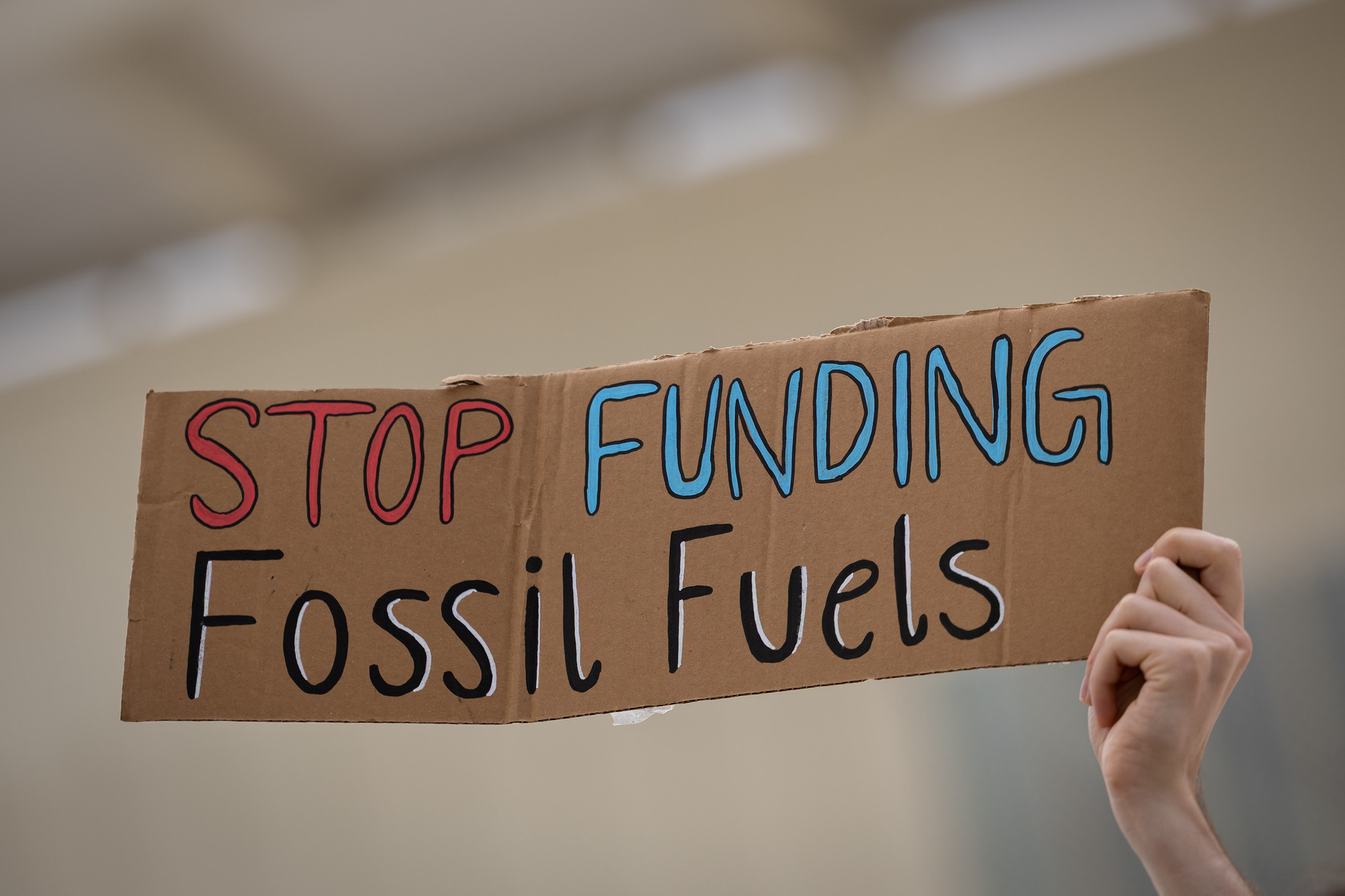
One of the major concerns is the possibility of losing explicit references to fossil fuels in the final agreement, a development that environmental advocates say could reverse progress achieved after nearly three decades of climate negotiations.
John Verdieck, Director of International Climate Policy at The Nature Conservancy, warned that the latest negotiations risk weakening an important breakthrough.
“It took almost 30 years to secure explicit reference to fossil fuels in the COP text. Now COP31 risks eliminating that progress overnight,” he said.
The concerns come as governments face increasing pressure to align their energy policies with the Paris Agreement’s goal of limiting global warming to 1.5 degrees Celsius.
Bruce Douglas, Chief Executive Officer of the Global Renewables Alliance, urged governments to maintain the proposed 35-by-35 electrification goal in the final decision, noting that more than 80 countries and several major companies had supported the initiative.
He said the agreement should accelerate renewable energy deployment, stronger electricity grids, energy storage and electrification rather than create opportunities for continued dependence on fossil fuels.
“Any final agreement must remain aligned with a 1.5C pathway. It must not open the door to damaging fossil fuels or allow promises of new technologies like Carbon Capture Utilisation and Storage (CCUS) to become an excuse for delaying the transition,” Douglas said.
He added that expanding renewable energy and electrification could reduce countries’ exposure to fossil fuel price fluctuations and geopolitical disruptions while supporting investment, employment and economic development.
Ocean protection gains recognition, but financing remains uncertain
Beyond energy transition, the latest draft has drawn attention for strengthening recognition of the ocean’s role in addressing climate change.
Anna-Marie Laura, an ocean and climate policy expert and former Senior Director of Climate Policy at Ocean Conservancy, said the text recognises the ocean’s vulnerability to climate impacts while acknowledging its contribution to climate mitigation, adaptation and resilience.
She welcomed provisions supporting developing countries, strengthening the Ocean and Climate Change Dialogue and connecting ocean-related action with the Paris Agreement’s ambition cycle and Global Stocktake.
However, she noted that the draft had removed some proposed timelines for the multi-year ocean dialogue roadmaps, although it retained the broader commitment to a future plan.
Marine Lecerf, Head of International Policy at the Ocean and Climate Platform, said the negotiations had delivered progress, particularly through recognition of ocean warming, rising sea levels and the need to integrate ocean-based solutions into national climate strategies.
She noted that 95 per cent of ocean and island countries now include at least one ocean-related measure in their national climate plans, although many commitments remain conditional.
“The ocean is also firmly in the cover decision, reflecting priorities shared by civil society and countries alike,” Lecerf said.
She also welcomed the launch of the first Antalya Ocean and Seas Compact by the COP31 Presidency, describing it as an important political signal for strengthening ocean action.
However, she cautioned against strong references to carbon dioxide removal technologies, arguing that their effectiveness and potential impacts on nature and communities remain uncertain.
The financing provisions have attracted particular criticism.
Fatima Candace Vahlsing, Vice President of Climate at Ocean Conservancy, said the draft recognises the importance of ocean science, monitoring systems and early warning mechanisms but weakens provisions that could help mobilise funding, particularly for small island developing states.
She stressed that early warning systems alone cannot protect vulnerable communities without adequate resources to help them prepare for and respond to climate-related disasters.
François Mosnier, Head of Nature at Planet Tracker, highlighted the disparity between funding for forest conservation and ocean protection.
He said commitments made across the two climate conferences held during the autumn amounted to nearly US$1 billion for forests, compared with only US$50 million for ocean protection.
According to Mosnier, ocean protection receives approximately US$1.8 billion annually, against an estimated US$16 billion needed to conserve 30 per cent of marine and coastal areas by 2030.
He further noted that governments continue to spend about US$22 billion annually on harmful fisheries subsidies, more than ten times the funding directed towards ocean protection.
“That is the right diagnosis, but text is not money. Without new pledges before the 2028 UN Ocean Conference, ambitions will remain on paper,” he said.
Nature and adaptation must remain central
The draft has also prompted calls for stronger commitments to protect forests, biodiversity and communities facing climate impacts.
Steven Guilbeault, former Canada’s Minister of Environment and Climate Change, welcomed recognition of the relationship between climate change, biodiversity and ocean protection.
However, he said the text should explicitly refer to the Kunming-Montreal Global Biodiversity Framework, the international agreement aimed at halting and reversing biodiversity loss.
Damian Fleming, Senior Director for Forests at WWF International, said protecting forests was essential to achieving climate ambitions.
He called for the inclusion of efforts to halt and reverse deforestation and forest degradation by 2030, supported by the Forest Roadmap developed to guide implementation.
Annamária Lehoczky, Senior Technical Specialist for Climate Change and Resilience at Fauna & Flora, also raised concerns about the weakening of adaptation finance commitments.
She noted that although the draft restores the ambition to triple adaptation finance by 2035, it omits the proposed minimum target of US$120 billion and leaves the baseline for calculating the increase to be determined later.
Lehoczky said locally led and ecosystem-based adaptation approaches were important in strengthening community resilience, but stressed that vulnerable countries needed more financial support.
She also warned that the draft had weakened language protecting the rights of Indigenous Peoples and local communities.
As negotiations approach their conclusion, environmental organisations are urging governments to preserve the stronger provisions in the draft and address gaps in financing, fossil fuel commitments and nature protection.
The final decision, they argue, will determine whether COP31 delivers meaningful progress towards a climate-resilient future or leaves important commitments dependent on further negotiations and voluntary action.