


By Habitat media correspondent
Antalya, Türkiye. Greenpeace has called on governments attending the COP31 climate summit to commit to phasing out fossil fuels and provide accessible climate finance to accelerate the transition to renewable energy, particularly in developing countries.
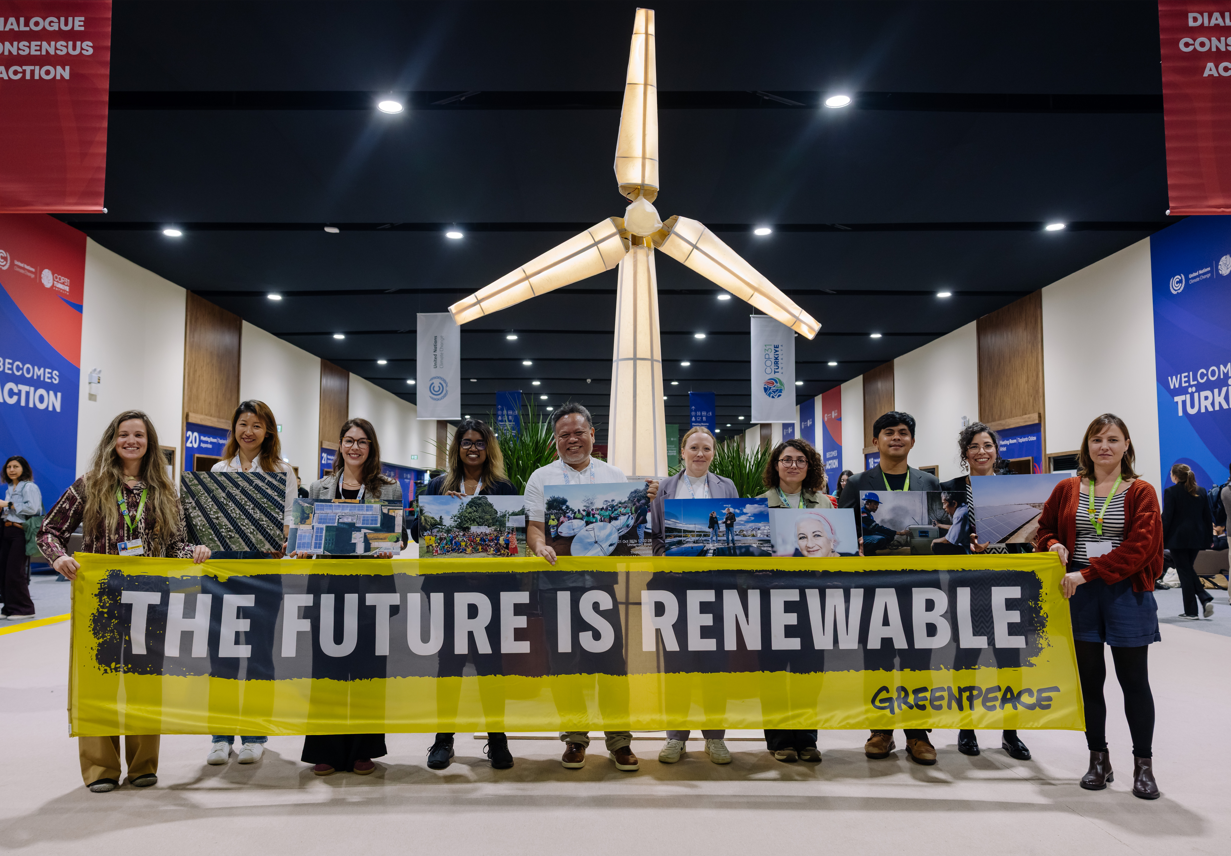
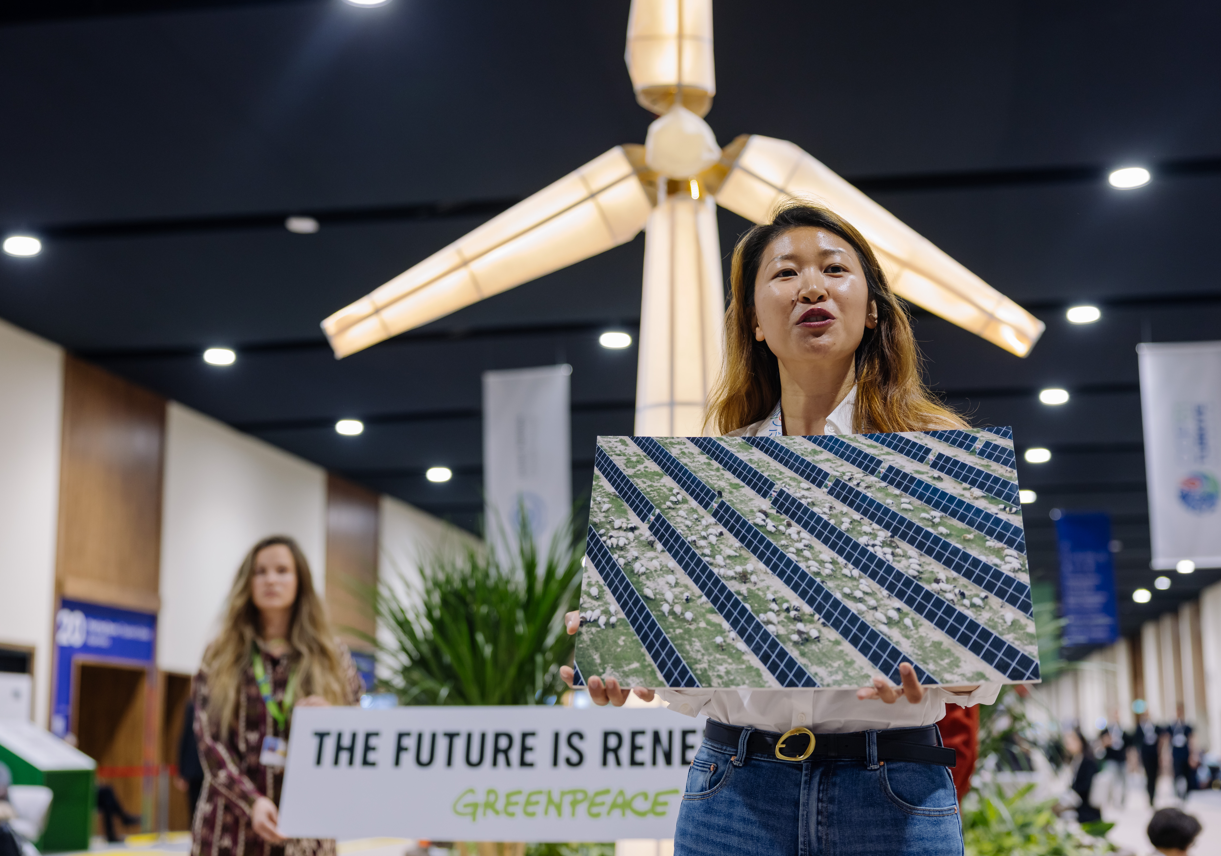
The call was made through an illuminated wind turbine installation unveiled inside the COP31 venue, accompanied by photographs showcasing community-led renewable energy projects from different parts of the world.
Positioned beneath official summit banners carrying the words “Dialogue, Consensus, Action”, the installation displayed the message “The Future is Renewable”, urging ministers to translate climate commitments into practical action as negotiations entered their final stages.
The photographs highlighted initiatives including solar-powered irrigation farms in Egypt, household solar energy projects in Fiji and community-based just transition centres in South Africa.
Sherelee Odayar, Oil and Gas Campaigner at Greenpeace Africa, said the South African projects demonstrated how renewable energy could improve access to essential services while addressing the challenges faced by rural communities.
“I brought this photograph from South Africa because negotiators inside these rooms need to see what real energy access looks like on the ground,” she said.
She cited initiatives implemented by Earthlife Africa, through which off-grid rural communities use parabolic solar dishes and solar cookers to boil drinking water and prepare meals without depending on centralised coal-generated electricity.
According to Odayar, the initiatives are particularly beneficial to rural women, reducing the need to travel long distances to collect firewood and freeing up time for other activities.
She also highlighted two women-led, solar-powered Just Transition Centres that provide electricity during power outages, allowing residents to charge mobile phones and giving students safe spaces to study.
“Local solutions already exist. Governments must stop locking African economies into volatile fossil fuels and start scaling what works for our communities,” Odayar said, calling for grant-based public financing rather than mechanisms that increase developing countries’ debt.
Renewable energy and ecosystem protection
Greenpeace Africa also argued that accelerating renewable energy development is essential not only for expanding electricity access but also for protecting the continent’s natural ecosystems.
Toussaint Molenge, Forest Campaign Lead at Greenpeace Africa, said wind and solar energy could support Africa’s development while reducing dependence on fossil fuels and limiting pressure on biodiversity.
“Wind power is one of the strongest, cleanest, and fastest ways to power Africa’s development without destroying the natural systems that keep us alive,” he said.
He warned that continued investment in coal, oil and gas would increase greenhouse gas emissions, disrupt rainfall patterns and threaten ecosystems, including the Congo Basin rainforests and marine environments.
Molenge said replacing fossil fuels with renewable energy was therefore critical to addressing climate change while safeguarding forests, oceans and biodiversity.
Call for accessible climate finance
The campaign also placed climate finance at the centre of the debate, with Greenpeace warning that renewable energy ambitions would remain difficult to achieve without adequate financial support for developing countries.
Koaile Monaheng, Climate Finance Expert at Greenpeace Africa, said governments needed to move beyond repeated financial commitments and establish mechanisms that deliver accessible funding to communities and countries most affected by climate change.
“Frontline communities cannot power their homes or build climate resilience on word sandwiches. At COP31, we do not need more recycled pledges or creative accounting; we need concrete, grant-based climate finance mechanisms that facilitate a genuinely just transition,” he said.
Monaheng further stressed that the COP31 Presidency’s 35 by 35 electrification goal should be integrated into national development plans, with renewable energy forming the foundation of expanded electricity access.
He called on developed countries, which bear greater historical responsibility for greenhouse gas emissions, to provide their fair share of climate finance to enable African countries to expand clean energy without accumulating additional debt.
As negotiations approached their conclusion in Antalya, Greenpeace urged ministers to adopt a clear, time-bound roadmap for phasing out fossil fuels, introduce progressive taxation on major polluters and direct financial support towards community-owned renewable energy infrastructure.
The organisation also called on developed countries to honour their obligations under Article 9.1 of the Paris Agreement, which requires developed countries to provide financial resources to assist developing countries with climate change mitigation and adaptation.
Greenpeace said such commitments were necessary to ensure that the global transition to renewable energy is adequately financed, equitable and responsive to the needs of communities on the frontlines of climate change.