


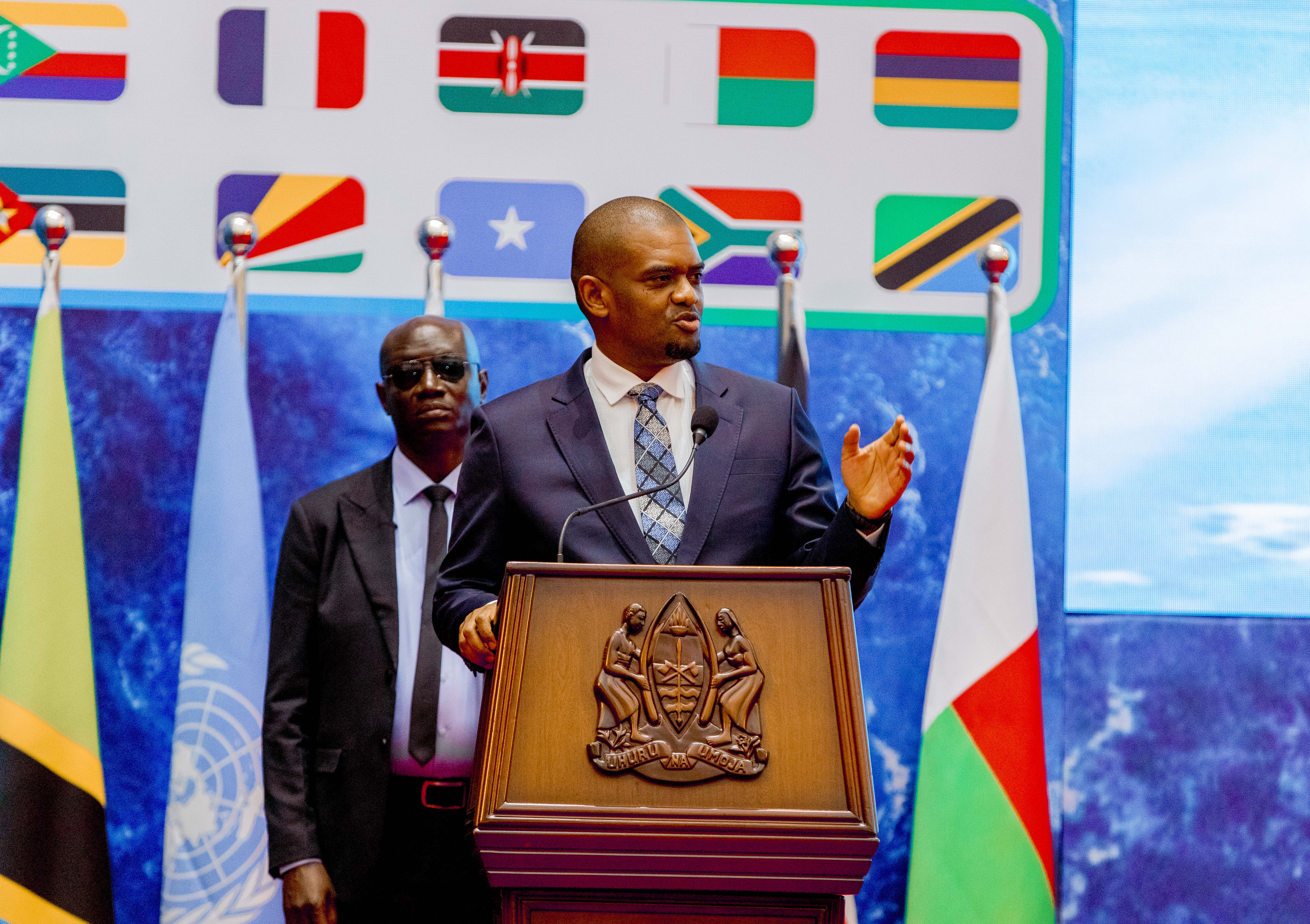
Tanzania’s Vice President Deogratius Ndejembi addresses delegates during the 12th Conference of the Parties to the Nairobi Convention in Dar es Salaam, calling for stronger regional cooperation to protect the Western Indian Ocean.
By Habitat Media Reporter
Dar es Salaam. Tanzania has outlined six priorities for countries bordering the Western Indian Ocean, calling for stronger regional cooperation, increased investment in ocean conservation and tougher action against marine pollution as climate change threatens coastal livelihoods and economic opportunities.
Vice President Deogratius Ndejembi said the region must move beyond commitments and translate four decades of cooperation under the Nairobi Convention into practical, measurable and adequately financed interventions that protect marine ecosystems while supporting economic growth.
Opening the 12th Conference of the Parties (COP12) to the Nairobi Convention in Dar es Salaam on Thursday, October 8, 2026, Mr Ndejembi said countries must strengthen the implementation of environmental agreements, restore marine habitats, improve access to climate finance and ensure that communities benefit fairly from the ocean economy.
He identified six priorities: translating regional commitments into national laws and budgets; advancing ocean-climate action; intensifying the fight against marine pollution; protecting biodiversity while guiding investment; strengthening scientific research and sustainable financing; and increasing the participation of the private sector, women and young people.
“Our commitments need clear responsibilities and measurable reporting,” he said, urging member states to strengthen their national implementation frameworks, political commitment and institutional capacity.
The meeting comes as the Nairobi Convention marks 40 years since its adoption in 1985, providing a regional framework for cooperation among countries sharing the Western Indian Ocean.
Mr Ndejembi said the anniversary should serve as an opportunity to assess past achievements and establish a more ambitious direction for the next four decades.
The Convention brings together 10 contracting parties: Tanzania, Comoros, France, Kenya, Madagascar, Mauritius, Mozambique, Seychelles, Somalia and South Africa.
Economic stakes rise as ocean warms
The Vice President said the Western Indian Ocean’s economic value depends on the health of its ecosystems, which support fisheries, tourism, trade and the livelihoods of millions of people.
According to figures presented in his address, the region’s ocean assets are valued at more than $300 billion, generating approximately $20.8 billion annually, while ecosystem services contribute an estimated $25 billion each year.
More than 65 million people in the Western Indian Ocean region depend directly on the ocean for food and livelihoods, underscoring the economic and social consequences of environmental degradation.
However, climate change, pollution, habitat loss, illegal fishing and poorly planned development are increasingly threatening these benefits.
Mr Ndejembi warned that sea surface temperatures in the Western Indian Ocean are rising by 0.1 degrees Celsius per decade, contributing to coral bleaching and rising sea levels that erode coastal infrastructure and allow saltwater to intrude into farmland.
The effects threaten not only biodiversity but also the fishing communities, tourism businesses and coastal populations whose incomes depend on functioning marine ecosystems.
He said countries must therefore prioritise the restoration of mangroves, seagrasses and coral reefs while integrating marine conservation into national climate strategies and improving access to financing for vulnerable communities.
The Vice President highlighted the importance of mangroves, saying one hectare can store up to 1,000 tonnes of carbon, while restoring these ecosystems can generate economic returns through coastal protection, fisheries and carbon credits.
He said every dollar invested in mangrove restoration could generate between $5 and $10 in benefits, making conservation an economic investment rather than simply an environmental obligation.
Tanzania seeks balance between growth and conservation
Tanzania’s priorities reflect the country’s ambition to expand its blue economy while protecting the natural resources on which it depends.
Mr Ndejembi said the country has approximately 1,424 kilometres of coastline, 64,000 square kilometres of territorial waters and an Exclusive Economic Zone covering 223,000 square kilometres.
These resources, he said, provide opportunities for fisheries, tourism, maritime transport, aquaculture and other ocean-related industries, in line with the country’s long-term development ambitions.
Tanzania has adopted a National Blue Economy Policy in 2024, while Zanzibar introduced its Blue Economy Policy in 2020. The Government has also established marine protected areas, supported mangrove restoration and strengthened measures to address marine pollution and unsustainable fishing.
The Vice President cited the Tanzania Scaling-up Sustainable Marine Fisheries and Aquaculture Management Project (TASFAM), which is investing more than $41 million in Zanzibar over five years and targets approximately 160,000 beneficiaries, 80 per cent of them women.
He said such initiatives demonstrate the potential of sustainable ocean-based industries to support livelihoods while protecting the environment.
However, he stressed that national interventions alone would not be sufficient to address problems that cross maritime boundaries.
Regional cooperation, he said, must guide the management of shared ecosystems, pollution control, marine research and the sustainable use of ocean resources.
UNEP calls for science-led regional action
United Nations Environment Programme (UNEP) Deputy Executive Director Elizabeth Mrema also called for stronger regional cooperation, sustainable financing and closer links between scientific research and policymaking.
Speaking at the opening, Ms Mrema said the Nairobi Convention had evolved from a framework addressing specific environmental challenges into a platform for integrated ocean governance across the Western Indian Ocean.
She said the Convention’s progress demonstrated the importance of countries sharing knowledge, developing common legal frameworks and working together to address environmental pressures that cannot be contained within national borders.
“Policy without science is blind; science without policy is silent,” she said, highlighting the importance of research in guiding decisions on marine conservation and coastal management.
Ms Mrema also pointed to the need for increased investment, noting that public resources alone would not be sufficient to finance the transition to a sustainable blue economy.
She said mechanisms such as blue bonds, natural capital accounting and marine spatial planning could help attract investment into sustainable ocean-related industries while improving confidence among financial institutions and investors.
The UNEP official further called for stronger implementation of global biodiversity commitments, including the target of protecting 30 per cent of marine and coastal areas by 2030.
She said the Western Indian Ocean region had an opportunity to contribute to global ocean governance by strengthening ecological connections between national waters and the high seas.
Calls for inclusive blue economy
Both leaders emphasised that sustainable ocean development must provide opportunities for communities, women and young people rather than concentrating benefits among a limited number of investors.
Mr Ndejembi welcomed the introduction of business and youth forums and dedicated engagement with women at COP12, calling for such participation to become a standard feature of future conferences.
He said private-sector partnerships should be guided by scientific evidence, accountability and the public interest.
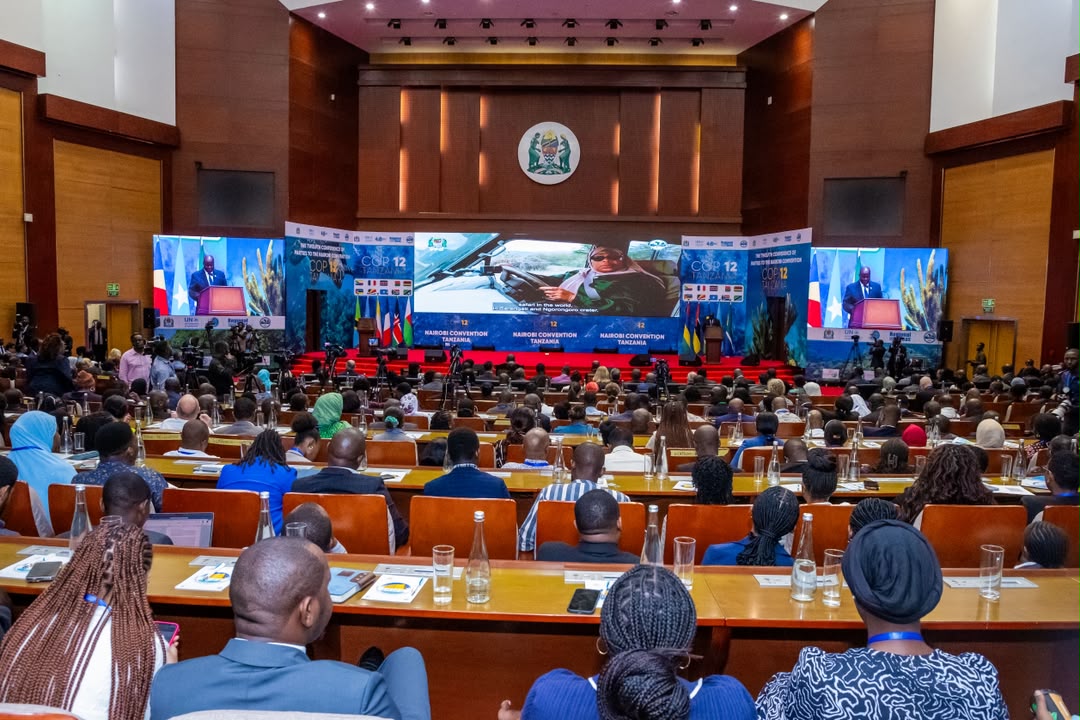
The four-day conference, which began on October 6 and concludes on October 9, has brought together governments, development partners, researchers, civil society organisations and other stakeholders to discuss the future of the Western Indian Ocean.
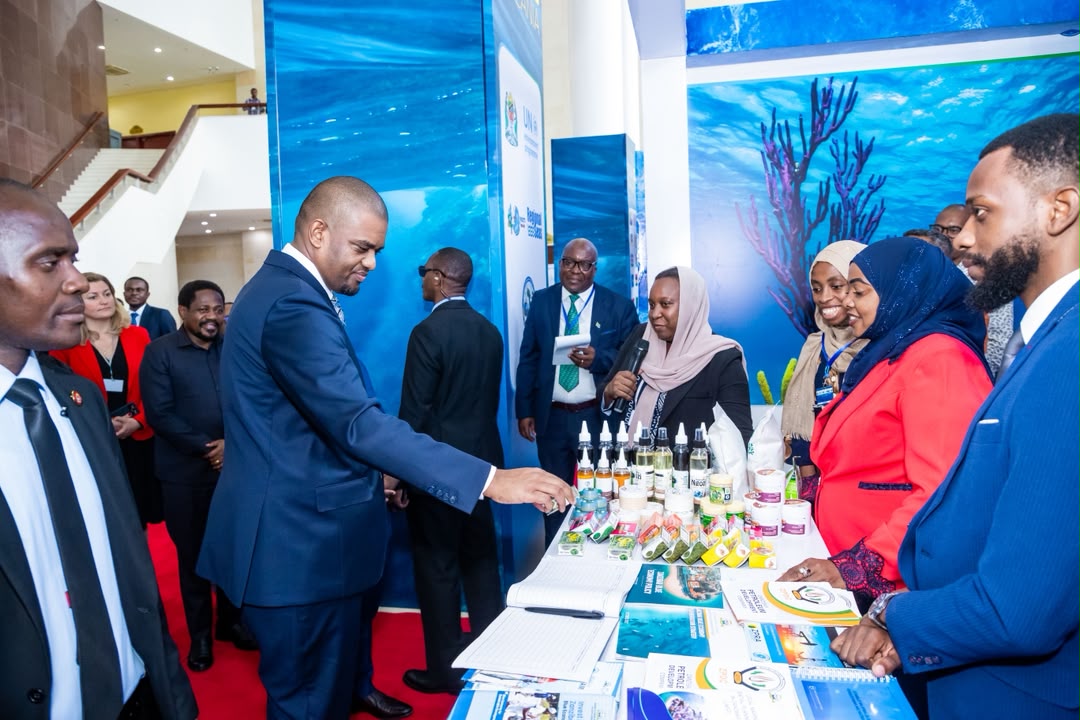
Nairobi Convention Secretariat Head Jared Bosire said the conference had attracted more than 1,500 participants, alongside business and youth events, exhibitions and more than 50 side events.
As the meeting concludes, the central challenge will be converting regional commitments into funded programmes, stronger national implementation and measurable improvements in the condition of marine ecosystems.
For the countries sharing the Western Indian Ocean, the decisions made at COP12 could help determine whether the ocean remains a source of economic opportunity and livelihoods or whether mounting environmental pressures undermine its contribution to future development.