


By Jenifer Gilla
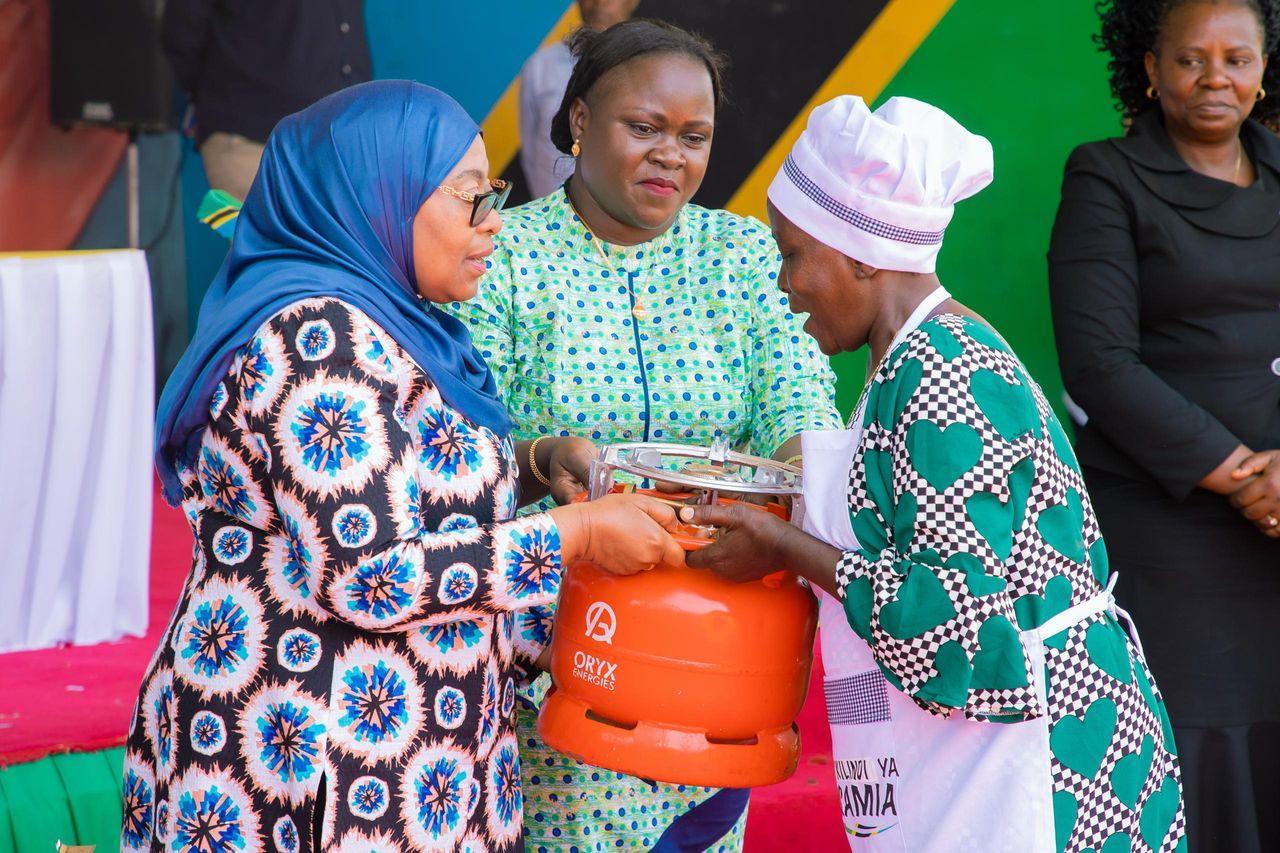
Dar es Salaam. More than two years after President Samia Suluhu Hassan launched Tanzania’s ambitious National Clean Cooking Energy Strategy (NSCCE 2024–2034), signs of progress are beginning to emerge across the country.
Electric cooking appliances are slowly finding their way into homes, electricity access is expanding at an unprecedented rate, awareness campaigns have reached millions of people, and the private sector is increasingly investing in clean cooking technologies.
For a country where charcoal and firewood still dominate kitchens and continue to drive forest loss, these developments mark an important shift.
Yet despite the momentum, experts warn that the success of Tanzania’s clean cooking transition will ultimately depend on one critical factor: whether ordinary households, especially those in rural areas and low-income communities, can afford the technologies being promoted.
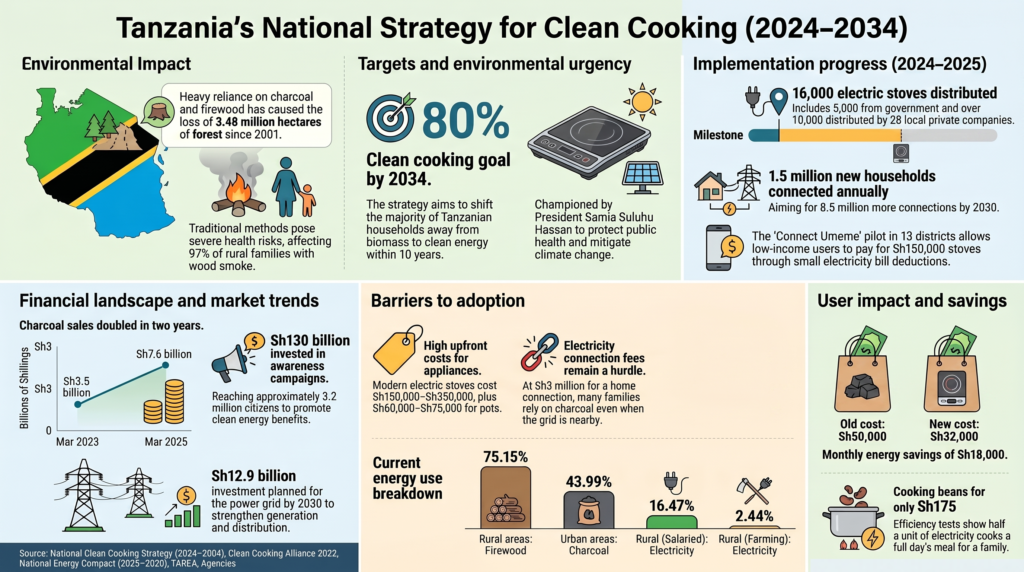
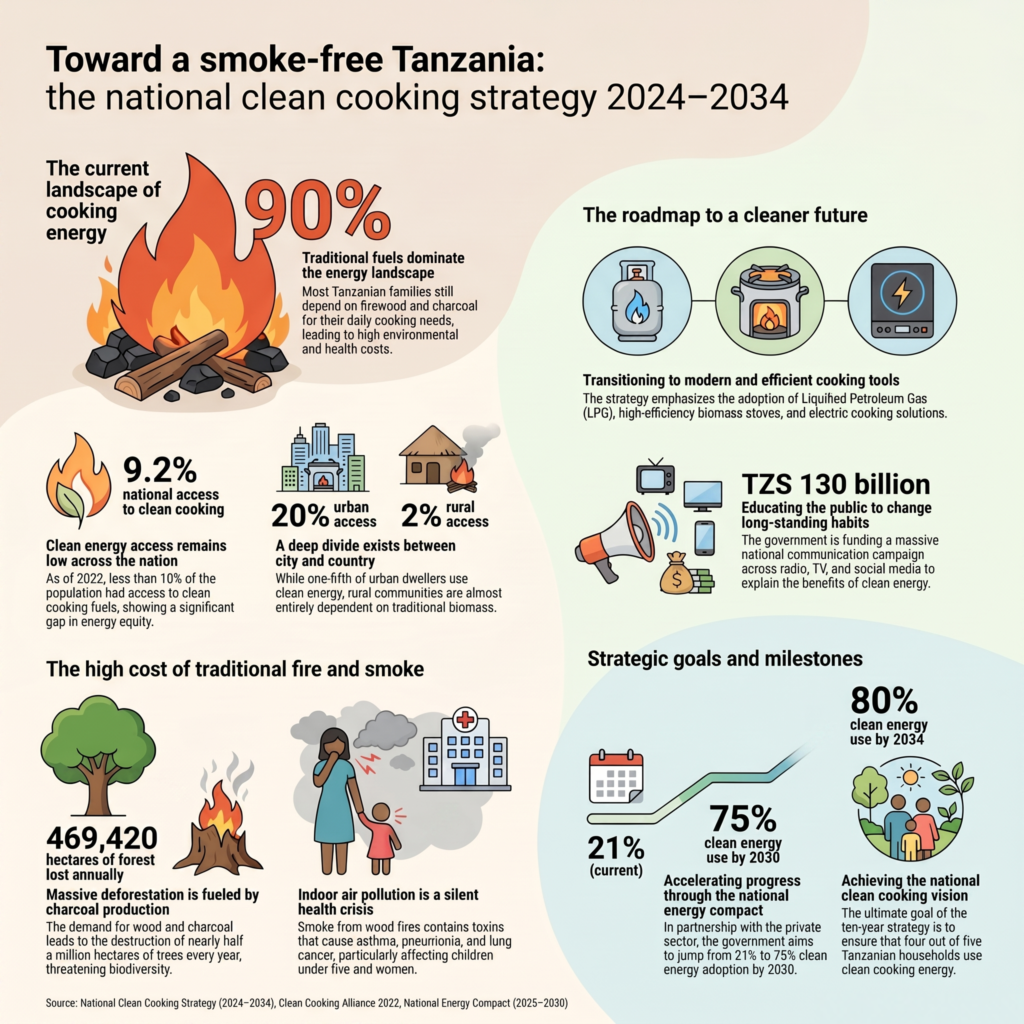
The challenge is significant. While the government wants 80 percent of Tanzanian households to use clean cooking solutions by 2034, the majority of families still depend on traditional biomass fuels.
The transition, experts say, will require not only awareness and infrastructure but also sustained investments, affordable financing, reliable electricity and carefully designed subsidies.
A strategy born out of urgency
The clean cooking strategy was launched in May 2024 at a time when Tanzania was facing mounting environmental and health concerns linked to charcoal and firewood use.
According to a 2021 study by the Tanzania Traditional Energy Development Organization (TaTEDO), about 90 percent of Tanzanian households depend on charcoal or firewood for cooking.
The study further found that 97 percent of rural households are regularly exposed to harmful smoke from biomass fuels while cooking.
The environmental consequences have been equally alarming.
TaTEDO reported that charcoal consumption doubled between 2007 and 2017 as urbanisation accelerated across the country. Without intervention, demand was projected to double again by 2030.
Recent economic data suggests that trend is continuing.
The Consolidated Zonal Economic Performance Report 2025 shows that charcoal sales increased from Sh3.5 billion in March 2023 to Sh7.6 billion in March 2025, reflecting growing demand despite ongoing efforts to promote cleaner alternatives.
Meanwhile, satellite monitoring by Global Forest Watch indicates that Tanzania lost approximately 3.48 million hectares of forest between 2001 and 2024, including 271,000 hectares in 2024 alone.
Against this backdrop, the government’s clean cooking strategy aims not only to reduce deforestation but also to improve public health, create green jobs and contribute to global climate commitments.
What has been achieved so far?
According to the Ministry of Energy’s Chief Geologist, Mr Ngereja Mgejwa, implementation of the strategy has already begun producing measurable results.
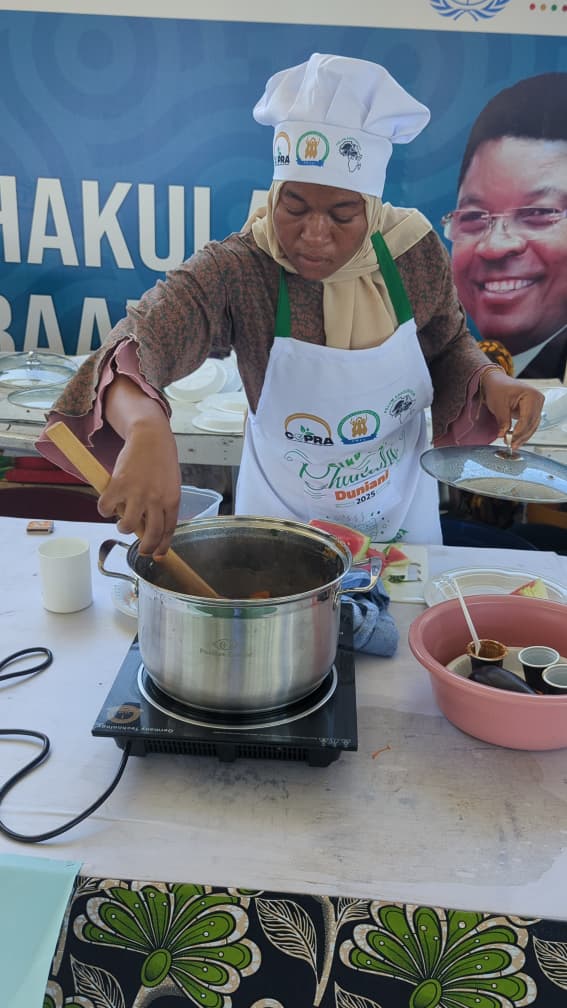
“One of the flagship initiatives has been the rollout of electric pressure cookers through TANESCO’s Connect Umeme programme” he said.
Under the pilot phase until March 2026, 5,000 electric stoves have been distributed through an interest-free financing scheme that allows households to repay the cost gradually through their electricity bills.
The programme has reached 13 districts across Dar es Salaam, Dodoma, Mwanza, Morogoro, Coast and Kagera regions.
In addition, the ministry has authorised 28 local companies to distribute and finance electric cooking appliances. Through these firms, more than 10,000 additional electric stoves have already been supplied to households.
Although the numbers remain small compared to national demand, officials describe the initiative as an important first step.
“We expect the private sector to play a major role in increasing distribution because government alone cannot achieve the target,” says Mr Mgejwa.
The government has simultaneously invested heavily in awareness campaigns.
A nationwide communication programme worth approximately Sh130 billion has so far reached about 3.2 million people through television, radio, SMS messaging, social media and community outreach activities.
The campaign seeks to educate citizens about the health, economic and environmental benefits of clean cooking while addressing misconceptions surrounding modern cooking technologies.
Expanding Electricity Access
The clean cooking agenda is closely linked to Tanzania’s broader electrification efforts.
Although electricity expansion is not formally part of the clean cooking strategy, government officials acknowledge that households cannot transition to electric cooking without reliable power connections.
According to the Ministry of Energy, annual household electricity connections have increased from approximately 500,000 to 1.5 million.
Between November 2020 and February 2025, the government connected 4,071 villages to the national grid at a cost of Sh1.593 trillion.
In the 2024/25 financial year alone, 640,747 households were connected to electricity.
The government now plans to extend electricity access to the remaining 8.5 million households by 2030.
Officials say the next phase will focus on expanding connections beyond villages into individual hamlets and settlements.
Currently, 33,657 out of 64,359 hamlets nationwide have access to electricity, representing about 52.3 percent coverage.
These investments form part of a broader national energy expansion programme expected to require approximately $12.9 billion (Sh33.5 trillion) by 2030.
Funding is expected from development partners, private investors and domestic resources.
Why electricity alone is not enough
Despite these gains, researchers caution that electricity access does not automatically translate into electric cooking adoption.
A 2025 study on household cooking energy transitions conducted by Jires Tunguhole and colleagues found that electricity is still rarely used as the primary cooking fuel, even among wealthier households.
The findings reveal that firewood remains dominant in rural areas, accounting for 75.15 percent of cooking energy use.
Charcoal remains the leading fuel in urban areas, accounting for 43.99 percent.
The study found that only 16.47 percent of salaried households in rural areas use electricity as their primary cooking fuel.
For agricultural households, the figure drops to just 2.44 percent.
Researchers concluded that numerous barriers continue to discourage households from adopting electric cooking technologies.
These include the high cost of appliances, expensive cookware, inadequate household wiring, unreliable electricity supply and limited consumer financing options.
The report recommends targeted subsidies, special cooking tariffs and affordable financing mechanisms to accelerate adoption.
The affordability question
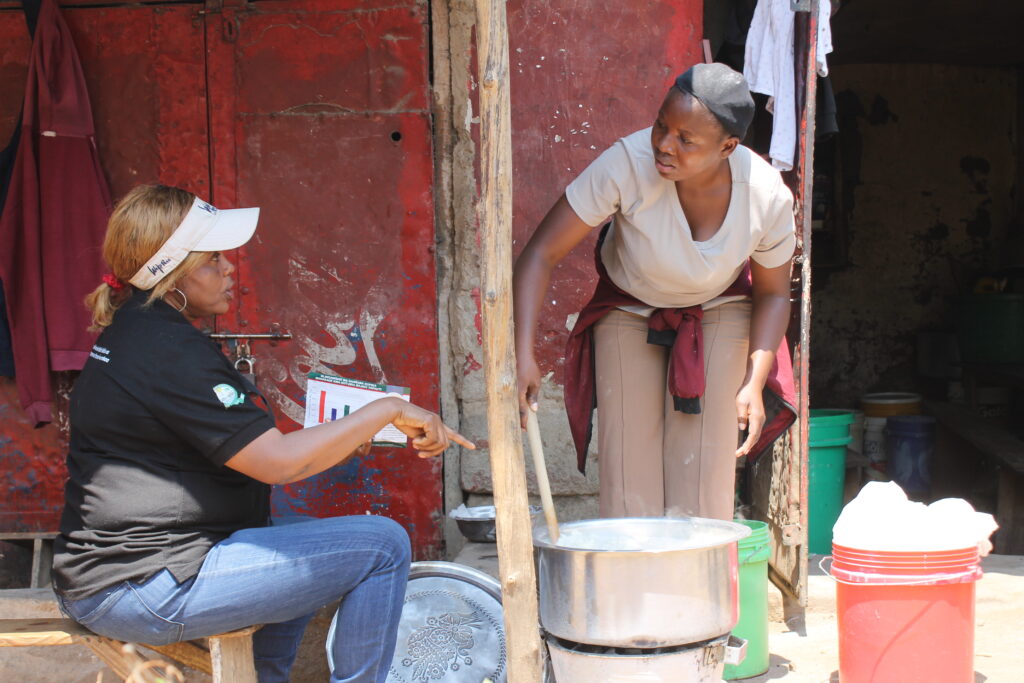
For many experts, affordability represents the single biggest obstacle to achieving the government’s target.
Dr Eng Matthew Josephat Matimbwi, Executive Secretary of the Tanzania Renewable Energy Association (TAREA), believes electric cooking can significantly reduce pressure on forests but only if low-income households can access the technology.
“To achieve the national target, Tanzania needs affordable electricity tariffs for cooking, sustainable subsidies, stronger distribution systems and local manufacturing,” he says.
He argues that current stove prices remain beyond the reach of most Tanzanians.
Although some subsidised electric stoves sell for around Sh150,000, market prices can reach Sh350,000.
Specialised induction cookware often costs between Sh60,000 and Sh75,000 per set.
For households struggling to meet daily needs, these costs remain prohibitive.
Without interventions to lower prices, Dr Matimbwi warns that the transition could remain concentrated among middle- and upper-income households.
Learning from other African countries
Tanzania is not the first African country to promote clean cooking.
Neighbouring countries have experimented with different policy approaches, offering lessons for policymakers.
Uganda, for example, introduced special electricity tariffs specifically designed for cooking.
Under the arrangement, households receive a designated amount of electricity each month at reduced rates before returning to standard tariffs.
According to Dr Matimbwi, the policy significantly improved affordability and encouraged households to abandon charcoal.
Rwanda adopted a different approach.
Instead of large short-term subsidies, the country implemented smaller but longer-term incentives designed to support market development without creating dependence.
The result has been a more stable clean cooking market.
Kenya provides a cautionary tale.
While LPG adoption initially increased rapidly, rising refill costs eventually pushed many low-income households back to charcoal.
The experience highlights the importance of ensuring long-term affordability rather than simply expanding access.
The Promise of Local Manufacturing
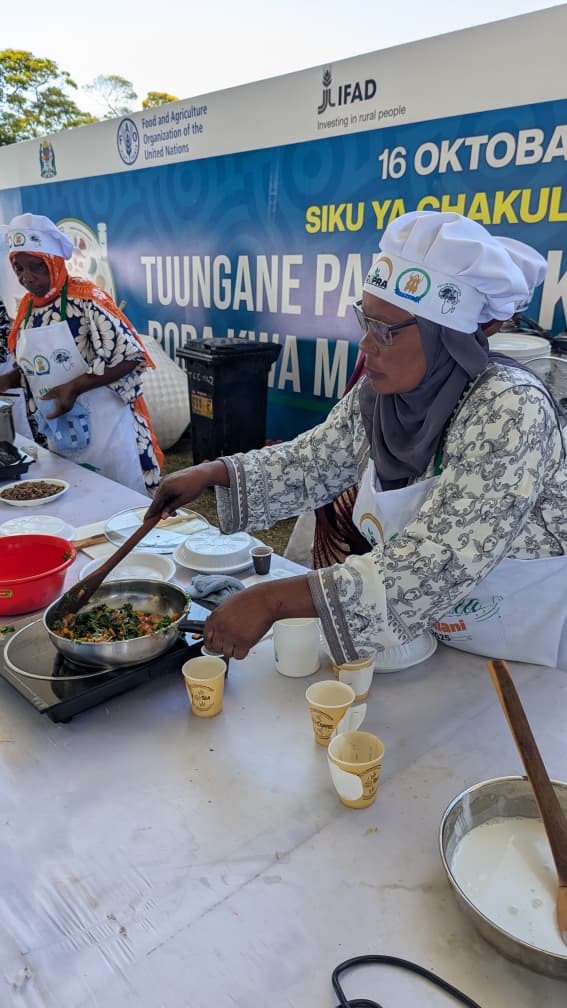
Stakeholders increasingly believe local manufacturing could provide a long-term solution to affordability challenges.
The Ministry of Energy is currently working with Modern Energy Cooking Services (MECS) and the Tanzania Agricultural Research Institute (TARI) to explore opportunities for domestic production.
Officials hope local manufacturing will reduce dependence on imports, lower production costs and create products tailored to Tanzanian cooking habits.
Sarah Pima, Executive Director of HUDEFO, believes local production is essential.
“These stoves must be produced locally if they are to become affordable for ordinary Tanzanians,” she says.
She argues that current prices primarily benefit middle-income households while leaving charcoal users behind.
Similarly, entrepreneur Atukuzwe Nkya says port charges and import-related taxes continue to inflate costs.
According to him, import expenses can increase product prices by roughly 32 percent before they reach consumers.
Removing these costs, he says, could dramatically improve affordability.
Can the grid support a cooking revolution?
The government maintains that Tanzania now has sufficient electricity generation capacity to support increased cooking demand.
Mr Mgejwa says national generation capacity has reached 3,091.7 megawatts, significantly exceeding current demand of around 1,800 megawatts.
Much of the increase has been driven by major investments including the Julius Nyerere Hydropower Project.
However, energy experts caution that generation capacity is only part of the equation.
Dr Matimbwi notes that distribution networks remain weak in many areas.
Aging transformers, overloaded lines and frequent outages continue to undermine consumer confidence.
“We still experience power interruptions even under current demand levels,” he says.
“If electric cooking expands rapidly without corresponding investments in distribution infrastructure, reliability could become a major challenge.”
Such concerns are important because households that lose confidence in electricity often revert to charcoal and firewood.
Household experiences reveal opportunities and challenges
Among households that have already adopted electric cooking, experiences have largely been positive.
In Masaki, Dar es Salaam, Mariam Mohamed switched to an induction cooker in October 2024 through a loan programme.
She estimates that her monthly cooking energy costs have fallen by approximately Sh18,000.
“This stove is healthier because it produces no smoke and cooks faster than gas or charcoal,” she says.
“My monthly costs have fallen from around Sh50,000 to about Sh32,000.”
In Kinondoni, bank employee Kelvin Mlaki reports similar savings.
After purchasing an electric cooker six months ago, his monthly cooking expenses dropped from approximately Sh55,000 to Sh10,000.
Despite the savings, both consumers acknowledge that the upfront costs remain high.
Another user, Beatrice Shayo from Mapinga, says specialised induction cookware creates additional expenses.
“The cookware alone cost around Sh75,000,” she says. “That is a lot of money for many families.”
Linda James from Temeke says repayment schemes can also be burdensome.
“Sometimes when you fail to make a payment, the stove is disabled. That can be frustrating,” she says.
The road ahead
The first year of Tanzania’s National Clean Cooking Energy Strategy demonstrates that meaningful progress is possible.
Electric stoves are reaching households. Electricity access is expanding rapidly. Public awareness is growing. Private companies are investing in the sector.
Yet the scale of the challenge remains enormous.
More than 90 percent of households still rely on charcoal and firewood. Millions remain unconnected to electricity. Appliance costs remain high. Grid reliability remains uneven.
For Tanzania to achieve its goal of 80 percent clean cooking adoption by 2034, experts agree that the next phase must focus on affordability, reliability and local production.
The government has already laid important foundations. The question now is whether those foundations can be scaled quickly enough to transform cooking practices across one of Africa’s fastest-growing populations.
If successful, the strategy could not only protect Tanzania’s forests and improve public health but also become one of the continent’s most significant clean energy transitions.
For now, the momentum is encouraging, but the real test lies ahead.