


By Habitat Media Reporter
The Tanzania Agricultural Development Bank (TADB) has invested Sh668.03 billion in Tanzania’s coffee value chain through direct financing and credit guarantees, seeking to increase productivity, strengthen processing and expand market opportunities for farmers and other players.
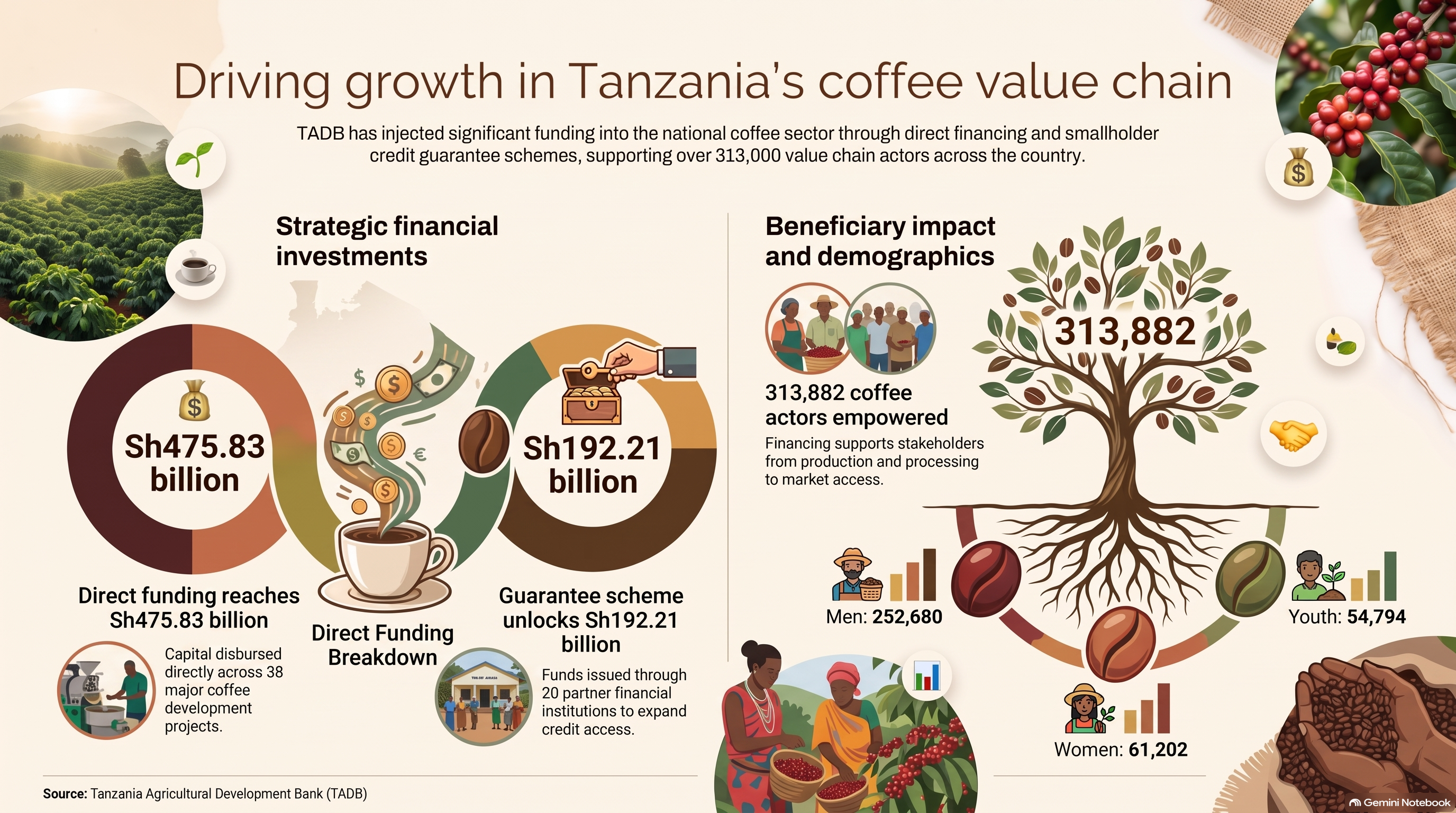
The financing comprises Sh475.83 billion channelled directly into 38 projects and Sh192.21 billion facilitated through the Smallholder Credit Guarantee Scheme (SCGS), which enables farmers and agricultural businesses to access loans through partner financial institutions.
According to TADB, the financing has reached 313,882 beneficiaries across the coffee value chain, including 61,202 women, 252,680 men and 54,794 young people.
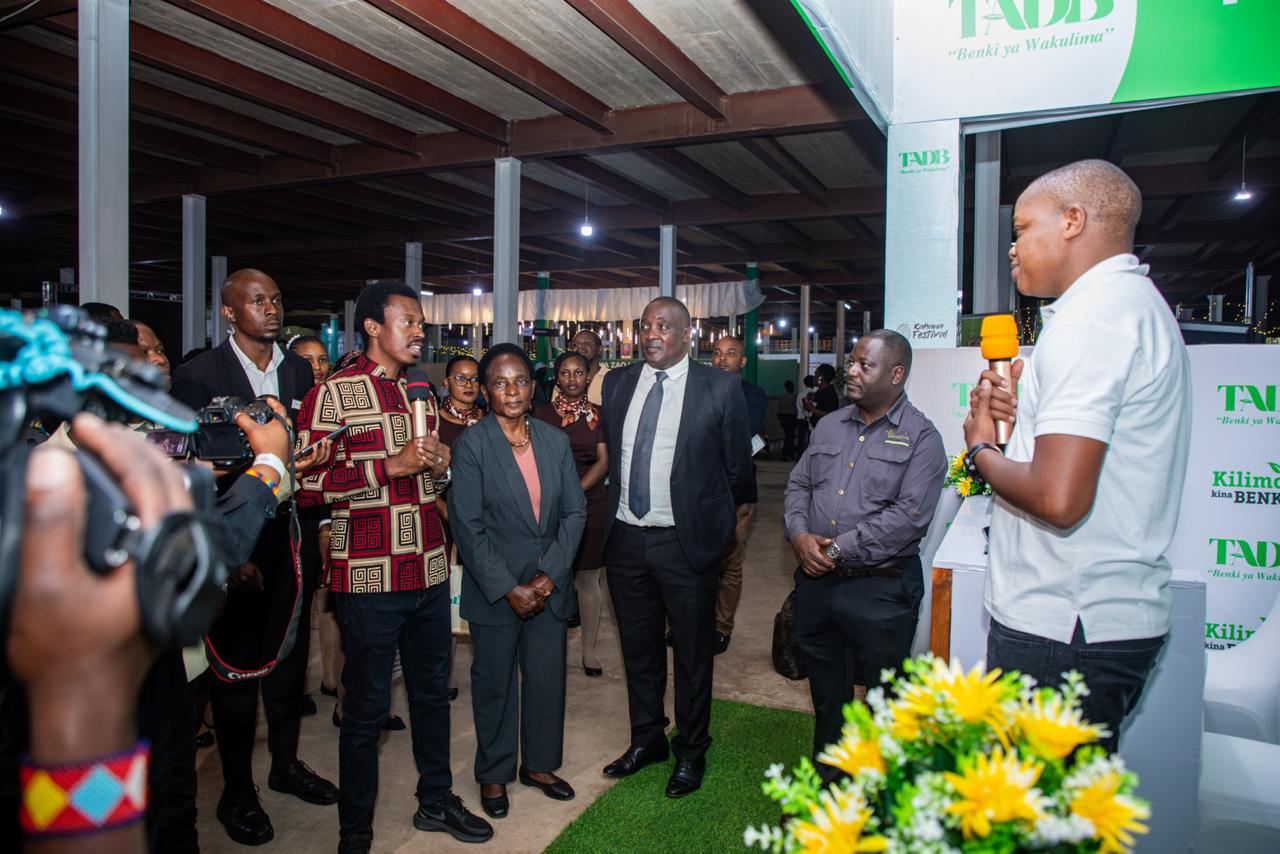
Speaking at the Coffee Festival 2026 in Moshi, Kilimanjaro Region, TADB Northern Zone Manager Alphonce Mokoki said coffee was the leading crop in the bank’s financing portfolio because of its contribution to farmers’ livelihoods and the national economy.
“For TADB, the success of agricultural financing is not measured solely by the amount of money disbursed, but also by the impact it creates,” he said.
“We want to see farmers increase productivity, cooperatives strengthen their capacity, coffee processing and trading businesses grow, the value of the crop increase and market opportunities improve.”
Mr Mokoki said the bank’s investments were intended to improve livelihoods and enhance the welfare of communities that depend on coffee production and trade.
He added that TADB was expanding access to agricultural finance beyond direct lending by partnering with other financial institutions through the SCGS.
“Through the Smallholder Credit Guarantee Scheme, TADB works with partner financial institutions, including banks and other financial service providers, to facilitate loans for stakeholders across agricultural value chains,” he said.
Through this arrangement, Sh192.21 billion has been facilitated through 20 partner financial institutions, broadening access to financing for farmers and agricultural businesses.
Mr Mokoki said the bank’s approach recognised that developing the coffee industry required investment beyond production at farm level, including collection, post-harvest management, storage, processing, value addition and access to markets.
“Coffee does not begin and end on the farm. There is a journey from the farmer through collection, storage, processing, value addition and marketing,” he said.
“Every stage is important in increasing the value generated by coffee and ensuring that the benefits reach different stakeholders, particularly farmers. TADB’s role is to facilitate financing and investment across these stages.”
Among the beneficiaries of TADB financing are the Kagera Cooperative Union (KCU), Karagwe District Cooperative Union (KDCU), Ngara Farmers, WAMACU in Mara Region, Wahurumie AMCOS in Horongo Mbalizi, GDM factory in Mbozi and Mbozi Coffee Curing Company Limited, among others.
The bank is also supporting investment in storage facilities, warehouses, processing infrastructure and other essential post-harvest operations.
These investments are intended to reduce post-harvest losses, improve coffee quality and enable stakeholders to store their produce and sell it at more favourable times.
TADB is also promoting climate-resilient agriculture across the coffee value chain, encouraging investments and farming practices that can strengthen farmers’ and agricultural businesses’ ability to withstand the effects of climate change.
The initiative is particularly important as coffee production depends on environmental conditions that influence crop productivity and quality. Strengthening resilience can help protect farmers’ investments and sustain production.

Working with the Tanzania Coffee Board (TCB), cooperatives, farmers’ associations, processors, traders and other industry stakeholders, TADB says it will continue facilitating access to capital and supporting investments aimed at strengthening the value chain and improving the competitiveness of Tanzanian coffee.
“We want to see Tanzanian coffee continue to gain value, farmers achieve higher productivity and incomes, agricultural businesses expand, and investment in processing and value addition increase,” Mr Mokoki said.
“This is what TADB’s existence means: not simply providing funds, but using finance as a catalyst for transformation in agriculture and people’s lives.”
The bank is using its participation in Coffee Festival 2026 to educate farmers, value-chain stakeholders, media practitioners and the public about available financing opportunities and how it works with industry players to develop Tanzania’s coffee sector.