


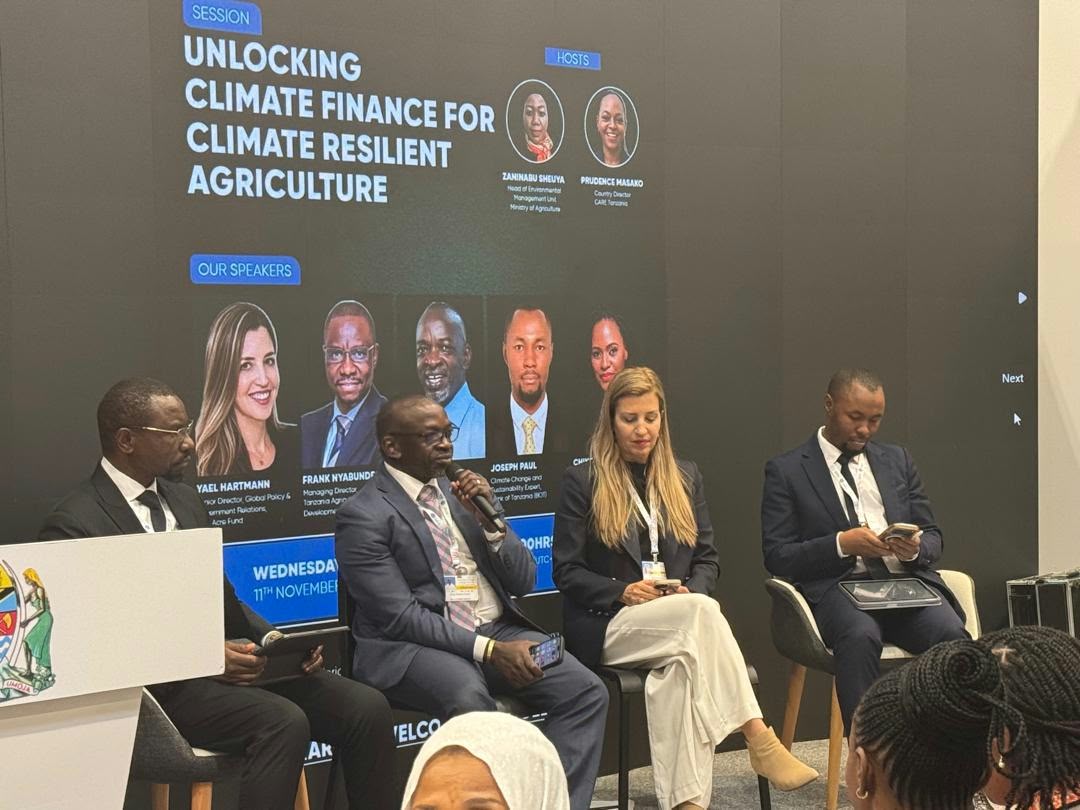
Tanzania Agricultural Development Bank (TADB) Managing Director Frank Nyabundege (left) participating in a panel discussion on unlocking climate finance for climate-resilient agriculture during COP31 in Antalya, Türkiye.
By Habitat Media Reporter
Antalya, Türkiye. Tanzania Agricultural Development Bank (TADB) says it has unlocked more than $300 million in private capital for the agriculture sector through credit guarantees, supporting over 680,000 smallholder farmers, women and young people in eight years.
The bank says the experience demonstrates how blended financing, climate risk intelligence and stronger partnerships can help mobilise investment in climate-resilient agriculture, particularly for smallholder farmers who often struggle to access affordable credit.
Speaking during a side event at the 31st United Nations Climate Change Conference (COP31) in Antalya, Türkiye, TADB Managing Director Frank Nyabundege said the bank was working to change the perception that agriculture was inherently a high-risk investment.
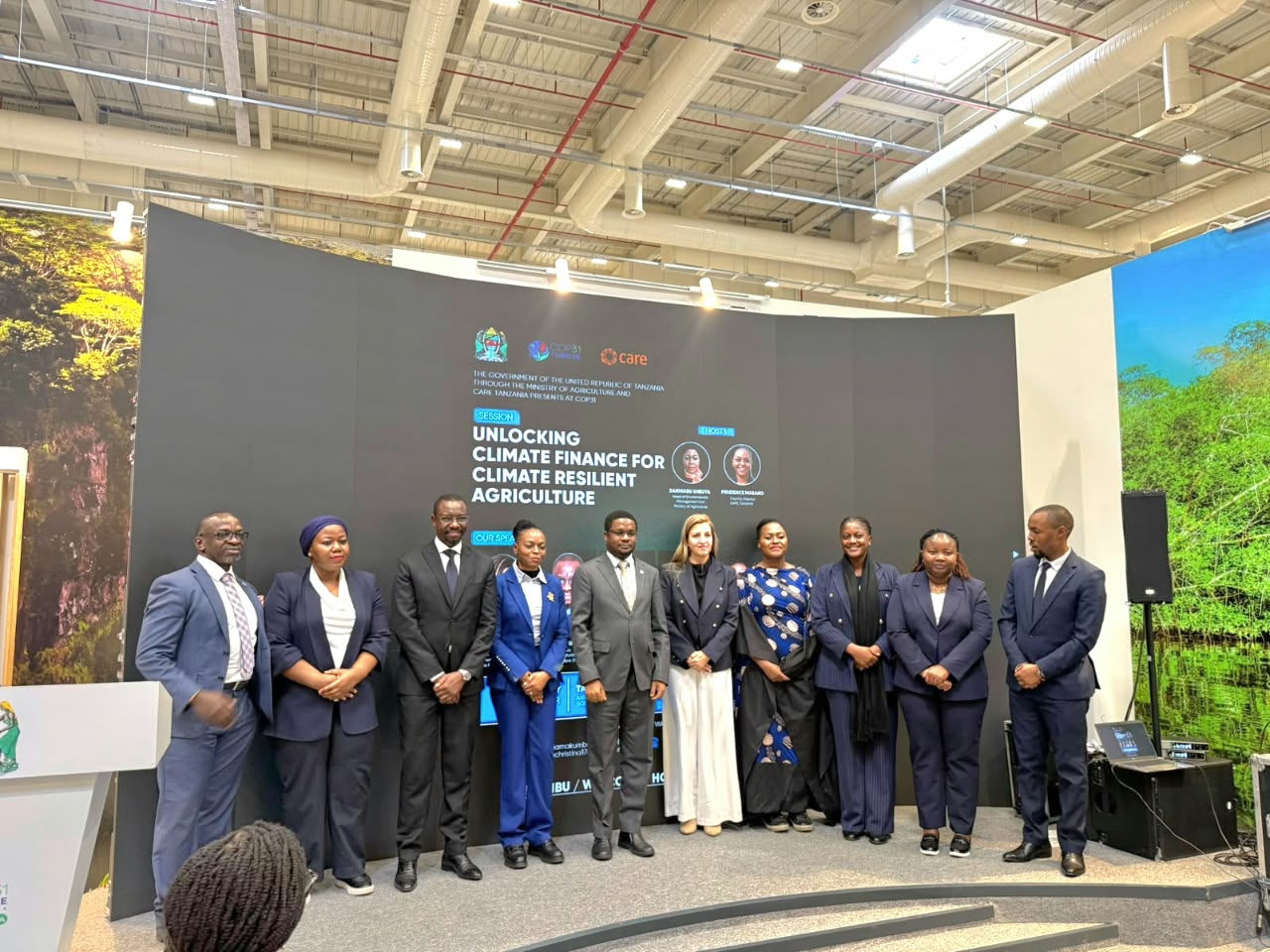
The event, held at the Tanzania Pavilion under the theme ‘Unlocking Climate Finance for Climate Resilient Agriculture’, was organised by the Government through the Ministry of Agriculture in collaboration with Care International.
Nyabundege said the perception of agriculture as a high-risk sector largely stemmed from inadequate understanding of how to structure financing for an industry characterised by seasonal production cycles and complex value chains.
“Agriculture lending goes beyond traditional lending approaches. Due to issues relating to seasonality and dynamics in value chains, it is quite different from financing a trader, for example, and expecting repayments to start within a month,” he said.
He said TADB had demonstrated an alternative through its Integrated Value Chain Financing Model, which supports activities across the entire chain, from production and aggregation to value addition and exporting.
However, he acknowledged that climate change presents additional risks to agricultural investments because of the sector’s dependence on natural resources.
To address this, he said the bank had developed and deployed a digital platform that uses climate risk intelligence to assess the exposure of its clients and guide investment towards appropriate climate-resilient agricultural practices.
On mobilising private capital, Nyabundege said TADB’s Smallholder Credit Guarantee Scheme, with core capital of about $50 million, had enabled the bank to unlock more than $300 million through 22 partner financial institutions over eight years.
The scheme has supported more than 680,000 smallholder farmers, women and young people by addressing collateral challenges and reducing lending risks for participating financial institutions.
He said TADB also provided technical assistance and training to partner lenders through the Bank of Tanzania Academy’s Agriculture Financing curriculum, helping them understand agricultural value chains, structure loans and develop climate financing frameworks.
The bank has further used co-financing arrangements with other financial institutions to attract commercial lenders and expand access to financing for farmers and agribusinesses.
Looking ahead, Nyabundege said TADB would focus on implementing its strategic roadmap for financing green and climate-smart agriculture, mobilising private capital and expanding the use of its digital climate risk assessment platform.
The bank will also deepen partnerships with development partners and other stakeholders to mobilise climate funds and support Tanzania’s Development Vision 2050.
“For the country to realise its climate ambitions, sustainable agriculture and effectively unlock climate finance for climate-resilient agriculture, we must deploy a blended and inclusive financing approach,” he said.