


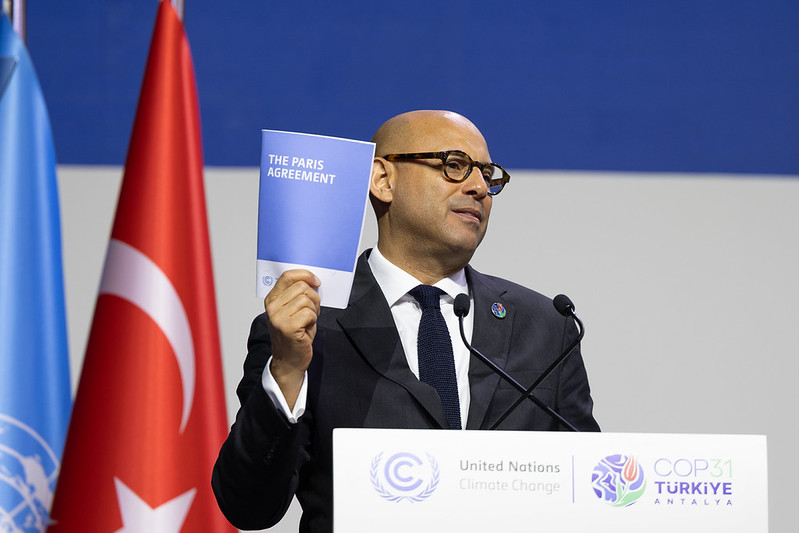
UN Climate Change Executive Secretary Simon Stiell
By Habitat Media Reporter
Antalya, Türkiye. Countries have been urged to move beyond climate commitments and accelerate practical solutions to address the growing impacts of climate change as the 31st Conference of the Parties to the United Nations Framework Convention on Climate Change (COP31) opens in Antalya, Türkiye.
The conference comes amid increasing climate-related challenges, including extreme weather events, rising temperatures, pressure on food security and growing demands for financial support to help vulnerable countries adapt to climate change.
UN Climate Change Executive Secretary Simon Stiell said this year’s conference should mark a shift towards implementation, with countries focusing on translating existing global climate targets into concrete actions.
“In this new era of implementation, at COP31, we’re doing things differently. Not discarding what went before. But building on it. Honing it. To deliver progress faster,” he said in his opening statement.
Stiell noted that although previous climate negotiations had helped shape political decisions and global markets, progress remained insufficient to address the scale of the climate crisis.
“Progress is nowhere near fast or fair enough,” he said, calling for practical solutions to accelerate climate action.
He identified adaptation finance, renewable energy expansion, improved electricity transmission infrastructure and methane reduction as some of the critical areas requiring urgent attention.
Stiell called for solutions to deliver on the commitment to triple adaptation finance, while addressing difficulties faced by countries in accessing already committed financial resources.
He also urged countries to accelerate efforts towards tripling global renewable energy capacity by 2030 and reducing methane emissions, particularly from the oil and gas and waste sectors.
On climate financing, he said countries needed clarity on how to deliver existing commitments of $300 billion annually and mobilise $1.3 trillion to support climate action.
“That will require the whole financial system to step-up,” he said.
The UN climate chief further emphasised that climate action must address inequalities, arguing that vulnerable communities and countries continue to bear the greatest costs of a crisis they have contributed least to creating.
“The vulnerable everywhere pay the highest price,” he said, stressing the importance of fairness in the global transition towards clean energy and climate resilience.
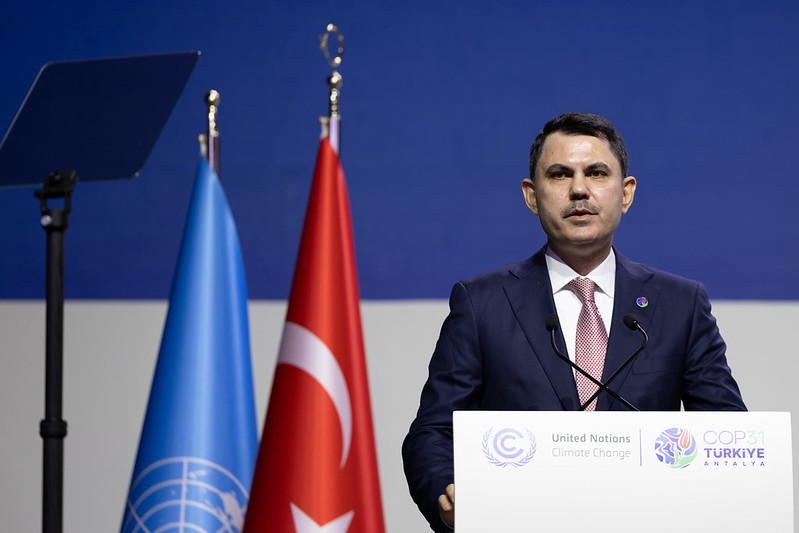
COP31 President Murat Kurum said climate change could no longer be treated as an isolated environmental issue because its effects were increasingly interconnected with food systems, energy, public health and economic development.
“That is why climate policy today is also development policy. It is food policy. Energy policy. Urban policy. Health policy,” he said.
Kurum said the conference should help close the gap between international commitments and the resources needed to implement them, particularly in developing countries.
He emphasised that climate decisions should produce tangible benefits for communities, including resilient infrastructure, sustainable agriculture, affordable energy and employment opportunities.
“The decisions we take in Antalya will only truly come to life when they leave these halls,” he said.
Kurum identified dialogue, consensus and action as the three principles guiding the COP31 presidency, adding that countries needed to work together to turn available knowledge, technology and financial resources into practical solutions.
He also highlighted the importance of fulfilling climate finance commitments, noting that developing countries needed predictable access to resources to implement their climate plans.
The conference is expected to advance discussions on climate adaptation, mitigation, a just transition and financing, with particular attention to strengthening international cooperation.
As negotiations continue, the central challenge remains ensuring that global climate commitments translate into meaningful action capable of protecting communities, strengthening economies and building resilience against the escalating impacts of climate change.