


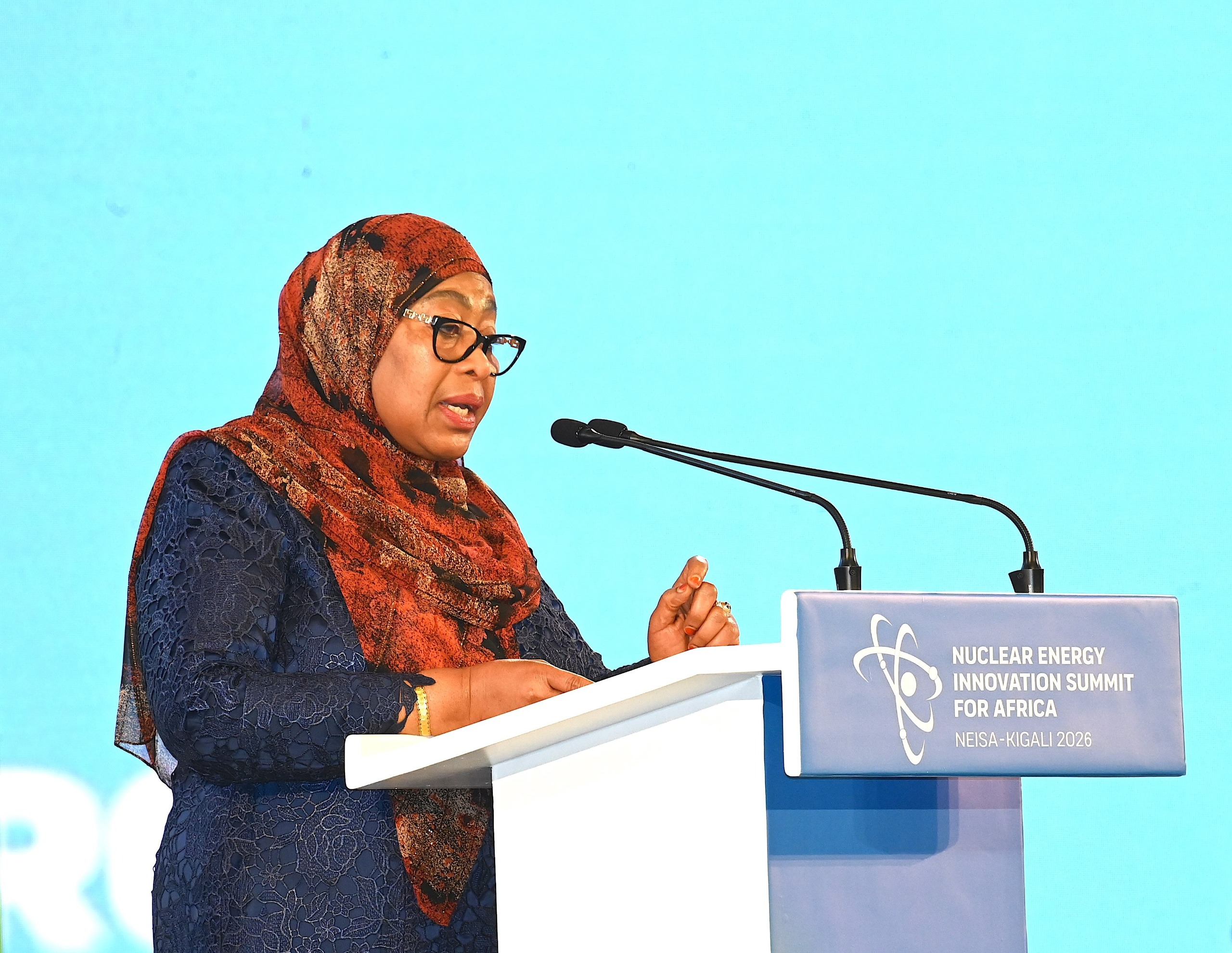
Kigali. President Samia Suluhu Hassan has called for stronger African cooperation in developing nuclear energy, saying reliable, affordable and sustainable electricity will be critical to the continent’s industrial transformation and long-term economic growth.
Speaking at the Nuclear Energy Innovation Summit on Africa (NEISA) 2026 held in Rwanda on May 19, President Samia said Africa’s growing industrialisation, urbanisation and digital transformation require stable energy systems capable of meeting rising electricity demand.
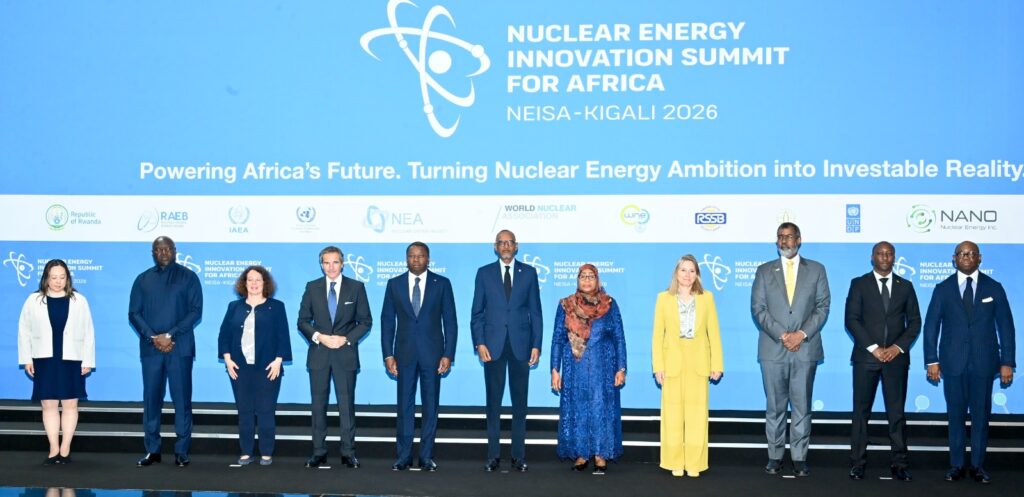
The summit, hosted by Paul Kagame, brought together African leaders, policymakers and energy experts to discuss the future of nuclear energy on the continent.
President Samia said nuclear energy should not be viewed as a competitor to renewable energy, but rather as part of a broader strategy to build resilient energy systems that can support industrial growth and economic development.
“We believe investment in nuclear energy can become part of the solution to the challenge of reliable electricity access, especially as energy demand continues to rise due to industrial growth, expanding cities and increased production activities,” she said.
She identified financing, safety and regional cooperation as key pillars for the successful development of nuclear energy programmes in Africa.
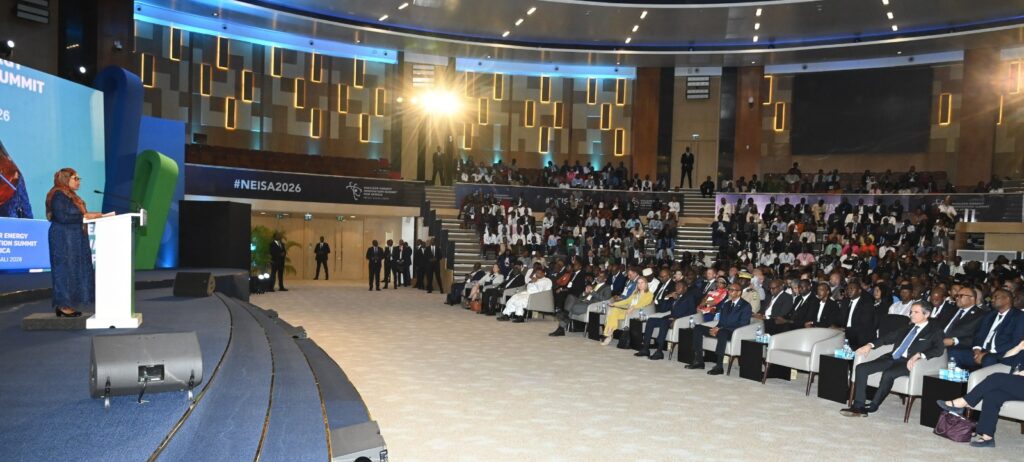
According to President Samia, many African countries continue to face difficulties in securing financing for large-scale nuclear projects because of their high costs.
She called for innovative financing mechanisms and investment models tailored to Africa’s economic realities in order to attract investors and improve access to affordable financing.
The Tanzanian leader also stressed the importance of regional cooperation, saying African countries can benefit from sharing expertise, attracting joint investment and strengthening institutional capacity in nuclear technology.
She commended President Kagame for championing discussions on Africa’s nuclear energy future and emphasised the need for strong regulatory systems and skilled professionals to ensure the safe use of nuclear technology.
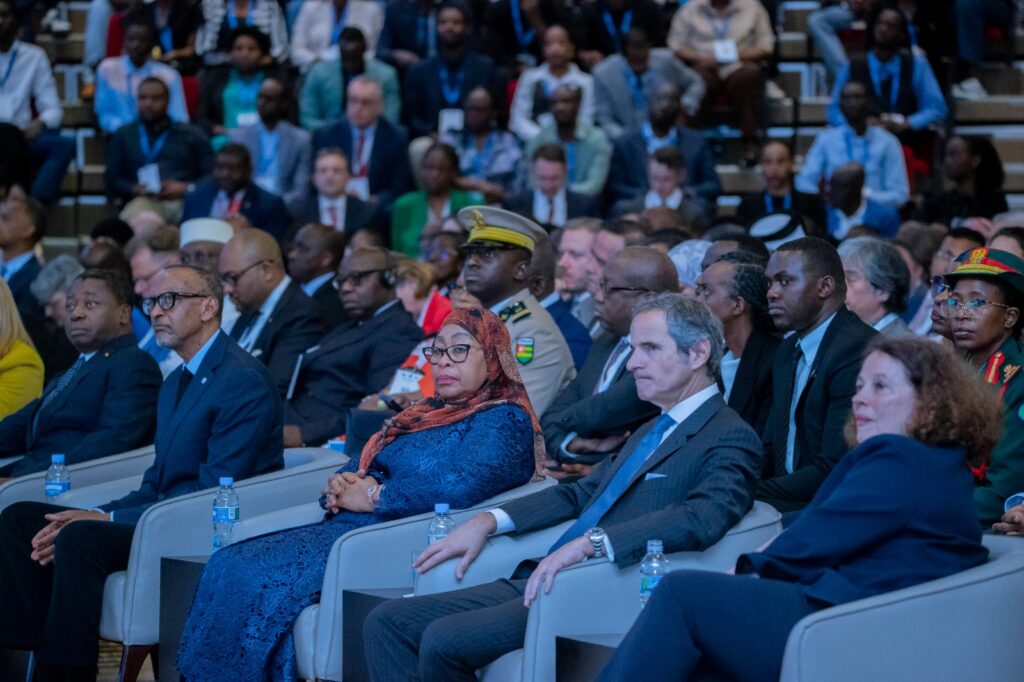
President Samia also praised the role of the International Atomic Energy Agency in helping African countries strengthen legal and technical capacity for the peaceful use of nuclear technology.
Her remarks came as the Executive Secretary of the Economic Commission for Africa, Claver Gatete, warned that Africa risks falling behind economically if it fails to close its electricity gap.
Speaking virtually during the Ministerial Compact Roundtable on Financing Africa’s Nuclear Energy Future, Mr Gatete said reliable electricity would determine Africa’s competitiveness under the African Continental Free Trade Area (AfCFTA).
“No nation industrialises in the dark,” he said.
“Africa cannot realise the promise of the AfCFTA or build competitive regional value chains on intermittent power alone.”
Mr Gatete said Africa’s energy challenges are being worsened by climate shocks, geopolitical tensions, high borrowing costs and limited access to finance, all of which are slowing investment in critical infrastructure.
Despite improvements in electricity access from about 25 percent a decade ago to around 51 percent today, nearly 600 million Africans still lack electricity, including about 400 million people living in rural areas.
“Africa needs to connect around 100 million people every year to stay within reach of Sustainable Development Goal 7,” he said.
He added that electricity demand on the continent could quadruple by 2040 as African countries expand manufacturing, mineral processing, modern agriculture, pharmaceuticals and digital infrastructure.
Against this backdrop, Mr Gatete said nuclear energy should be considered part of Africa’s diversified clean energy mix because modern economies require reliable and constant power supply alongside renewable energy sources.
He said Africa already has strategic advantages, including uranium resources, emerging nuclear institutions and growing political interest in nuclear energy development.
South Africa currently operates the continent’s only commercial nuclear power plant, while Egypt is constructing reactors at El Dabaa. Morocco and Rwanda are also advancing nuclear energy plans.
However, Mr Gatete said financing remains the biggest obstacle.
“Nuclear ambition will not become investable reality unless countries can lower risk premiums through credible governance, bankable delivery models and strong institutions,” he said.
He also called for investment in infrastructure, skilled labour, regulators and regional centres of excellence to support Africa’s nuclear energy ambitions.
Speaking at the summit, the Director General of the International Atomic Energy Agency, Rafael Mariano Grossi, said the agency recognises Africa’s financing challenges and stands ready to support countries seeking funding for nuclear energy projects.