


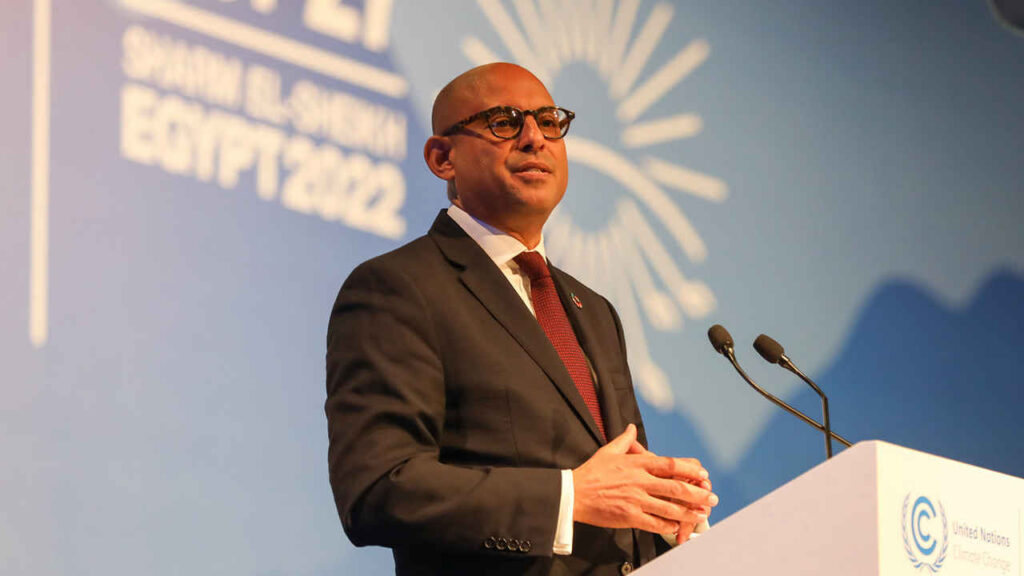
Paris. The ongoing conflict in the Middle East is not only inflicting a heavy human toll but also accelerating a global shift toward renewable energy, according to Simon Stiell, Executive Secretary of UN Climate Change.
Speaking at the opening of the COP31-IEA High-Level Energy Transition Dialogue in Paris on April 30, Mr Stiell said the war’s economic shockwaves have spread worldwide, driving up fossil fuel costs and squeezing households, businesses and governments.
“Civilians are suffering. Lives are being torn apart, and economies are stalling,” he said, noting that the ripple effects of the conflict have triggered what he described as a “fossil fuel cost crisis” now weighing heavily on the global economy.
The crisis, he warned, is fuelling stagflation risks while exposing the vulnerability of energy systems heavily dependent on fossil fuels. Yet, in what he termed a “profound irony,” the same disruption is accelerating investment in cleaner energy alternatives.
Mr Stiell said global investment in clean energy is now set to double that of fossil fuels, while solar power generation alone recorded a significant surge, rising by 600 terawatt-hours compared to 2024 levels.
“This latest fossil fuel cost crisis has made the economic logic of renewables impossible to ignore,” he said.
He emphasised that renewable energy offers a more stable and secure alternative, insulated from geopolitical tensions and supply chain disruptions such as those affecting key shipping routes.
Countries with strong renewable energy capacity, including Spain and Pakistan, he noted, have been relatively shielded from the worst impacts of the current crisis.
The shift is now gaining momentum globally, with major economies including China, India, Indonesia, South Korea, Germany and the United Kingdom placing renewable energy at the centre of their energy security strategies.
In France, financing for electrification is already doubling, reflecting a broader policy shift aimed at reducing reliance on fossil fuels.
Mr Stiell urged governments to sustain this momentum while avoiding decisions that could lock in fossil fuel dependence over the long term.
“We must harness this momentum to accelerate a truly global shift,” he said, pointing to the need for countries to deliver stronger climate action commitments ahead of COP33, where progress on global climate goals will be reviewed.
He stressed the importance of breaking the link between electricity prices and fossil fuels, allowing cheaper renewable energy to translate into lower consumer costs.
However, he cautioned that many developing countries remain constrained by limited access to finance and mounting debt burdens, which hinder their ability to invest in clean energy and climate resilience.
To address this, Mr Stiell called for urgent delivery of the New Collective Quantified Goal on climate finance, including a roadmap to mobilise $1.3 trillion annually.
“We must get finance flowing, rapidly,” he said, underscoring the need for stronger international cooperation.
He also highlighted the role of the Paris Agreement’s Action Agenda in mobilising governments, investors and civil society to translate climate pledges into tangible projects across key sectors.
Priority areas, he said, include expanding electricity grids and energy storage systems, as well as reducing methane emissions—an approach that offers quick climate benefits while lowering costs.
Food security is another urgent concern, with climate shocks and war-driven fertiliser shortages putting an estimated 45 million people at risk of acute hunger this year.
Mr Stiell noted that global coalitions are already stepping up efforts, citing ongoing discussions among governments and civil society in Santa Marta on fossil fuel transition strategies.
Looking ahead, he said COP31 in Türkiye will provide a critical platform to accelerate action across sectors.
“We must seize this moment,” he said. “We’ve no time to lose.”