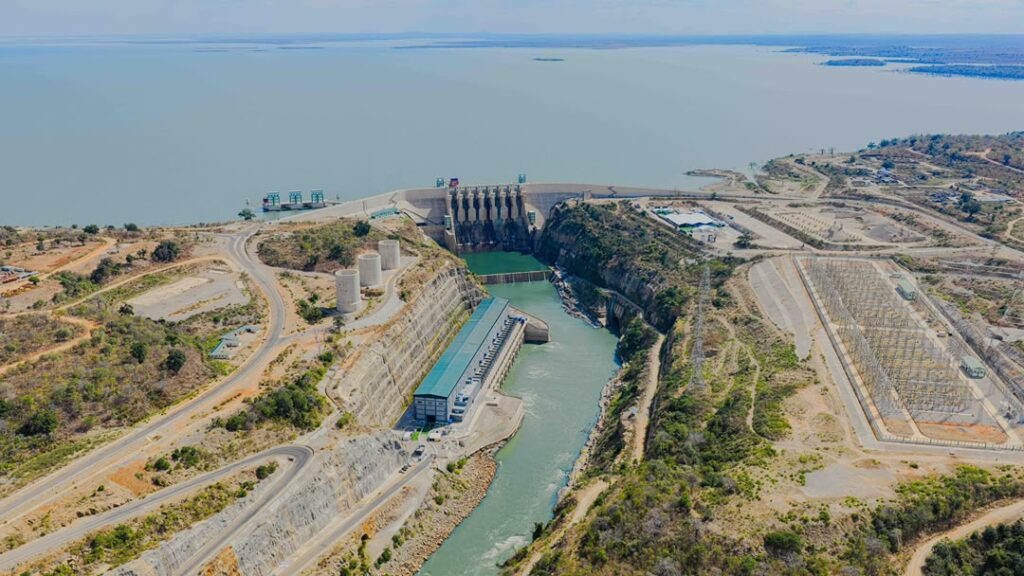


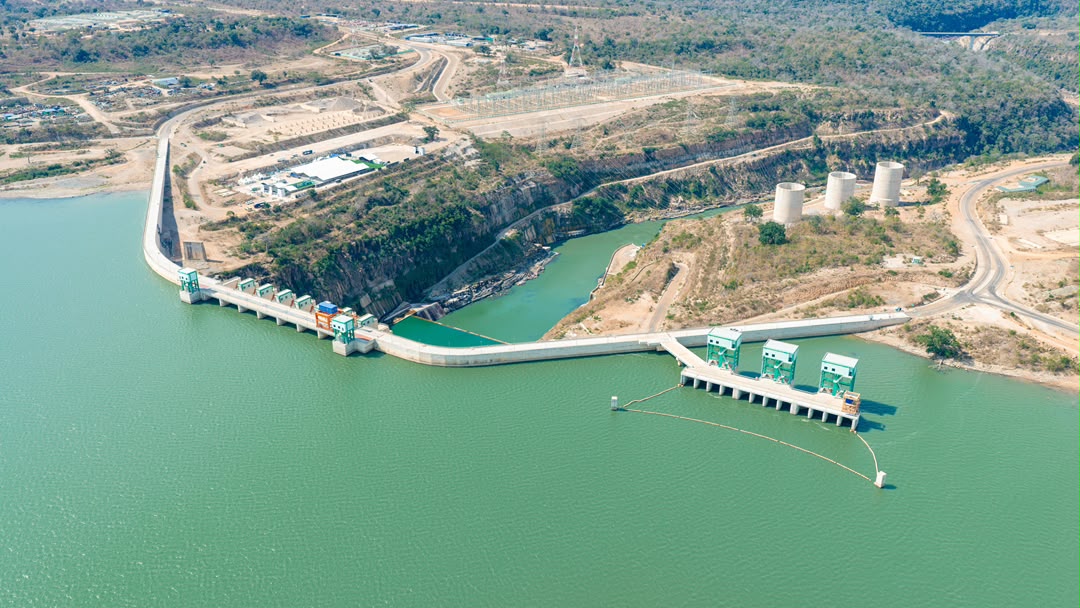
Dar es Salaam. The commissioning of the Julius Nyerere Hydropower Project (JNHPP) has raised expectations among Tanzanians that increased electricity generation will eventually translate into lower energy costs for households and businesses.
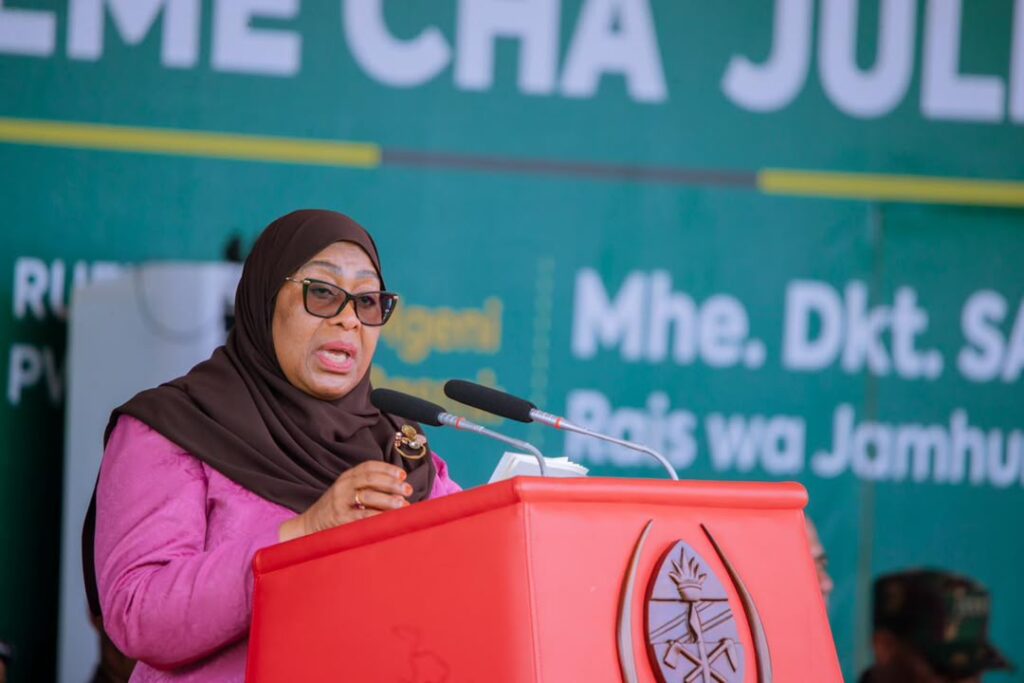
The project, officially launched by President Samia Suluhu Hassan on August 22, 2026, at Rufiji in the Coast Region, has added 2,115 megawatts (MW) to the national grid, significantly increasing Tanzania’s electricity generation capacity.
However, while the additional power is expected to strengthen energy security and support economic activity, attention has now shifted to whether the investment will also bring relief to consumers through lower electricity tariffs and connection costs.
Government Chief Spokesperson Gerson Msigwa said on August 23 that calls for lower electricity costs had been heard and were being considered.
Speaking in Morogoro, Mr Msigwa said any decision to revise electricity tariffs would require consultation through the Energy and Water Utilities Regulatory Authority (EWURA).
“We have heard these requests and the government is working on them,” he said, while maintaining that Tanzania’s electricity tariffs remain relatively low compared with those in other countries.
The government’s position has fuelled expectations that the completion of JNHPP could create room for a review of electricity costs, particularly because the project has substantially increased the amount of power available to the national grid.
A major boost to electricity supply
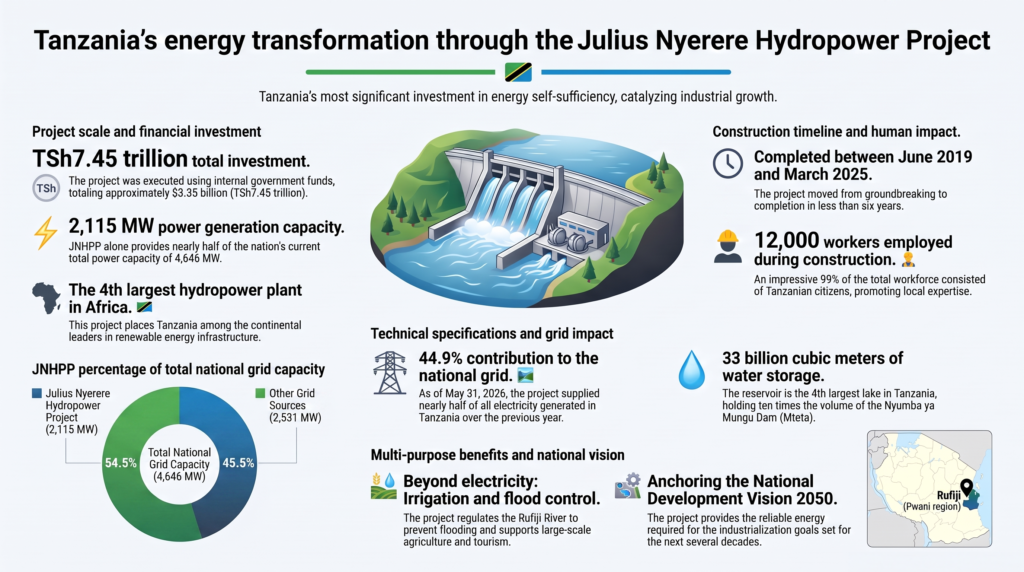
According to the Ministry of Energy, JNHPP cost Sh7.452 trillion and is the largest electricity generation project ever implemented in Tanzania using domestic government financing.
The project has a generation capacity of 2,115MW, accounting for almost half of the country’s current installed generation capacity of about 4,646MW.
By May 31, 2026, the project had contributed 44.9 per cent of all electricity fed into the national grid over the preceding year, according to ministry figures.
The project began construction in June 2019 and was completed in March 2025. During construction, it employed about 12,000 people, 99 per cent of whom were Tanzanians.
The dam can store approximately 33 billion cubic metres of water, creating a reservoir that is among the largest in Tanzania.
Beyond electricity generation, the project is also expected to support flood control along the Rufiji River, irrigation, tourism and domestic water needs.
The government sees the project as a key component of its efforts to strengthen energy security, expand industrial production and support investment and economic growth.
Will consumers see lower costs?
Despite the increase in electricity generation, the question of affordability remains.
Under the current EWURA tariff structure, domestic customers in the D1 category pay Sh100 per unit for consumption of up to 75 units, while additional consumption above that threshold is charged at Sh350 per unit.
For T1 customers, generally covering general-use electricity consumption, the tariff is Sh292 per unit.
But for many households, the challenge begins before they can consume electricity: connecting their homes to the grid can be expensive.
EWURA data shows significant differences in connection charges between urban and rural areas. For a single-phase connection within 30 metres, for example, the urban charge is Sh272,000, rising to Sh436,964 at 70 metres and Sh590,398 at 120 metres.
In rural areas, the corresponding single-phase connection charge is Sh27,000 for those distances.
The issue has previously attracted parliamentary scrutiny.
In April 2025, the Parliamentary Committee on Energy and Minerals raised concerns about the differences in electricity connection costs, with MPs calling for the government to review charges, particularly for low-income urban residents who may struggle to raise more than Sh320,000 for a connection.
The government has previously explained that urban connection costs were reviewed in January 2022, while the Sh27,000 rural connection charge is supported by government subsidies.
The last-mile challenge
For some Tanzanians, increasing national electricity generation will only have a meaningful impact if electricity becomes affordable to connect to individual homes.
Masanja Philipo, a resident of Makomba in Uyui District, Tabora, said electricity had reached his area but the cost of connecting individual homes remained a major obstacle.
“The electricity has reached us, but the cost of installing poles to individual homes is difficult for many people. We are asking the government to reduce the costs,” he said.
His experience reflects a broader challenge facing the country’s electrification programme: ensuring that increased generation and grid expansion translate into actual household connections.
President Samia said in January 2022 that not every area could be connected at a flat cost of Sh27,000 because TANESCO had to consider the actual costs involved depending on local conditions, while people with limited financial means should receive assistance.
Electricity access expanding
The government has continued to expand electricity access alongside efforts to increase generation.
Under the Rural Energy Agency’s programme, all 12,318 villages on mainland Tanzania have been reached by electricity, while attention has increasingly shifted to the remaining 64,359 hamlets.
By 2026, electricity had reached 62.4 per cent of the hamlets, according to REA data, with the government targeting universal hamlet access by 2030.
The Ministry of Energy says national electricity access has reached 85.5 per cent, while the proportion of citizens actually connected to electricity stands at 52.1 per cent.
The government aims to raise connectivity to 75 per cent by 2030.
These figures underline the distinction between electricity being available in an area and individual households being able to afford and complete the connection.
EWURA assessment holds the key
The completion of major power projects could now provide an opportunity for a broader review of electricity costs.
EWURA has previously indicated that an assessment after the completion of major electricity projects would determine whether tariffs should be reduced, increased or maintained.
EWURA Director General Dr James Mwainyekule previously noted that reliance on rented power plants had contributed to tariff increases of 40 per cent in 2011 and 39 per cent in 2013. However, he said the tariffs were not subsequently reduced after the country moved away from such plants.
With JNHPP now contributing 2,115MW to the national grid, consumers will be watching closely to see whether the increased generation capacity eventually results in lower electricity costs.
The project represents a major investment in Tanzania’s energy infrastructure. Its ability to deliver cheaper electricity, however, will depend not only on the amount of power generated but also on the cost of financing, transmission, distribution, regulation and household connections.
For millions of Tanzanians, the ultimate measure of the project’s success will therefore extend beyond megawatts generated.
It will be whether reliable electricity becomes more affordable and accessible to households, businesses and industries across the country.