


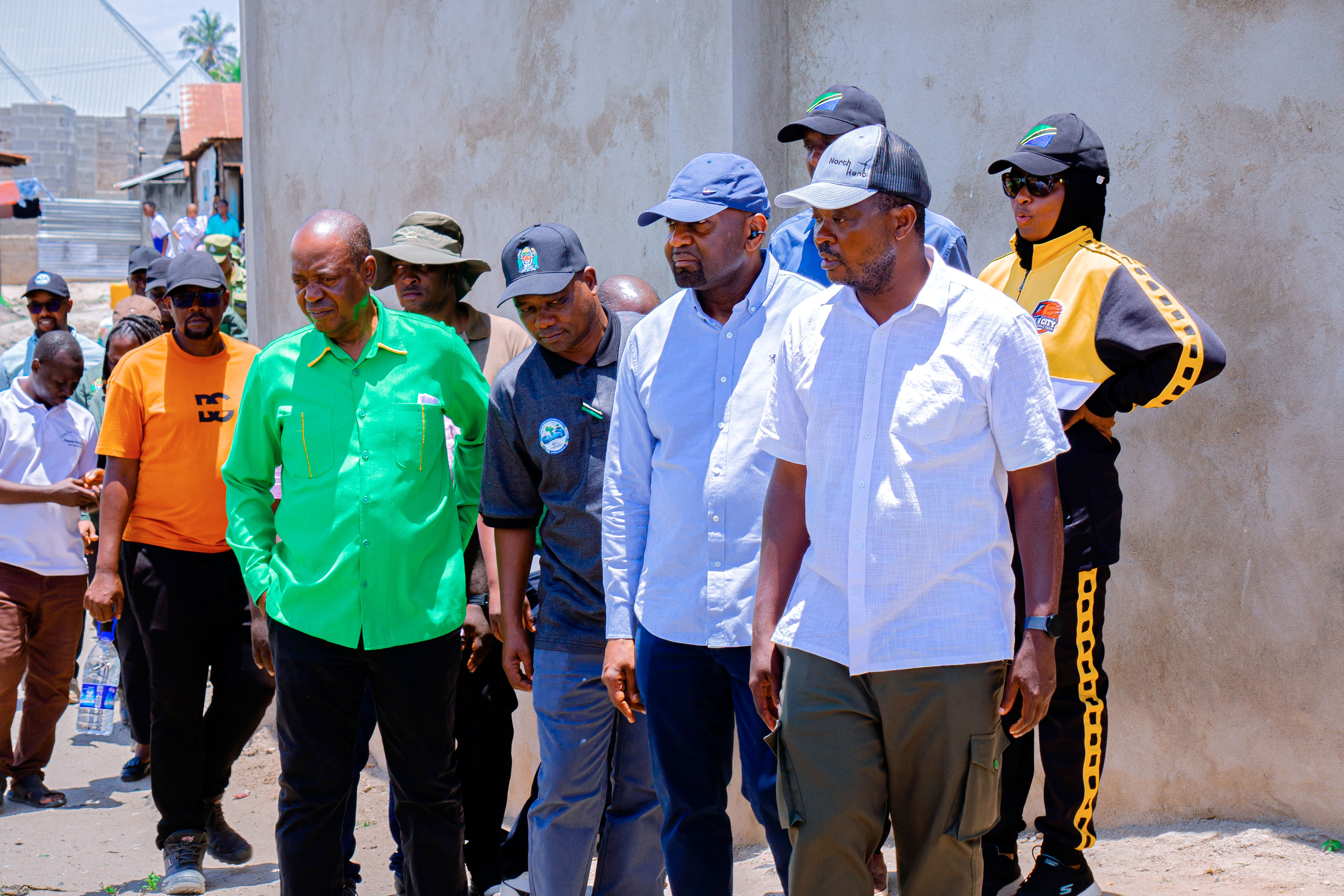
Environment Minister demands permanent waste management systems and protection of urban waterways as authorities begin removing homes from flood-prone areas along the Ng’ombe River.
By Habitat Media Reporter
DAR ES SALAAM: Tanzania’s government has directed authorities in Dar es Salaam to strengthen waste management, prevent pollution of rivers and drainage channels, and improve flood preparedness as concerns grow over the environmental risks facing the country’s largest city.
Minister of State in the Vice-President’s Office (Union and Environment), Engineer Hamad Yussuf Masauni, said municipal authorities must establish sustainable waste collection and disposal systems instead of relying on occasional clean-up campaigns or directives from senior government officials.
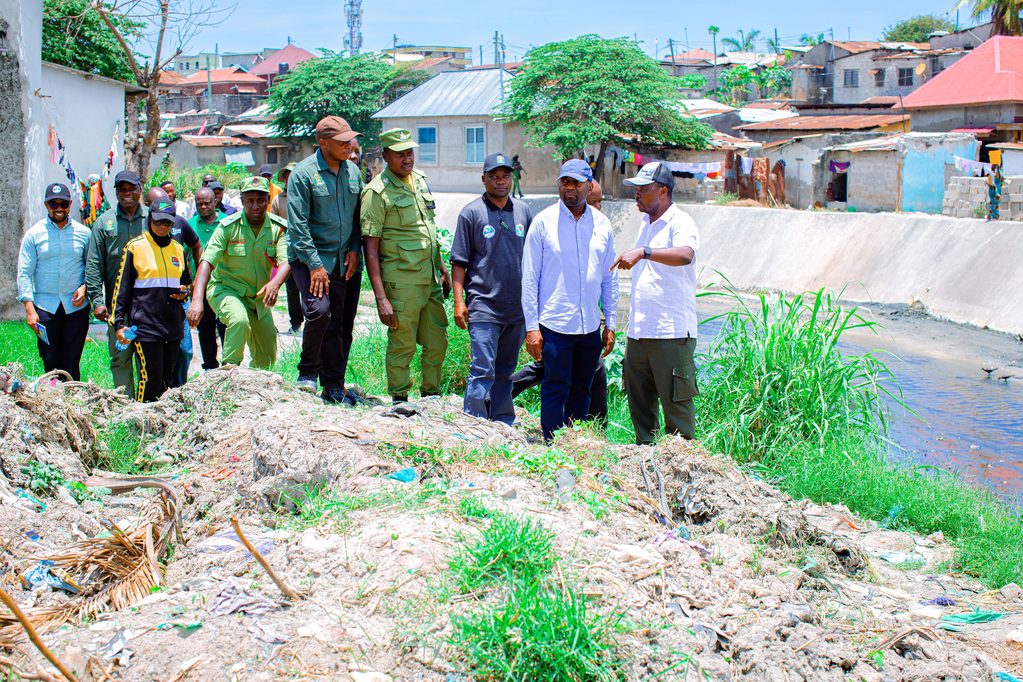
He issued the directive on October 11, 2026, during an inspection of sanitation and environmental conservation activities along the Ng’ombe River in Kinondoni District, where settlements near the river are particularly vulnerable to flooding.
Masauni warned that poor waste management, unplanned settlements and inadequate environmental protection measures were undermining efforts to keep Dar es Salaam clean, safe and resilient to extreme weather.
He stressed that environmental management must become a permanent responsibility of local government authorities, with clear accountability for maintaining sanitation and protecting waterways.
“Dar es Salaam is the face of the country,” Masauni said, emphasising that leaders at every administrative level must ensure that environmental protection is consistently implemented.
The Minister said the Vice-President’s Office would not tolerate poor implementation of sanitation and environmental conservation responsibilities.
Waste pollution and flood risks
The inspection of the Ng’ombe River highlighted the relationship between solid waste management, urban drainage and flood vulnerability.
When household refuse, plastics and other solid waste accumulate in rivers and drainage channels, they can obstruct water flow, increasing the risk of flooding during heavy rainfall.
Such pollution can also degrade aquatic ecosystems, contaminate water and create public health hazards for communities living along waterways.
Masauni called on municipal authorities to strengthen controls against indiscriminate waste disposal, particularly in areas affected by unplanned urban development.
Although he acknowledged the difficulties associated with informal and unplanned settlements, he insisted that authorities must enforce environmental protection measures and establish effective waste collection systems.
His directives come as the government seeks to improve preparedness for the potential effects of El Niño-related rainfall.
Heavy rains can expose weaknesses in urban drainage infrastructure, particularly where waterways have been narrowed, obstructed or polluted by accumulated waste.
For communities living close to rivers, the consequences can include flooded homes, displacement, loss of property and increased exposure to waterborne diseases.
The Minister urged regional, district and municipal authorities to take preventive action rather than waiting until flooding and environmental damage have occurred.
Residents ordered to leave vulnerable areas
Kinondoni District Commissioner Saad Mtambule said residents living near the Ng’ombe River had been instructed to vacate areas considered vulnerable to flooding.
He confirmed that demolition of houses in the affected locations had already begun as part of efforts to reduce the risks associated with heavy rainfall.
Mtambule said the district was also implementing public awareness campaigns to encourage residents to participate in sanitation and environmental conservation.
Waste collection activities were continuing alongside efforts to strengthen community involvement in protecting the environment.
However, the removal of homes from flood-prone areas also raises important questions about how urban authorities can balance environmental protection, disaster risk reduction and the welfare of affected households.
Long-term flood resilience requires not only the protection of waterways but also effective land-use planning, appropriate settlement management and measures to reduce the vulnerability of communities exposed to environmental hazards.
Turning waste into a resource
Beyond controlling pollution, Masauni urged authorities to recognise the economic and environmental value of waste.
He said properly collected and processed waste could become a source of income and employment rather than remaining a threat to public health and the environment.
The Minister called for stronger waste management systems that would allow discarded materials to be recovered, processed and put to productive use.
This approach is consistent with the principles of a circular economy, which seeks to reduce waste generation, extend the useful life of materials and recover resources through reuse and recycling.
For Dar es Salaam, improved waste separation, collection and recycling could help reduce the volume of refuse entering rivers, open spaces and drainage systems.
It could also create opportunities for community-based recycling initiatives and businesses involved in recovering plastics, organic waste and other reusable materials.
However, achieving these benefits requires reliable collection services, suitable processing facilities, public participation and consistent enforcement of environmental regulations.
Need for lasting solutions
The government’s latest intervention underscores the importance of addressing waste pollution and flood risks as interconnected urban environmental challenges.
Regular waste collection can help prevent drainage blockages, while protecting river corridors can reduce exposure to flooding and preserve the ecological functions of urban waterways.
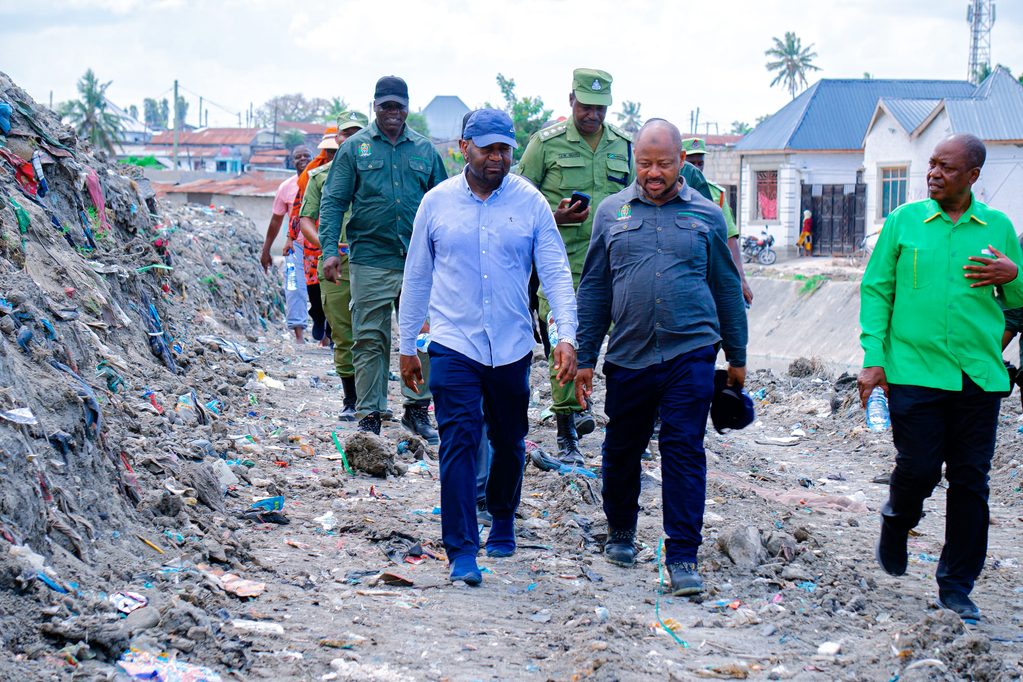
PHOTO CREDIT: VICE-PRESIDENT’S OFFICE
Public awareness campaigns also have a role to play, particularly in discouraging illegal dumping and encouraging households to dispose of waste responsibly.
Nevertheless, lasting improvements will depend on whether local authorities establish dependable systems that continue operating beyond ministerial inspections and periodic clean-up exercises.
For a rapidly expanding city such as Dar es Salaam, environmental resilience increasingly depends on integrating solid waste management, drainage maintenance, land-use planning and community protection.
The situation along the Ng’ombe River illustrates why preventive environmental management is essential.
Without sustained action, polluted waterways and vulnerable settlements will continue to expose communities to avoidable environmental and public health risks. The challenge now facing Dar es Salaam’s authorities is to translate the Minister’s directives into measurable improvements in waste collection, river protection and flood preparedness, while ensuring that vulnerable residents are not left behind.