


By Habitat Media Reporter
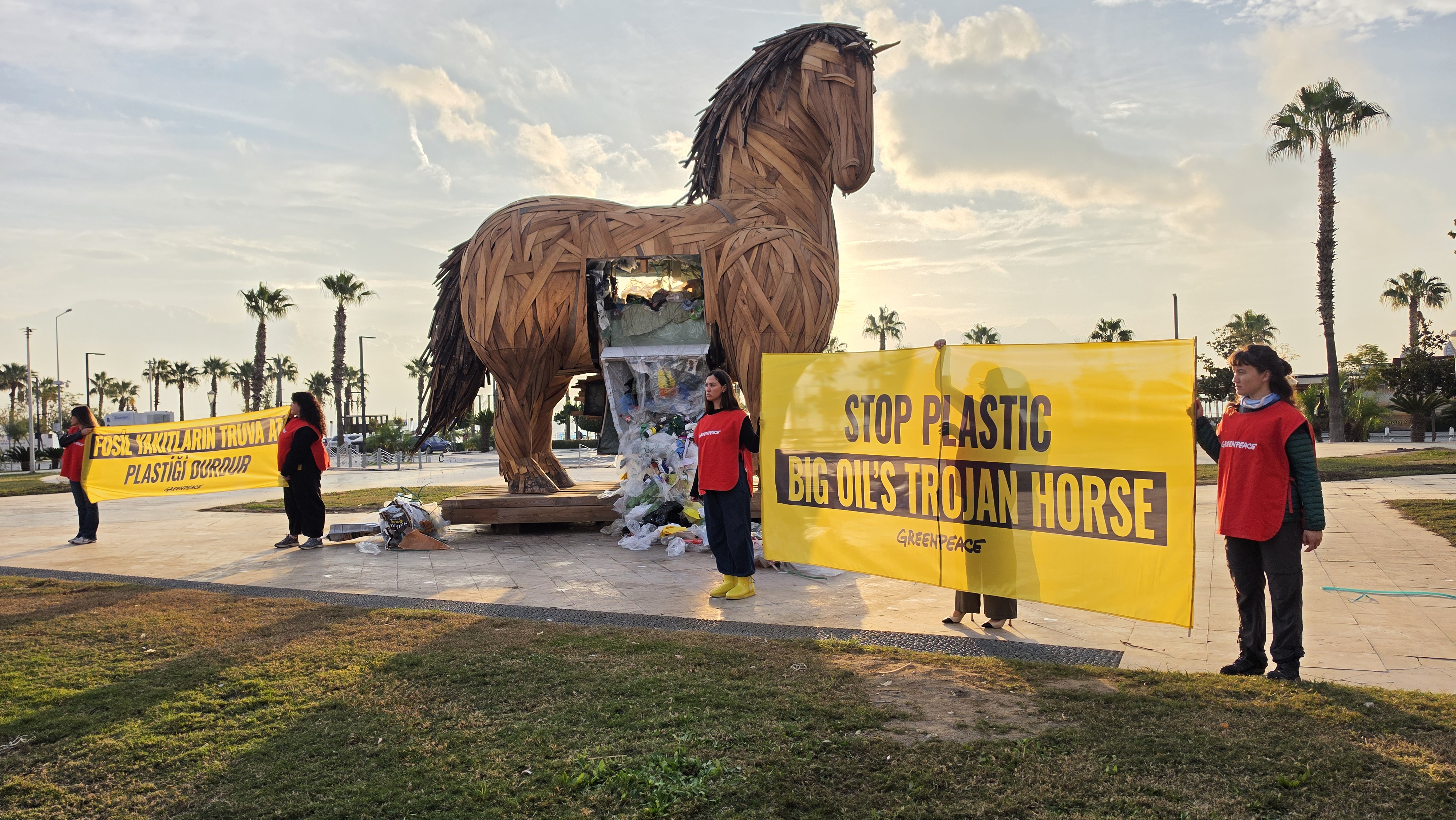
Antalya, Türkiye. Greenpeace International has unveiled a giant Trojan Horse installation at the United Nations climate conference COP31, warning that the fossil fuel industry is increasingly relying on plastic production to sustain demand for oil and gas and protect its profits.
The installation, launched on November 13, 2026, in Konyaalti Municipality, Antalya, uses the symbolism of the Trojan Horse to expose what Greenpeace describes as the hidden links between plastic production, fossil fuels and the climate crisis.
Created in collaboration with Danish artist Thomas Dambo as part of Greenpeace’s plastics campaign, the sculpture stands six metres tall and four metres wide. It releases plastic when a trapdoor in its belly opens, symbolising what the organisation says lies behind the industry’s growing reliance on petrochemicals.
The installation carries a message to world leaders attending COP31: plastic is Big Oil’s Trojan Horse.
Berk Butan, Social and Economic Systems Campaigner at Greenpeace Türkiye, said the installation draws on the ancient legend of Troy to illustrate the threat posed by the fossil fuel industry’s growing investment in plastics.
“The legend of Troy is a striking story deeply rooted in the ancient history of these lands. Just like in the myth, this horse – appearing as a gift from the outside – hides something within that threatens our lives. The fossil fuel industry is using plastic as an escape hatch,” he said.
Butan said Türkiye’s promotion of its Zero Waste initiative at COP31 should be accompanied by stronger measures to address plastic production and waste imports.
“Türkiye is hosting an historic moment. Now is the time to take a decisive stance and fight for true Zero Waste,” he said, calling for limits on plastic production and restrictions on plastic waste imports from other countries.
Greenpeace says plastic contributes to the climate crisis throughout its life cycle, from fossil fuel extraction and manufacturing to disposal.
It argues that continued expansion of plastic production allows oil and gas companies to maintain demand for fossil fuels at a time when governments are under pressure to accelerate the transition to renewable energy.
Fred Njehu, Pan-African Political Strategist at Greenpeace Africa, warned that the expansion of petrochemical industries could lock African countries into decades of fossil fuel dependence, pollution and environmental damage.
“The fossil fuel industry is using plastic production as a Trojan Horse to lock Africa into decades of continued extraction and pollution,” he said.
“As the world rightly demands a shift from fossil fuel sources to renewable energy, Big Oil is aggressively pushing petrochemicals as their escape hatch, exploiting our continent to protect their growing profits.”
Njehu said governments could not effectively address climate change while allowing fossil fuel companies to expand plastic production.
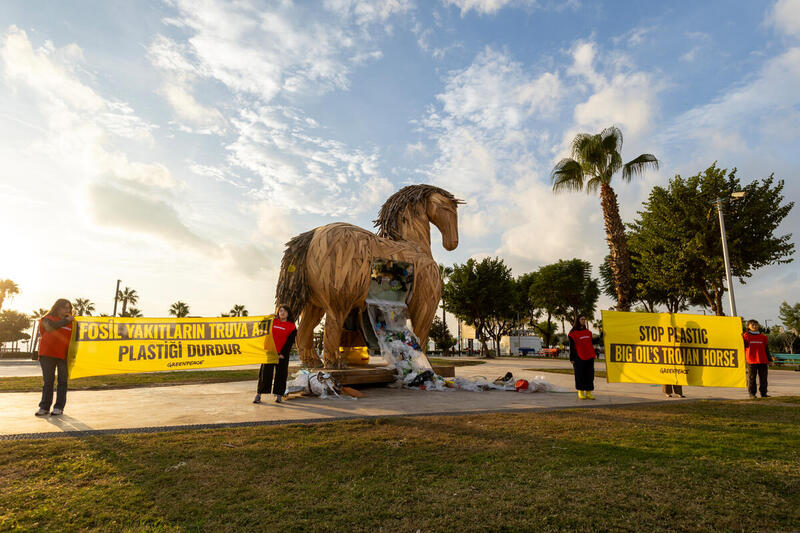
Created in collaboration with Danish artist Thomas Dambo for Greenpeace’s plastics campaign, the installation stands six metres high and four metres wide and poured out plastic when the trapdoor in its belly opened. It carries a message to world leaders gathering for climate negotiations: plastic is the big oil’s Trojan Horse.
He called on COP31 leaders to support a binding global plastics treaty that would reduce production at source and hold corporations accountable for the environmental and health impacts of their supply chains.
“COP31 must deliver real accountability: we demand a binding treaty that cuts plastic production at the source, and a commitment to finally make corporate polluters pay for the devastating impacts of their entire toxic supply chain on African frontline communities,” he said.
Dambo, the artist behind the installation, said his work uses recycled materials and waste to challenge excessive consumption and raise awareness about environmental problems.
“I build sculptures exclusively from recycled materials and trash to make people think of how we overproduce. Here at COP31, this Trojan Horse reveals what everyday plastic conceals: its connection to oil and gas,” he said.
He added that the installation was intended to encourage public reflection on the relationship between plastic consumption, fossil fuel production and climate change.
“Working with Greenpeace, I hope this horse sparks curiosity and sends a clear message: a healthier climate means cutting plastic production,” he said.
Jacob Kean-Hammerson, Global Plastics Policy Lead at Greenpeace USA, said governments needed to confront the influence of fossil fuel interests in global plastics policy.
“Plastic is Big Oil’s Trojan Horse – a way to keep profiting from fossil fuels and continued climate emissions and pollution,” he said.
He urged governments attending COP31 and the forthcoming Global Plastics Treaty negotiations to commit to reducing plastic production and supporting a just transition away from fossil fuels.
Greenpeace is calling on governments to adopt a strong Global Plastics Treaty that would cut plastic production at source, accelerate a just transition away from fossil fuels and support the expansion of reuse and refill systems.
Ahead of the next round of Global Plastics Treaty negotiations scheduled for March 2027, the organisation says the Trojan Horse installation is intended to draw attention to the fossil fuel industry’s influence over plastic production and the need for stronger international action.
It maintains that addressing plastic pollution requires more than improving waste management, arguing that governments must also tackle plastic production itself to protect communities, public health and the climate.