


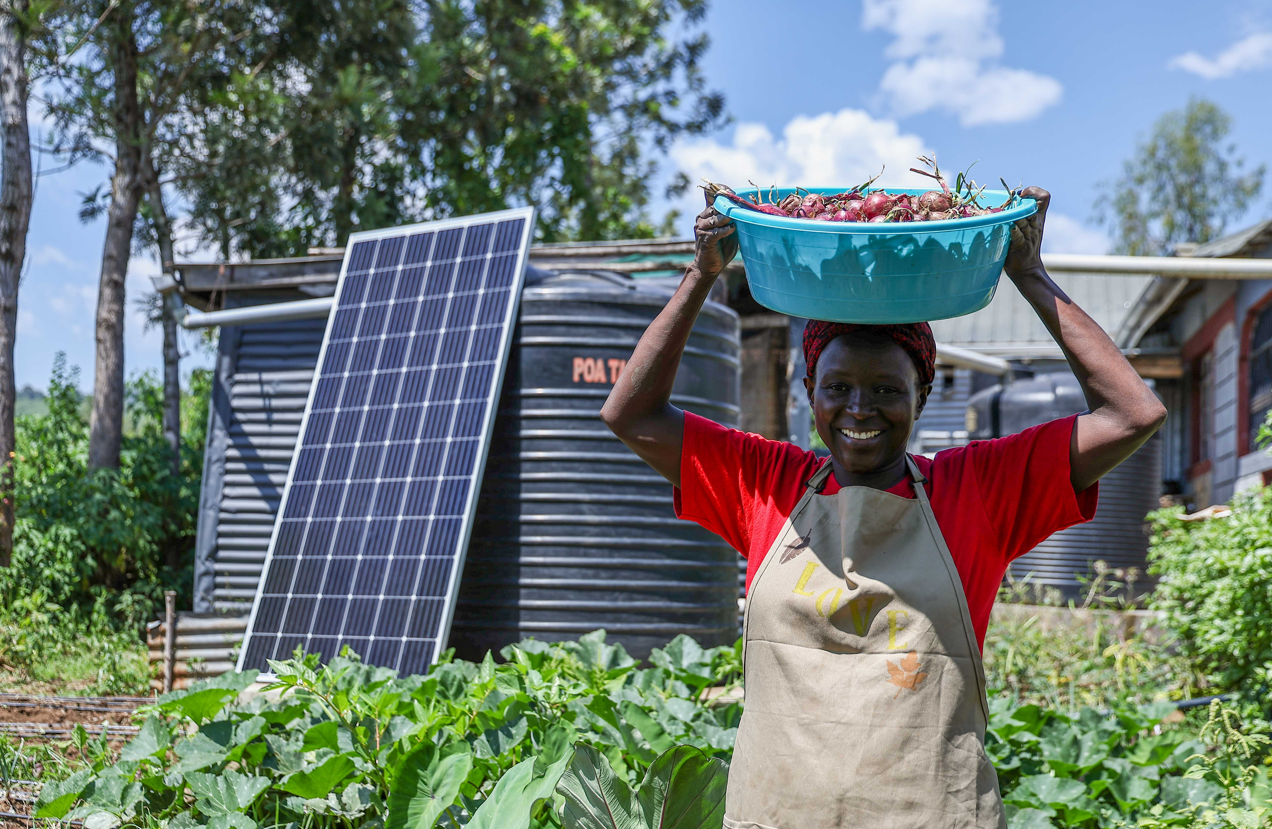
Nairobi. Africa is on course for a record year in solar power, with installations projected to rise by 45 per cent in 2026 as households, businesses and governments increasingly turn to the continent’s abundant sunshine to meet growing electricity demand.
The continent is expected to install about 17 gigawatts (GW) of solar capacity this year, equivalent to roughly 100,000 solar panels every day, according to a new analysis by energy think tank Ember and the African Tech Futures Lab.
The growth is spreading beyond Africa’s traditional solar markets, with 36 of the continent’s 54 countries expected to record their highest-ever annual solar installations in 2026. In 19 countries, installations are projected to more than double compared with the previous year.
Power Shift Africa, which highlighted the findings, says the figures challenge the long-standing narrative of Africa as a continent defined primarily by energy poverty, showing instead that a rapid home-grown clean energy transition is already taking place.
“Africa’s solar revolution is no longer something we’re waiting for – it’s happening right now,” said Mohamed Adow, director of Power Shift Africa.
“Across the continent, businesses and ordinary people are embracing solar at an extraordinary rate. For too long, Africa has been portrayed simply through the lens of energy poverty. These figures tell another story.”
Mr Adow said African countries were increasingly taking advantage of solar power as one of the world’s fastest-growing energy technologies, but urged governments and international financiers to respond by expanding access to affordable finance, strengthening electricity grids and investing in battery storage.
The report, The Take-off in African Solar That Official Statistics Can’t Yet See, estimates that solar installations increased by 25 percent in 2024 and 51 percent in 2025 before the projected 45 percent growth this year.
Growth spreads beyond traditional markets
Some of the fastest expansion is taking place outside Africa’s established solar markets.
Installations in the Democratic Republic of Congo are expected to increase by 544 percent in 2026, followed by Zimbabwe at 282 per cent, Egypt at 176 percent and Zambia at 117 percent.
South Africa, which has historically dominated the continent’s solar market, is expected to account for less than 20 percent of Africa’s installations this year—the first time its share has fallen below that level since 2019.
“Countries are already leapfrogging into faster, more secure, cleaner energy growth, and the governments that get ahead of it stand to gain all the benefits,” said Dave Jones, chief analyst at Ember.
Much of the expansion is occurring outside large utility-scale solar farms.
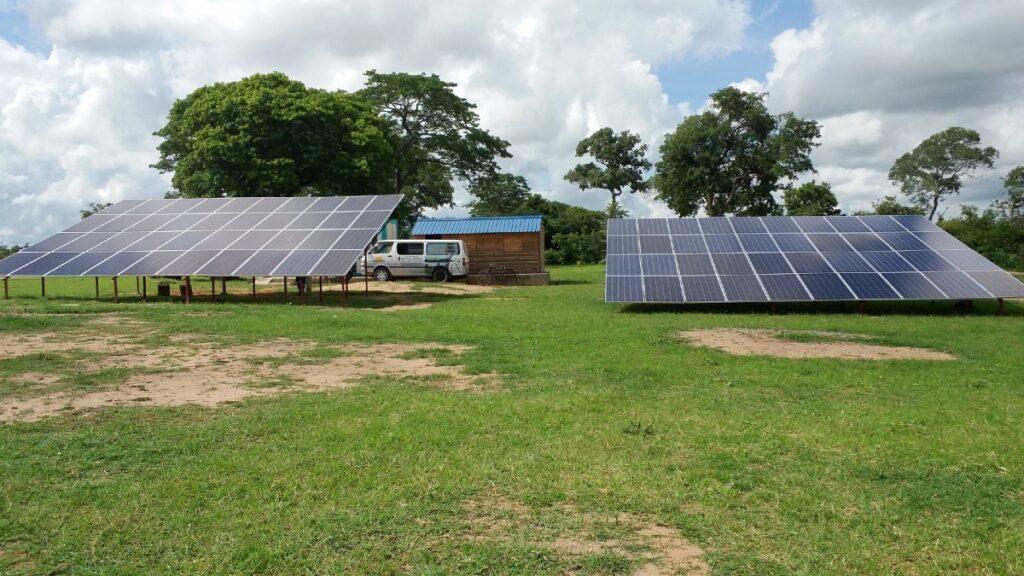
Ember and the African Tech Futures Lab estimate that about three-quarters of the solar capacity added across Africa between 2023 and 2025 was distributed solar, largely consisting of smaller systems installed by households and businesses.
The researchers say this rapid expansion is not being fully reflected in official statistics.
Only South Africa, Tunisia and Tanzania currently publish solar capacity data quarterly or more frequently, while just 14 African countries had published national solar capacity figures for 2025.
As a result, the researchers estimate that Africa installed about 12GW of solar in 2025, roughly twice the capacity captured by major international datasets.
“Across Africa, distributed energy resources are rapidly expanding, and in many cases, overtaking grid capacity,” said Joel Nana, research director at the African Tech Futures Lab.
He said policymakers now needed to determine whether these distributed systems would continue operating as a parallel electricity network that compensates for weaknesses in national grids, or whether they could be integrated into national systems to deliver wider benefits.
Solar begins to close Africa’s power gap
The scale of the expansion is also beginning to have a significant impact on Africa’s electricity supply.
The 17GW of solar expected to be installed in 2026 could generate about 23 terawatt-hours (TWh) of electricity annually, equivalent to about 2.3 per cent of the continent’s current electricity generation.
That amount is higher than Africa’s average annual growth in electricity demand, which stood at 2.2 percent between 2014 and 2024.
In more than half of African countries, the additional electricity expected from solar installations in 2026 is projected to exceed their historical annual growth in electricity demand.
In some countries, the impact could be particularly significant.
| Country | Electricity from 2026 solar installations as a share of current annual generation |
| Sierra Leone | 97% |
| Togo | 24% |
| Somalia | 21% |
| Djibouti | 21% |
| Democratic Republic of Congo | 14% |
| Comoros | 14% |
| Namibia | 12% |
| Liberia | 12% |
| Chad | 11% |
| Lesotho | 10% |
Africa urged to capture more value
While the growth in solar generation presents an opportunity to expand access to electricity, Power Shift Africa says African countries must also ensure that they capture more of the economic value created by the transition.
Mr Adow said Africa currently imports almost all of the solar panels it installs, limiting the potential for the boom to create local manufacturing capacity and skilled employment.
“Africa should be using this rapidly growing market to build our own manufacturing, create skilled jobs and power African industries with African renewable energy,” he said.
According to the report, about 94 per cent of the solar panels installed in Africa are currently imported from China.
African solar panel manufacturing capacity is expected to quadruple to about 3.5GW in 2026, as new factories come online in Egypt and Tanzania. However, much of that production is currently intended for export rather than African markets.
The rapid growth of solar, Power Shift Africa said, demonstrates an opportunity for African countries to expand electricity supply while reducing the risk of becoming increasingly dependent on imported fossil fuels.
The report, published on August 27, 2026, was produced by Ember in partnership with the African Tech Futures Lab.
The analysis uses Chinese customs export data and a new methodology to estimate solar capacity installed across African countries. The researchers estimate that about 73 per cent of Chinese solar panel exports are installed within six months, allowing them to estimate full-year 2026 installations using export data available through June.