


By Jenifer Gilla
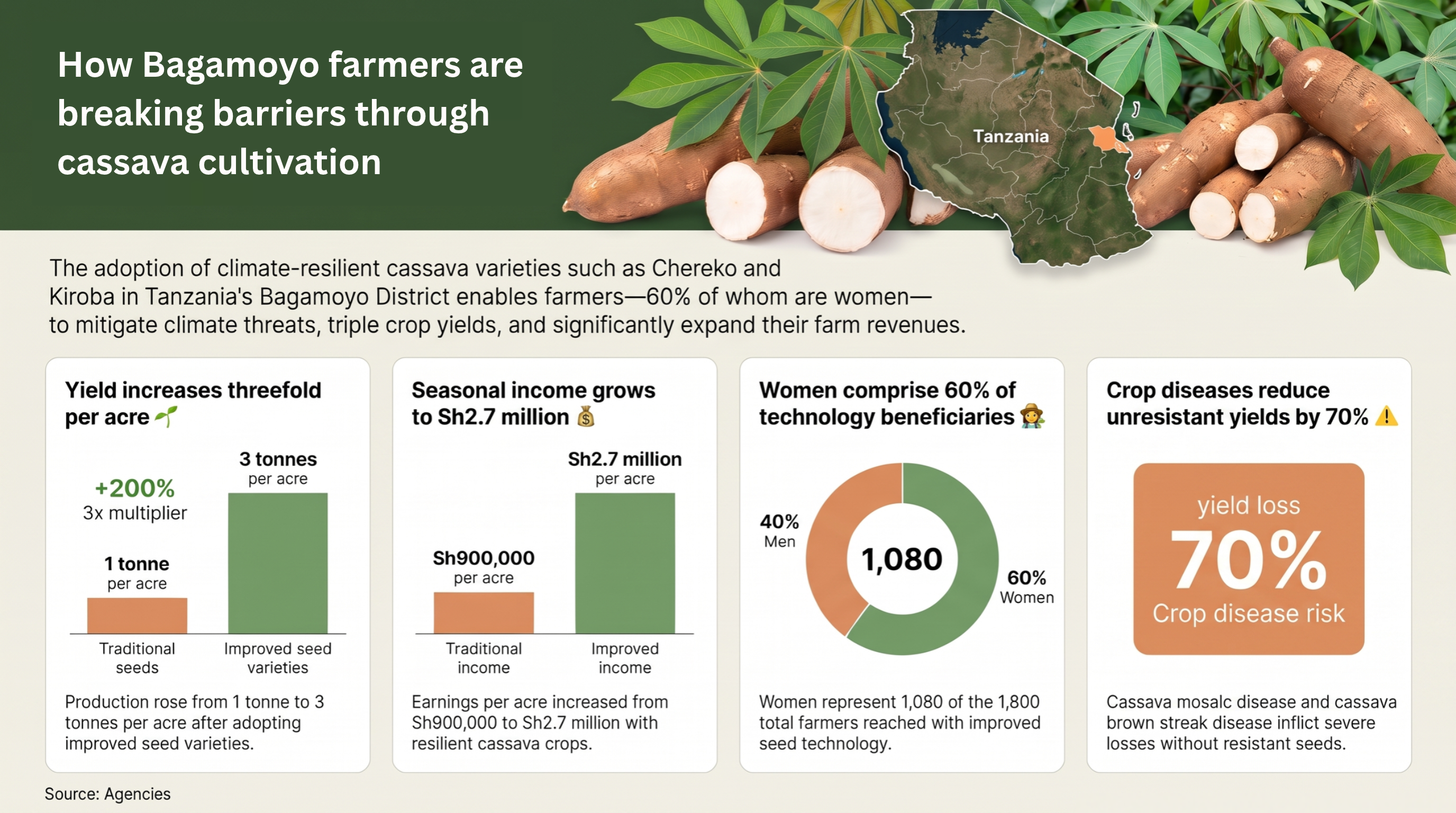
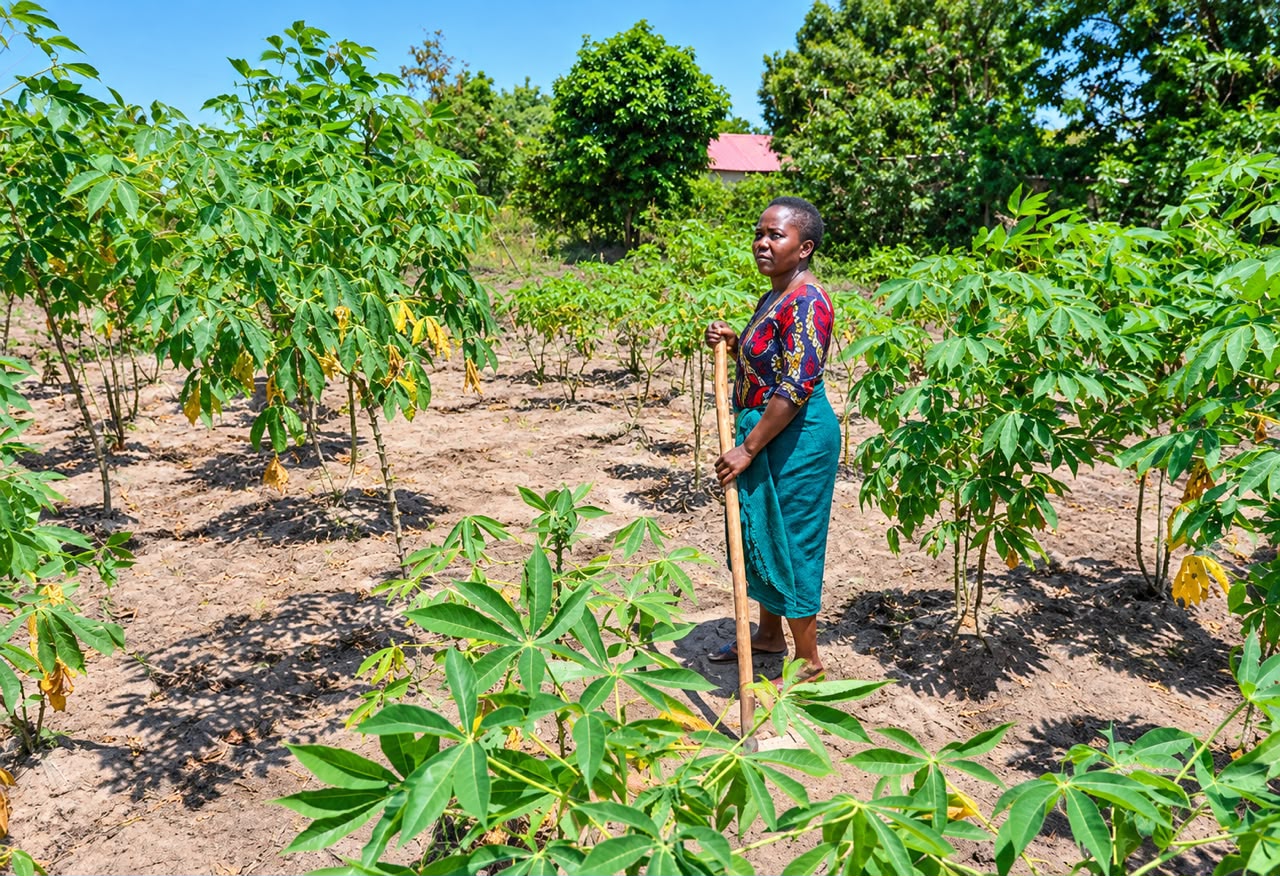
Pwani, Bagamoyo. For five years, Anna Macha, a cassava farmer in Kongo Village, Bagamoyo District, in Tanzania’s coastal Pwani Region, harvested only one tonne of cassava per acre, far below her expected yield of more than three tonnes.
She attributes the poor harvests to the susceptibility of traditional cassava varieties she cultivated to cassava mosaic disease (CMD), whiteflies, green mites and cassava brown streak disease (CBSD).
“There was a time when I considered abandoning farming. I kept thinking about the energy and money I invested in my farm, only to harvest one tonne per acre. When I sold it, I earned a paltry Sh900,000 (US$340). I borrowed money to prepare my farm for the following season,” she says.
However, last year, Macha changed her farming approach by adopting Chereko and Kiroba, drought-tolerant cassava varieties. Despite drought conditions and the presence of cassava mosaic disease and whiteflies, the crops survived and produced a better harvest.
During this year’s harvesting season in August, she harvested three tonnes from her one-acre farm, generating Sh2.7 million (approximately US$1,020) in sales revenue.
Beyond producing cassava for household consumption and commercial purposes, Macha also produces planting materials, which she sells to other farmers. She plans to expand her cultivation area to one and a half acres next season.
Her experience reflects the potential of improved agricultural varieties to strengthen women’s resilience to climate-related challenges and improve their livelihoods.
According to a 2026 CGIAR report, although women play a crucial role in global food production, they continue to face systemic barriers that undermine their productivity. These include the impacts of climate change, such as prolonged droughts, extreme heat, flooding, invasive plants and increased pest attacks that spread crop diseases.
Furthermore, a study published in the Journal of Agrarian Change in 2024 found that farms managed by women in Tanzania had a productivity gap of 16.2 per cent compared with those managed by men.
Zakayo Machunde, a senior cassava researcher at the Tanzania Agricultural Research Institute (TARI), says that although cassava can withstand some climate-related stresses, extreme conditions can exceed the crop’s tolerance, resulting in poor growth and reduced productivity.
The improved harvests reported by Macha and more than 100 other women among the 300 farmers in Kongo Village are attributed to the introduction of improved cassava varieties, including Kiroba and Chereko, intended to strengthen resilience to climate-related challenges.
The International Institute of Tropical Agriculture (IITA) introduced the varieties to the community in 2023 following research activities that evaluated nine improved cassava varieties.
Edda Mushi, an IITA researcher, says the introduction was carried out through a project known as Building an Economically Sustainable Cassava Seed Systems (BASICS II), which aims to increase awareness, stimulate demand and improve farmers’ access to improved cassava varieties.
The initiative used experimental plots known as “Demand Creation Trials” to introduce the varieties.
These trials gave farmers, particularly women, opportunities to evaluate improved varieties under local production conditions, multiply planting materials and establish reliable community sources of quality cassava stems.
According to Mushi, Macha is among the farmers who have made significant progress in producing cassava planting materials. She has become a model farmer because she sees the crop as an opportunity to improve her livelihood.
Building on these achievements, IITA is working with Macha and other farmers in Kongo Village in 2026 to evaluate two newly registered improved cassava varieties: TARICASS6 (Kiwango) and TARICASS7 (Kipato).
The initiative seeks to expand the genetic diversity of improved cassava varieties available to farmers, giving them more options suited to their production needs and preferences.
The project’s focus on empowering women farmers through access to improved agricultural technologies, information and capacity-building opportunities aligns with the objectives of the Belém Gender Action Plan, adopted at the United Nations Climate Change Conference (COP30) in Brazil in November 2025.
For another farmer, Mwamvua Ndago, adopting improved cassava varieties has also helped reverse years of poor harvests.
She recalls that two years ago, she harvested only half a tonne of cassava from her one-acre farm after excessive rainfall caused the roots to rot. The losses left her struggling financially, as she could not even recover the money invested in farming.
After receiving training last year, she planted the Chereko variety. Despite heavy rainfall, the crop performed well, allowing her to harvest two and a half tonnes, compared with the one tonne she harvested two years earlier.
Women lead in production
Aloyce Shirima, an agricultural officer at Bagamoyo District Council, says women account for 60 per cent of farmers who have accessed improved cassava planting material technology in the district.
Of the 1,800 farmers reached, 1,080 are women.
Shirima says adopting improved varieties alongside good agronomic practices has contributed to increased cassava production, with yields rising from approximately three tonnes to between six and nine tonnes per hectare.
The increase in production has also been accompanied by the expansion of cassava-related businesses, including the sale of fresh cassava, processing and the production of various cassava products.
Challenges remain
Despite the progress, women involved in cassava farming continue to face challenges, particularly limited access to land and capital.
Ederick John, a public relations officer at the Environmental Conservation Community of Tanzania (ECCT), says these constraints undermine women’s efforts to improve their livelihoods.
“Without secure land ownership or access to affordable credit, women farmers may struggle to invest in climate-resilient farming technologies. Those who rent plots may also be reluctant to make long-term investments in soil conservation and sustainable farming practices, leaving them more vulnerable to crop failures, declining incomes and food insecurity,” John says.
Macha also points to limited access to modern climate adaptation technologies, including cassava drying equipment for use during the rainy season, modern storage facilities and knowledge on how to cope with rising temperatures, flooding and drought.
She says these challenges continue to limit farmers’ ability to expand production, forcing them to cultivate smaller areas because of fears of financial losses.
What needs to be done
To achieve gender equality in food production, the CGIAR report recommends creating opportunities for women to become leaders, innovators and active participants in decisions concerning resources and agricultural development.
John recommends educating women on the proper use of agricultural technologies to ensure they are not left behind, noting that many farmers do not recognise the importance of adopting such technologies.
He also calls for communities to be educated about women’s land ownership rights, while encouraging men to support the agenda.
According to him, addressing these barriers would help women access land and invest in climate-resilient farming practices.
“For women, access to land and participation in decisions about income are also essential to ensure that the benefits of new technologies improve their lives. Therefore, during our meetings with farmers, we educate men about the importance of allowing their wives to own land,” Shirima says.