


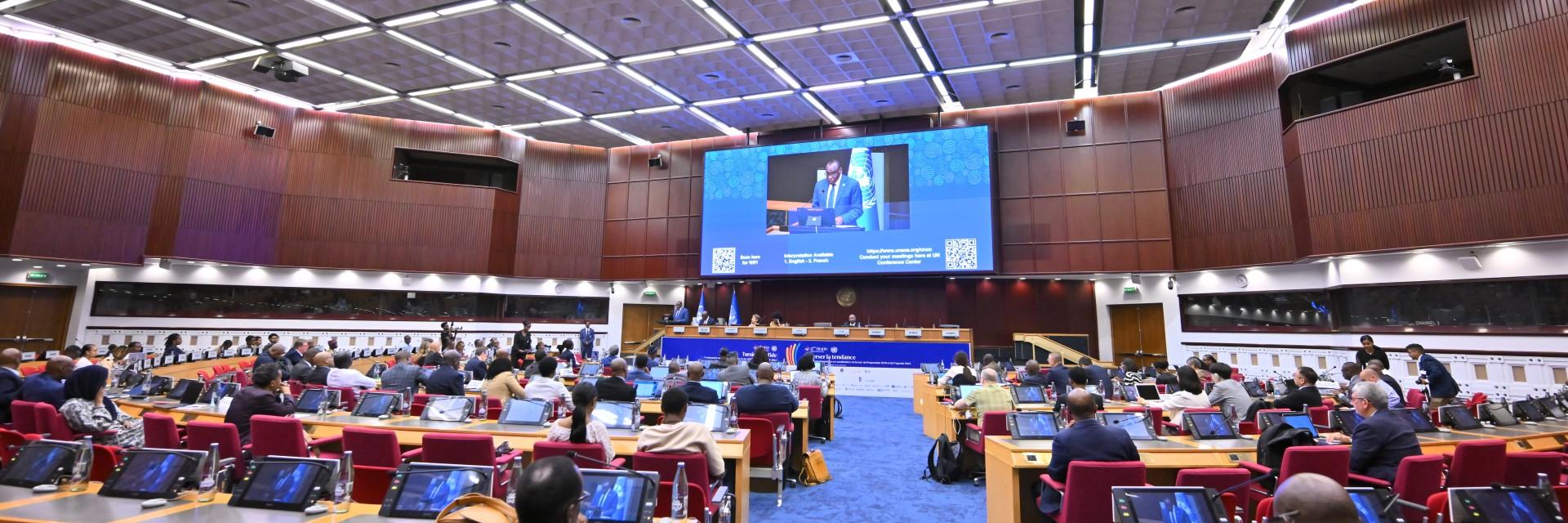
Addis Ababa, Ethiopia. African leaders and policymakers have called for stronger coordination and urgency in harnessing science, technology and innovation (STI) to accelerate progress towards the global 2030 Agenda and the African Union’s Agenda 2063.
The call was made on April 26, 2026 at the opening of the Eighth African Science, Technology and Innovation Forum, held ahead of the 12th Africa Regional Forum on Sustainable Development in Addis Ababa.
Held under the theme of advancing development through transformative and coordinated action in science, technology and digital innovation, the forum has convened ministers, senior government officials, private sector leaders, academics and civil society organisations from across the continent.
Ethiopia’s Minister for Innovation and Technology, Belete Molla, said STI must be treated as a practical development tool rather than a luxury for developed nations. He linked innovation to sustainability, citing Ethiopia’s investments in reforestation, electric mobility, artificial intelligence, data infrastructure and peaceful applications of nuclear science in sectors such as energy, agriculture and health.
Another minister, Berkeley, emphasised the need for stronger continental cooperation, noting that no country can innovate in isolation. He called for enhanced science diplomacy, harmonised systems and deeper collaboration across borders.
Uganda’s Minister for Science, Technology and Innovation, Monica Musenero Masanza, said Africa has made progress in recognising STI as central to economic transformation, industrialisation and job creation. However, she cautioned that implementation remains weak.
“Africa is strong at convening but weak at continuing,” she said, warning that initiatives often suffer from fragmentation, weak monitoring and limited follow-through.
Drawing from Uganda’s experience, she highlighted efforts to link research with production and markets, describing it as closing the “black box” between innovation and the real economy.
The Executive Secretary of the United Nations Economic Commission for Africa, Claver Gatete, urged African countries to act with urgency, warning that delays could cost the continent its place in the next wave of global transformation.
“For Africa, the margin for delay has disappeared. The cost of inaction is rising,” he said.
Mr Gatete noted that despite growing opportunities in emerging technologies, Africa continues to face significant gaps. Internet penetration stood at just 36 per cent in 2025, with disparities between urban and rural areas as well as between men and women. The continent also accounts for only 0.6 per cent of global patent applications, despite having nearly one-fifth of the world’s population.
“These are signals of untapped potential, but also of urgent gaps we must close,” he said.
He stressed that STI is not optional but foundational to achieving both global and continental development goals, raising a key question: whether Africa will remain a consumer of technologies developed elsewhere or become an active player in shaping them.
Mr Gatete cited examples of innovation already delivering impact across Africa, including climate-smart agriculture in Kenya and drone-based medical delivery systems in Rwanda.
To scale such gains, he outlined five priorities: aligning innovation with economic transformation, investing in digital public infrastructure, building future-ready skills, strengthening regional coordination and ensuring reliable, sustainable energy supply.
He said the African Continental Free Trade Area provides an opportunity to harmonise regulations, expand digital markets and develop regional value chains, particularly in pharmaceuticals and digital services.
Mr Gatete also pointed to an upcoming regional consultation on artificial intelligence governance as a chance for Africa to shape global standards and ensure emerging technologies reflect its priorities.
“The decisions we take here and the partnerships we forge will determine whether Africa becomes a contributor of global solutions or remains a consumer,” he said.
Other participants at the forum include senior officials from the African Union and the United Nations system, among them Rita Bissoonauth and Saidou Madougou.