


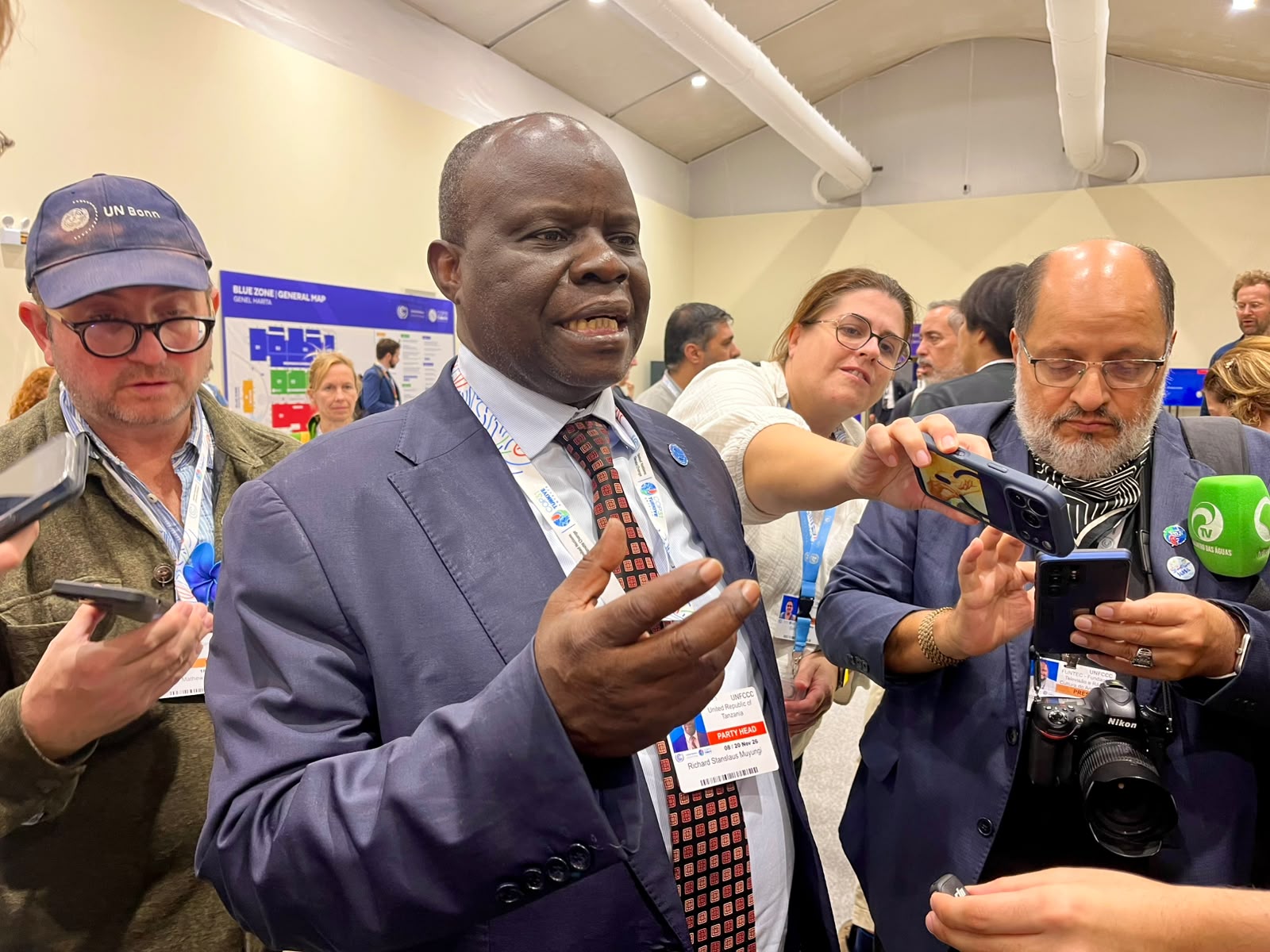
Permanent Secretary in the Vice-President’s Office, Dr Richard Muyungi, speaks to journalists and other stakeholders in Antalya, Türkiye, on November 21, 2026, following a meeting between COP31 President Chris Bowen and the G77 and China, where discussions focused on a just energy transition, climate finance and developing countries’ right to utilise their natural resources.
By Habitat Media Correspondent
Antalya, Turkiye. Tanzania has reaffirmed its position that countries should retain the right to use their natural energy resources as they pursue a just transition, arguing that national economic priorities and development needs must be considered in global efforts to address climate change.
The position was outlined on November 21, 2026, by the Permanent Secretary in the Vice-President’s Office, Dr Richard Muyungi, following a meeting between COP31 President Chris Bowen and the Group of 77 (G77) and China, representing developing countries.
Dr Muyungi said countries remained divided over how to address global warming, particularly proposals to accelerate the transition away from fossil fuels, with the draft COP31 outcome document lacking a specific provision calling for accelerated action to phase out their use.
“The draft outcome document does not contain a provision calling for accelerated steps to move away from fossil fuel energy sources. Consultations will therefore continue until it becomes clear that member states have reached a common position,” he said.
He said Tanzania’s position was that its natural energy resources should remain part of its development pathway, stressing that their use could help lower production costs and improve efficiency across economic activities.
The debate reflects broader differences among countries over how to achieve a just energy transition while balancing climate commitments, energy security, affordability and economic development.
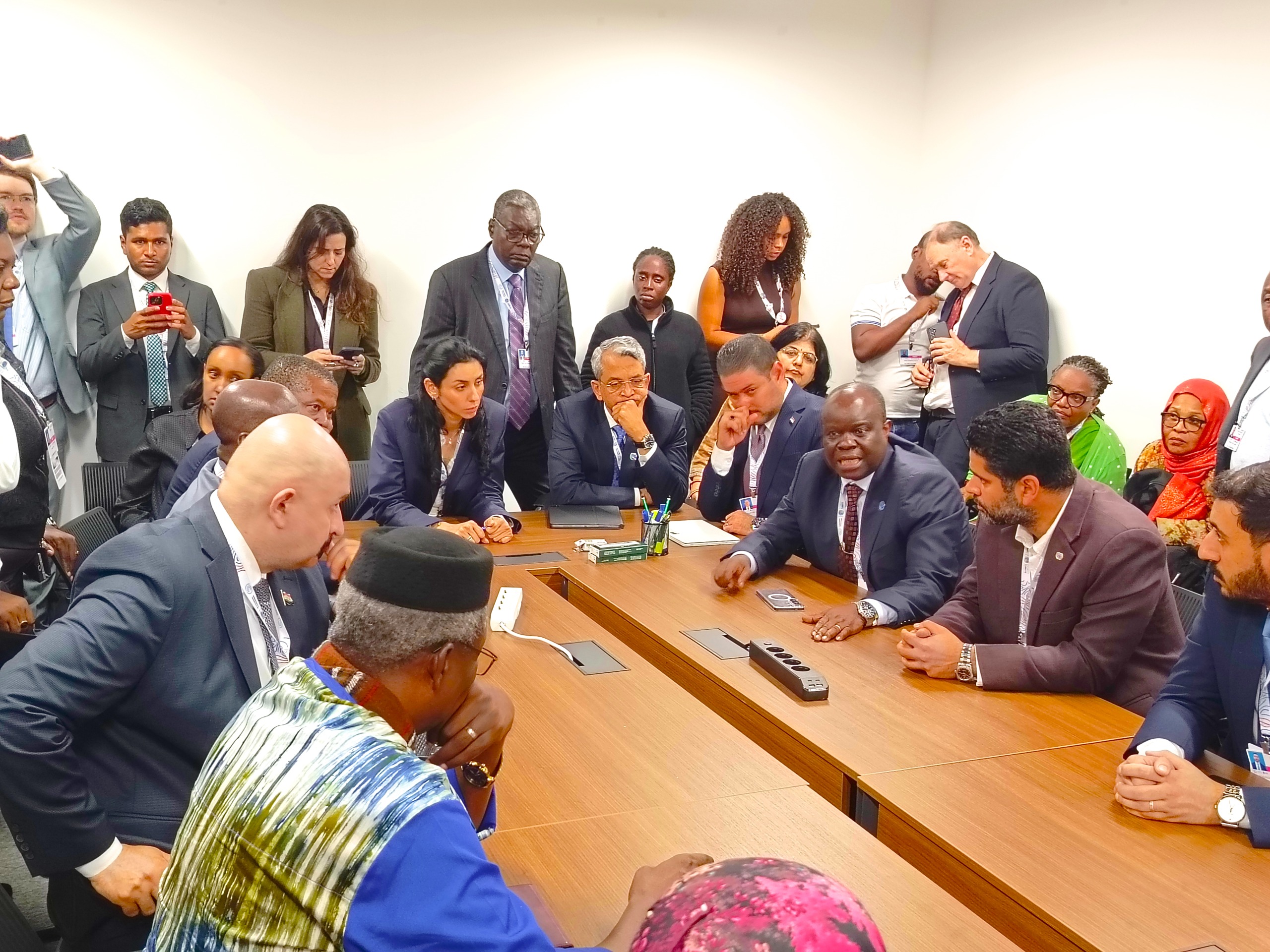
Dr Muyungi said countries that produce fossil fuels had yet to demonstrate readiness to reopen the issue and reach an agreement on accelerated measures to move away from their use.
He noted that similar disagreements dominated discussions at COP30 in Brazil, which ended without including a call to phase out fossil fuels in its final outcome document.
Beyond the energy transition debate, the meeting also addressed the need to expand access to climate finance, particularly grants and concessional loans for developing countries and communities on the frontlines of climate change.
Dr Muyungi said developing countries needed greater access to financial resources to strengthen their capacity to respond to climate impacts and implement climate action.
Trade and climate change also featured in the discussions, with developing countries raising concerns over trade barriers linked to the carbon content of goods they produce.
He said such restrictions presented additional challenges for developing economies, highlighting the need for international climate and trade policies to take into account the different economic circumstances and capacities of countries.
COP31 entered its second day of extended negotiations on November 21, following the scheduled conclusion of the summit on November 20 in Antalya, Türkiye.
Delegates from nearly 200 countries continued negotiations amid disagreements over the future of fossil fuels and the measures needed to accelerate the global energy transition.