


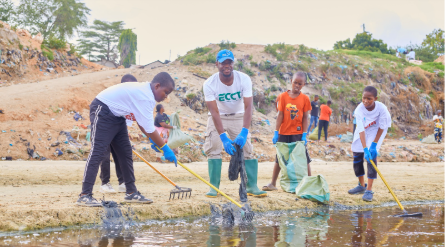
Dar es Salaam. Tanzania is strengthening its footprint in the global environmental movement after a Dar es Salaam-based initiative, GLFx Msimbazi, was admitted into an international network championing sustainable land use and ecosystem restoration.
The chapter, led by the Environmental Conservation Community of Tanzania (ECCT), becomes one of five new African initiatives joining the GLFx network this year under the umbrella of the Global Landscapes Forum (GLF). The announcement was made in Bonn, Germany, on February 19, 2026.
GLF is a leading knowledge-led platform and community focused on sustainable land use worldwide. Through its global network of local chapters known as GLFx, it connects grassroots organisations working on landscape restoration, climate adaptation and biodiversity conservation.
Tanzania’s Msimbazi chapter
GLFx Msimbazi is a women-led initiative working to restore degraded ecosystems in Tanzania, particularly through mangrove restoration and coastal regreening. The chapter also engages women and youth in ecopreneurship, tackles plastic waste and promotes sustainable fashion as part of broader environmental conservation efforts.
By joining GLFx, the Tanzanian initiative will gain access to new partnerships, learning platforms, global exposure and seed funding opportunities to scale up sustainable landscape management.
“Joining the GLFx network is a tremendous opportunity for ECCT. It empowers our team to exchange knowledge, amplify community-led restoration, and scale innovative environmental solutions. Being part of this global platform strengthens our capacity to inspire youth and women, drive climate action, and build a sustainable, resilient future for Tanzania,” the GLFx Msimbazi team said in a statement.
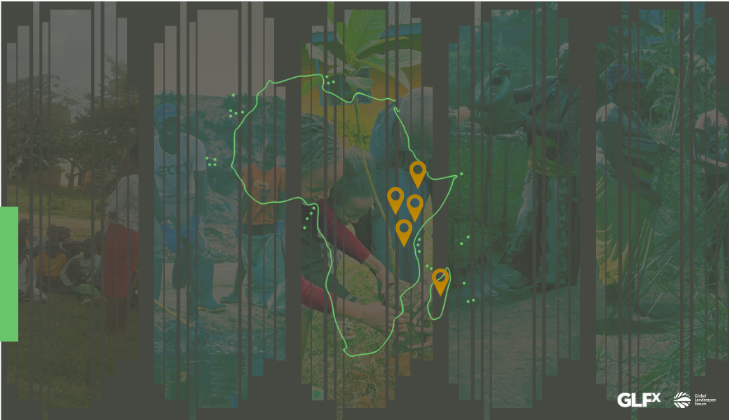
Five African chapters join in 2026
Across Africa, four other chapters have joined the network this year.
In Ethiopia, GLFx Sidama becomes the country’s first GLFx chapter. Led by the Integrated Women’s Development Organization, it focuses on restoring communal and private farmland while expanding women-based small farm management. The initiative seeks to address land degradation, climate change, gender inequality, unemployment and low farm productivity.
“This is the first time that our organization has had the chance to collaborate with different community-based organizations, associations, nongovernmental organizations, researchers and funding agents at the global level. It will help expand best practices and successful stories to other communities,” the GLFx Sidama team said.
In Kenya, GLFx Machakos, led by the Kijani Mtaani initiative, is restoring degraded landscapes by promoting local knowledge, inclusive participation and long-term environmental stewardship. The project co-designs nature-based solutions with young people and local communities, focusing on restoration, climate resilience, learning and care.
“What truly drives our work is seeing communities, especially young people, reconnect with their land and realise their power to care for it and shape healthier, more resilient neighbourhoods for the future,” said Sandra Kwamboka, Communications Officer at Kijani Mtaani.
Madagascar’s GLFx Sambirano, led by SoaRoots ReForest, is a women-led social enterprise supporting reforestation initiatives. Working with farmers, schools, companies and local authorities, it integrates circular economy principles, agroforestry, food security and improved livelihoods in both dry and moist forest ecosystems.
“We are in service of reforestation that transforms lives and landscapes, and for us, joining GLFx means growing through diversity, collaboration and recognition,” the GLFx Sambirano team said.
Meanwhile, GLFx Kalangala in Uganda is led by Beautiful Periods Uganda and is based on the Ssese Islands of Lake Victoria. Established within the School Food Forest Initiative, it helps communities restore degraded land while improving nutrition and livelihoods through self-sufficient food systems.
The chapter works with youth and women in agroforestry, tree nursery management and environmental education, while also addressing menstrual health and hygiene.
“Being a part of the GLFx network connects us to a worldwide group that cares about restoration led by local people and learning together. For our team, this is a chance to make sure the voices of island groups in Kalangala are heard, to learn from others in different areas, and to get better at restoring nature while also improving how people live,” said Namulindwa Brendah, co-founder of Beautiful Periods Uganda.
A growing global movement
The 12 new chapters were selected from 818 applicants and now join 50 existing GLFx chapters operating in 33 countries. Together, the network engages more than 70,000 people across 400 landscape restoration activities involving both ecosystems and the communities that depend on them.
Beyond Africa, new chapters this year span Asia-Pacific and Latin America, including initiatives in Indonesia, Papua New Guinea, Vanuatu, Argentina, Brazil, Ecuador and Mexico. Many of the new chapters are led by women, Indigenous peoples, youth and Afro-descendant communities, with a strong focus on climate adaptation, biodiversity conservation and green entrepreneurship.
Gerald Nkusi, Coordinator of GLFx Virunga in Uganda, said the network plays a crucial role in connecting grassroots projects to global partners.
“GLFx is exceptional at connecting us with the key partners and institutions we need to talk about scaling our Food Forest project, and with landscape leaders who are eager to join us in restoring landscapes, which family farmers depend on,” he said.
Ana Yi, GLFx Coordinator at the Global Landscapes Forum, said the expansion reflects the growing demand for locally rooted restoration models.
“GLFx embodies the aspirations of locally-rooted organizations to connect, collaborate and restore the landscapes that sustain life and community wellbeing. Together, we are shaping a trust-based partnership model where tailored opportunities and resources go hand in hand with supporting and advocating for local agency and landscape leadership, ultimately making global restoration goals grounded and possible,” she said.
For Tanzania, the inclusion of GLFx Msimbazi signals both recognition and responsibility — placing community-led restoration at the centre of the country’s response to climate change and environmental degradation.