


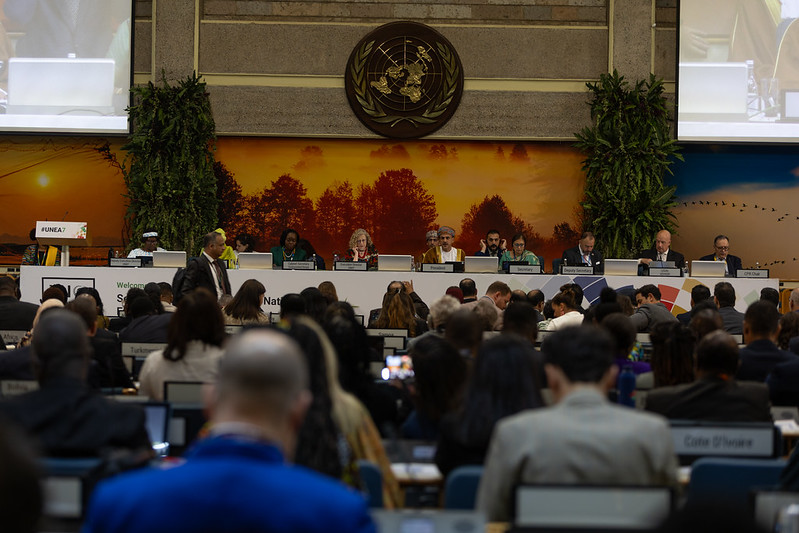
Nairobi. The seventh session of the United Nations Environment Assembly (UNEA-7) has opened in Nairobi at a moment global environmental leaders describe as critical for the planet’s future.
The meeting comes at a time when environmental pressures are intensifying, with accelerating climate impacts, ecosystem degradation, pollution, and rising geopolitical tensions testing the global governance system.
UNEA-7, scheduled for December 8–12, 2025, is therefore being framed as a critical moment for multilateral environmental action, bringing together leaders, ministers, policymakers, scientists, and diverse stakeholders.
Speaking on issues expected to feature prominently, Tanzania’s representative and Chair of the African Group of Negotiators (AGN), Richard Muyungi, said the Assembly will deliberate on 15 agenda items, all carrying significant weight.
Among them are strengthening the global response to the management of fires, the environmental sustainability of artificial intelligence systems, the environmental dimensions of antimicrobial resistance, and improved global action on the massive influx of sargassum seaweed blooms.
Other topics include the active protection of deep-sea ecosystems, promoting sustainable solutions through sport for a resilient planet, and accelerating global action to enhance the climate resilience of coral reefs.
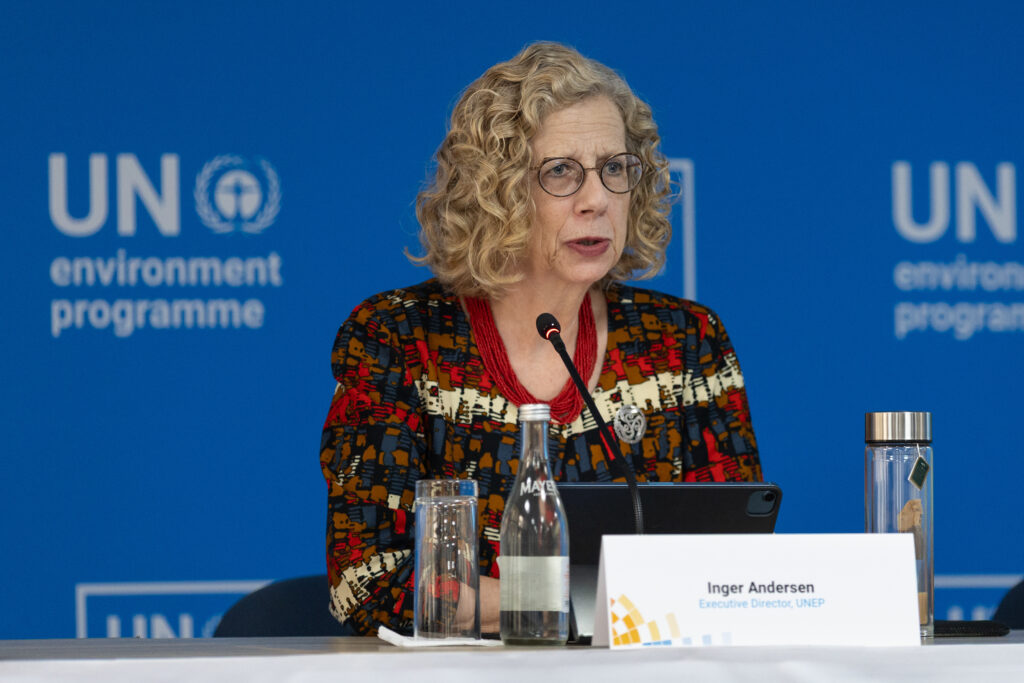
UNEP Executive Director, Inger Andersen said the Assembly aims to shape responses to what she termed “the three planetary environmental crises: the crisis of climate change; the crisis of nature, land and biodiversity loss, which includes desertification; and the crisis of pollution and waste.”
Describing UNEA as “the world’s most influential environmental decision-making body,” Ms Andersen underlined its historical role in shaping the global environmental agenda. However, she noted that the current moment requires more than routine commitments.
“This year, this Assembly must draw on its history of unity to again deliver sustainable solutions for a resilient planet,” she said. She warned that environmental challenges are accelerating and that global temperatures are likely to exceed 1.5°C within the next decade, with consequences that intensify “with every fraction of a degree.”
She added that evidence of environmental degradation continues to mount. “Ecosystems are disappearing and land is degrading. Dust storms are intensifying. Toxins continue to pollute our air, water and land,” she said.
Ms Andersen also pointed to growing geopolitical instability, noting that “the world is in turbulent geopolitical waters, which adds stresses and strains to multilateral processes.”
Despite this, UNEA-7 is seen as a platform for advancing actionable solutions.
Ms Andersen said the newly released Global Environment Outlook (GEO-7) outlines “pathways to transformation that would deliver higher global Gross Domestic Product, fewer deaths, less hunger and less poverty – all through action on climate, on nature and on pollution.”
She said this links environmental action to economic growth, public health and development.
She also referenced recent global milestones that reinforce multilateral momentum.
These include advances made at the 2025 climate talks in Belém, the entry into force of the BBNJ Agreement on marine biodiversity in areas beyond national jurisdiction, and the establishment of the new Intergovernmental Science-Policy Panel on Chemicals, Waste and Pollution. Many of these developments trace their origins to past UNEA resolutions.
UNEA-7 President Abdullah Bin Ali Al-Amri said the Assembly comes at a decisive moment, with communities confronting “the intertwined impacts of climate change, land, nature and biodiversity loss, and pollution and waste.”
He said these challenges test economies, societies and “the trust in our collective will.”
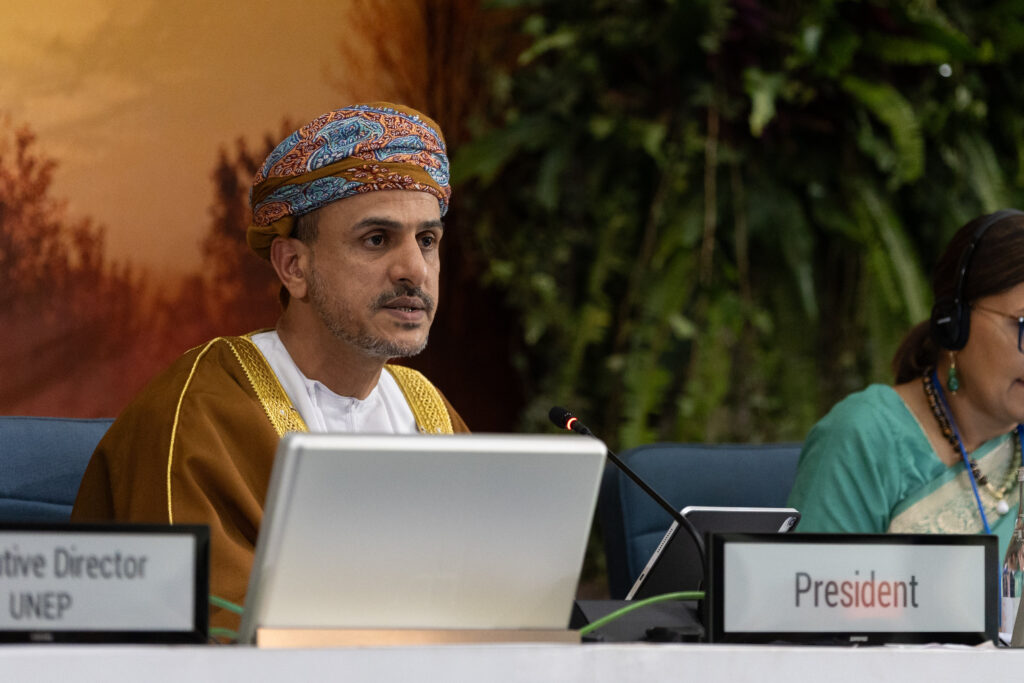
He identified three pillars essential for progress: ambition, solidarity and science. According to him, ambition is needed because “incrementalism is insufficient,” solidarity because resilience “is built together or not at all,” and science because it must guide decision-making.
A central task for UNEA-7 is the consideration of UNEP’s Medium-Term Strategy (2026–2029) and Programme of Work and Budget (2026–2027).
These will guide how UNEP supports countries in environmental governance and capacity building.
Al-Amri said success depends on “resolutions that are implementable, guided by science, and equipped with follow-up mechanisms,” supported by a well-resourced strategy and programme of work.
As host, the Kenyan government stressed the broader implications for development and resilience.
Cabinet Secretary for Environment, Climate Change and Forestry, Dr Deborah Barasa, said, “The time for small, cautious steps has passed; what we need now is bold, integrated, and inclusive action.”
She said a resilient planet requires the wise use of resources, just and inclusive societies, economic growth within environmental limits, and innovation that prevents harm. She added that challenges “cannot be tackled in isolation.”
Dr Barasa highlighted the expected outcomes of UNEA-7, including the adoption of the Medium-Term Strategy, a strong Ministerial Declaration, and decisions on the date for UNEA-8. She expressed confidence that the resolutions will address pressing global environmental issues.
Kenya’s active role in sponsoring and co-sponsoring resolutions, she said, demonstrates the importance of the Assembly for developing countries.
She called for increased financing for nature-based and circular economy solutions, innovation, and stronger connections between local action and global ambition.
She further emphasized that UNEA-7 is grounded in inclusive environmental governance that gives real voice to women, youth, Indigenous peoples, local communities and marginalized groups.
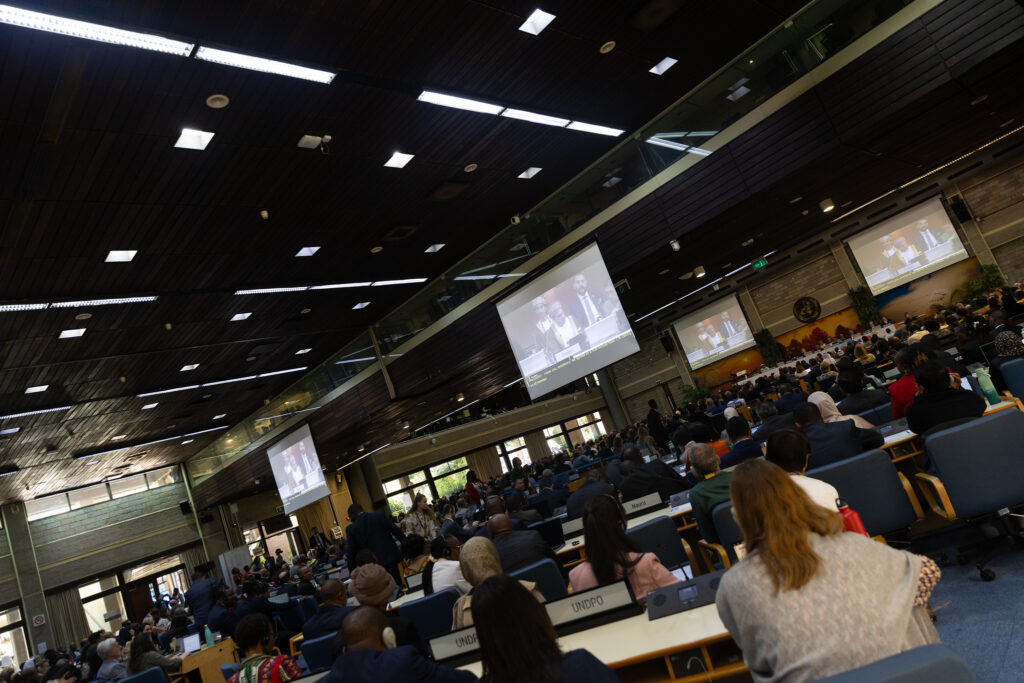
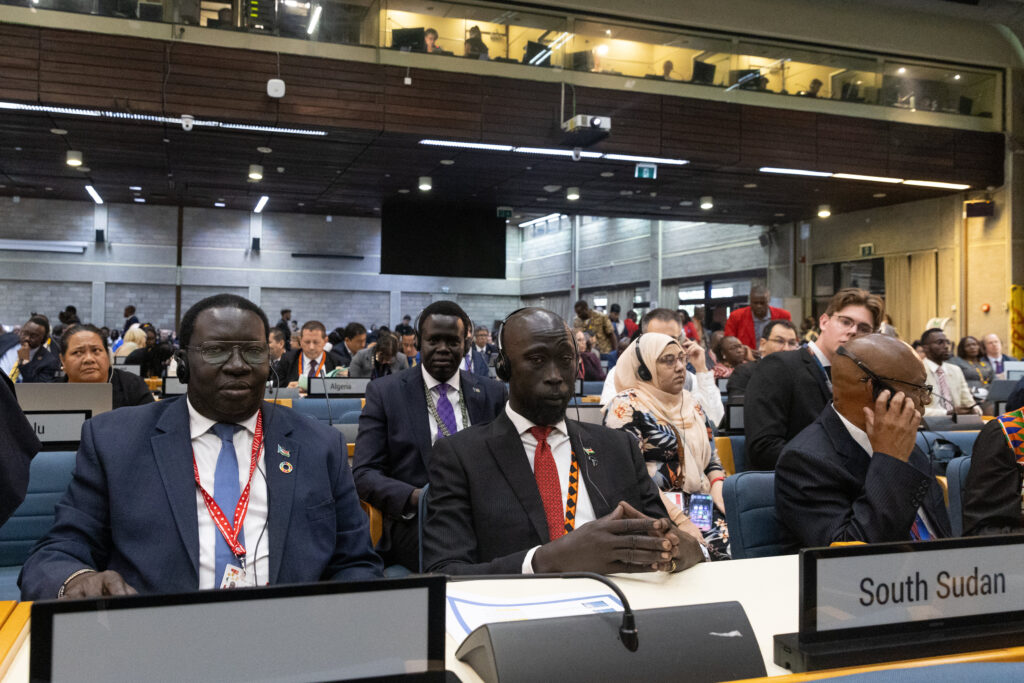
Beyond negotiations, UNEA-7 has drawn nearly 6,000 registered participants from more than 170 Member States, including 79 ministers and 35 vice-ministers.
With participation from cities, youth groups, Indigenous communities, scientists, industry and labour groups, the Assembly functions as both a political and societal forum, reinforcing its role as a global platform for environmental dialogue.