


By Jenifer Gilla
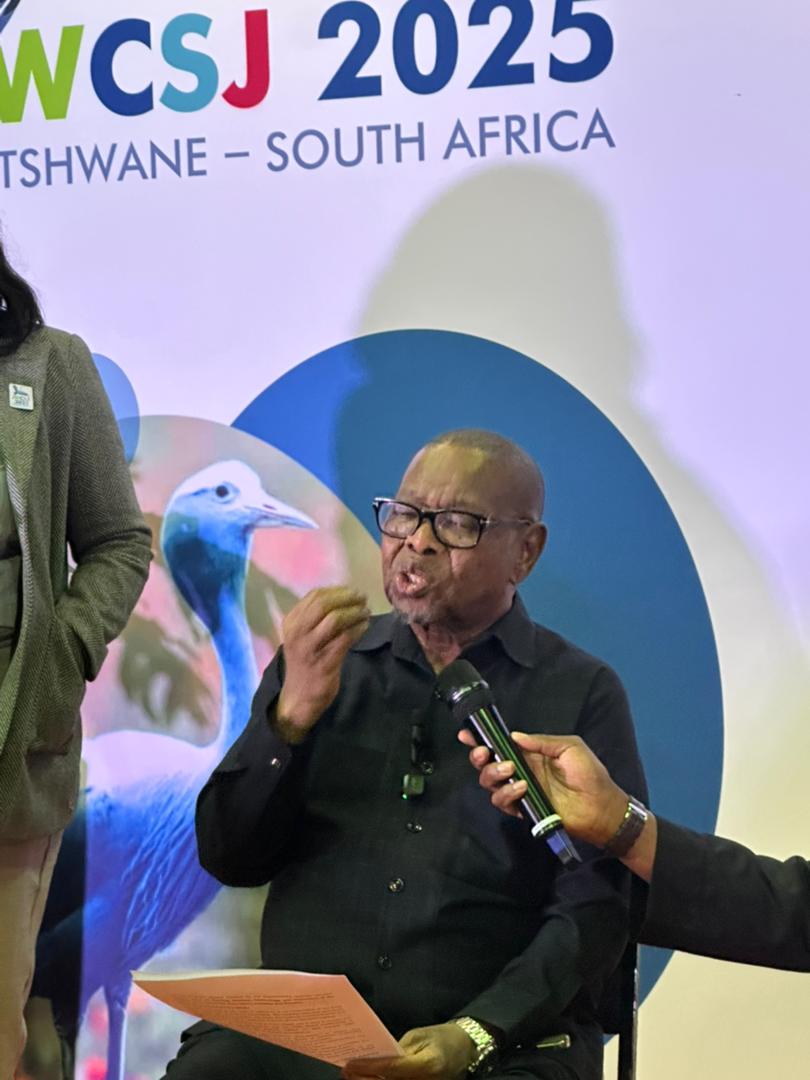
Pretoria, South Africa. As the World Conference of Science Journalists (WCSJ2025) opened in Pretoria on Monday December 01, 2025, South Africa’s Minister of Science, Technology and Innovation, Prof Blade Nzimande, delivered a message that resonates across the continent:
“Africa cannot advance without strong science journalism, public trust in science, and science-driven governance.”
The conference, being held on African soil for the first time, follows a historic milestone for South Africa the conclusion of the first G20 Presidency hosted on the continent.
It also marks four years of the SADC Science Journalism Training Course, which has trained journalists from more than 12 Southern African countries. These achievements, Nzimande said, reflect Africa’s growing role in shaping global scientific dialogue.
The theme, “Science journalism and social justice: journalism that builds understanding and resilience,” sets the tone for urgent conversations about the role of science in society.
During his opening remarks, Nzimande stressed that science journalism must help citizens understand how science responds to real-world crises, including climate change, inequality, pandemics and conflict.
However, he also warned about the dangers posed by emerging technologies, particularly artificial intelligence, which he said is already being misused in modern warfare — including in the targeted killing of civilians and journalists.
Citing data from the International Federation of Journalists showing that more than 248 journalists have been killed since October 2023, the minister challenged African governments and media organisations to reflect on how science journalism can safeguard human rights in an era where technology can easily be weaponised.
A model for Africa: Investing in science engagement
Over the past decade, South Africa has deliberately invested in strengthening science journalism. Through its Science Engagement Programme, the government aims to build a scientifically literate society capable of forming independent opinions on science-related issues.
To achieve this, the Department of Science, Technology and Innovation collaborates with mainstream and community media to place more than 40 young journalism graduates each year in science reporting roles.
This approach is guided by the findings of the 2022 Public Relationship with Science survey, which showed that television (60%), the internet (52%) and radio (51%) remain the main sources of science information for South Africans. The data points to where journalists and policymakers should focus their efforts to strengthen science communication.
South Africa has also used global platforms to advance this agenda. The recent G20 Leaders’ Declaration endorsed recommendations to improve access to science and broaden public participation a step many African countries have yet to take.
Lessons for African governments
Nzimande’s expectations for the conference offer clear lessons for governments seeking to strengthen science journalism across the continent.
He emphasised the need to combat misinformation, discrimination and harmful stereotypes that erode public trust in science. He urged governments to ensure scientific knowledge is communicated in ways that protect human rights and dignity, especially for marginalised communities.
He also highlighted the importance of integrating emerging technologies, such as artificial intelligence, responsibly — without compromising journalistic ethics, safety or accuracy.
In addition, he stressed the urgent need to close the capacity gap in science journalism between African countries and the Global North by investing in training, mentorship and opportunities for young journalists.
He called on governments to recognise science journalism as a strategic tool for development and diplomacy one capable of strengthening regional cooperation, driving innovation and enhancing Africa’s voice on the global stage.
A call to action
Nzimande urged governments to embrace science-driven decision-making and to support journalism that promotes justice, accountability and public understanding.
As Africa confronts climate shocks, health threats and rapid digital transformation, he said, science journalism is no longer optionalc, it is foundational.
“The value of science must always be used to build a just and humane world.”
This year’s gathering brings together more than 190 speakers, 58 parallel sessions and 21 science field trips, including visits to the Square Kilometre Array (SKA), one of the world’s largest and most advanced astronomy projects.