


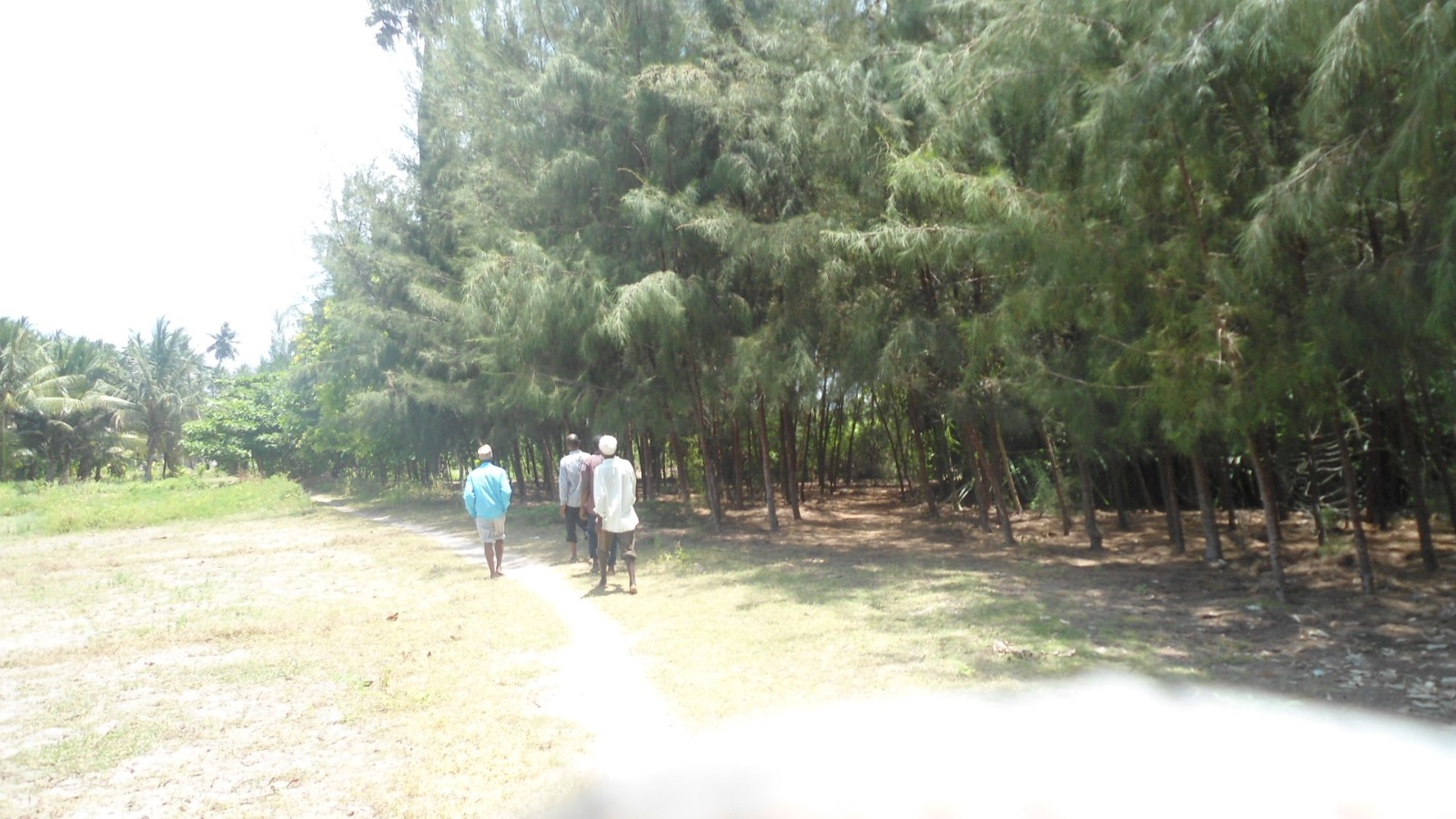
Tanga, Zanzibar. For residents of Tanzania’s coastal islands, climate change is no longer an abstract scientific concept. It is a daily reality measured by disappearing farmland, submerged homes and graves washed away by the sea.
Across Pangani in Tanga Region and the islands of Panza, Madauni and Ufunguni in Pemba, residents recount painful experiences as the ocean slowly advances inland, reshaping both landscapes and community memory.
In Kisiwapanza, waves no longer stop at the shoreline. According to residents, seawater has begun excavating graveyards, forcing families to rebury their loved ones repeatedly.
Juma Ali Mati, Secretary of the Pemba Forest Conservation and Development Association, recalls witnessing exposed human remains after strong tidal surges.
“We saw bones from graves that had been buried long ago exposed by ocean waves. We had to collect the remains and rebury them in higher ground where seawater has not yet reached,” he says.
The situation is worse in Madauni village, where graves that once stood approximately 200 metres from the shoreline are now submerged.
“There are times when waves arrive and even newly built graves disappear. Elders say the dead no longer rest in peace because the ocean has taken their place,” says Haji Ali Shaame, Sheha of Kisiwapanza.
Residents describe traumatic encounters with human remains washed ashore. Salum Khamisi Hamad, a resident of Kisiwapanza, says strong tidal waves have forced communities to take emergency measures.
“We have seen bones floating during strong waves. Some we collect and rebury in dry areas, but others are carried away by the ocean. It is frightening,” he says.
Similar experiences are reported in Ushongo village in Pangani. Mtoo Bin Mzee, an 89-year-old resident, says ancestral burial sites have gradually disappeared as seawater continues to advance.
“Graves that were once on dry land are now inside the ocean. I once personally picked up a human skull that had marks of braided hair patterns. We buried it again with other villagers,” he says.
For many residents, the loss is not only physical but emotional and cultural. Graves serve as symbols of family history and identity.
“Graves represent our families, our lineage and our beliefs. When they disappear, it is like we are erased from history,” Shaame says.
Beyond burial sites, entire settlements are shrinking. In Kojani, Sheha Ali Hamad Bwakane says population displacement has been widespread.
“There used to be more than 3,000 houses here. Now fewer than 700 remain. People have been forced to move to higher ground as the ocean invades,” he says.
Agricultural land has also been severely affected. Residents say saltwater intrusion has destroyed farms that previously supported food production.
“Areas where we used to grow cassava, sweet potatoes and other crops have turned into saltwater plains,” says Fatuma Omar, a Madauni resident. “We live like strangers on our own land as the ocean slowly consumes our history.”
The disappearance of Maziwe Island in Pangani is often cited by residents as a warning of what may happen elsewhere. The island, once covered by vegetation and used by fishermen as a resting place, has now been reduced to a sandbank.
“We used to go there to rest. There were trees and shade. Today there is nothing left. The ocean has swallowed everything,” says Rashid Kombo, a Pangani resident.
Fishing communities also report declining marine resources linked to environmental degradation. According to Ali Mohamed Abdula, a resident of Kisiwapanza, coral destruction and mangrove harvesting have disrupted fish breeding grounds.
“During our childhood there were plenty of small fish and octopus near the shore. Now you can go far into the ocean and still fail to catch enough fish,” he says.
He adds that declining fishing income has affected education opportunities for young people, many of whom depend on fishing livelihoods.
Community members acknowledge that human activities have contributed to environmental degradation. Juma Ali Mati says mangrove forests have been cut for lime production and seaweed farming structures, weakening natural coastal protection.
“When strong winds and waves come, the absence of mangroves allows seawater to reach farms and homes,” he explains.
Residents have begun grassroots adaptation efforts despite limited resources. Communities are planting mangrove trees, building small stone barriers and relocating graves to higher ground.
“We plant mangroves every rainy season. We know it is not enough, but it is better than doing nothing. This is our land and our history,” Mati says.
Government interventions have also reached some communities. Shaame says a seawall constructed in Kisiwapanza has helped protect farmland previously threatened by saltwater intrusion, allowing approximately 60 farmers to resume cultivation.
He adds that a recent tree-planting project supported by Unicef involved schools and local offices planting about 10,000 trees.
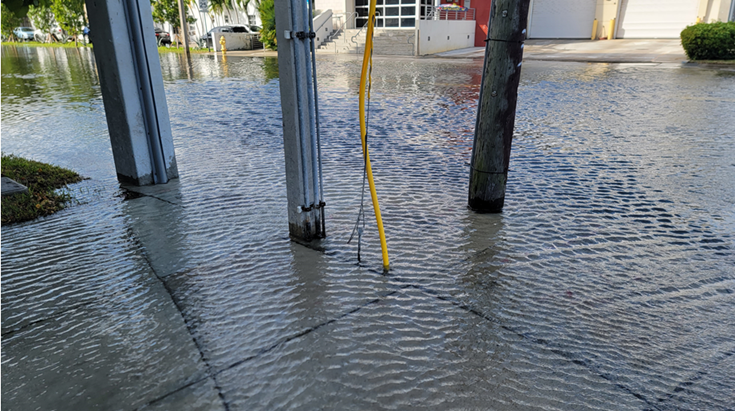
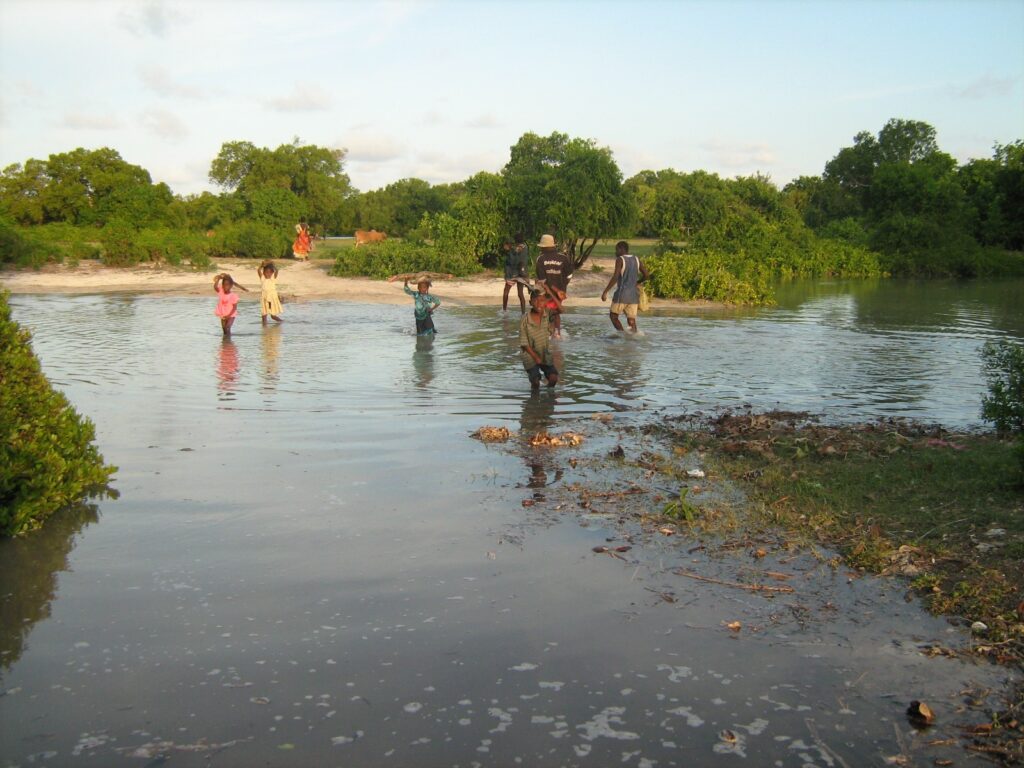
However, residents say these efforts are insufficient compared to the scale of climate impacts. Shaame notes that flooding has begun affecting key infrastructure, including a bridge built in 1975 linking Panza and Mtondooni villages.
“During strong tidal surges, water blocks the bridge and students cannot cross to reach school safely,” he says.
For many residents, climate change represents a slow and painful transformation of their homeland. Communities fear that continued shoreline retreat may eventually force permanent relocation.
“Madauni and Mtoakae areas that were once used for farming are now part of the ocean,” Shaame says. “If seawater continues to rise, even the areas where we rebury our loved ones may not remain safe.”
Across Tanzania’s coastal islands, residents say the ocean is not only claiming land but reshaping identity, memory and livelihoods. As waves continue to push inland, communities remain caught between preserving their heritage and adapting to a changing climate.