


Dodoma. The government has stepped up efforts to safeguard its interests in the global carbon market by adopting an integrated assessment framework known as Integrated Assessment for Article 6 (IAA6), in a move aimed at strengthening its participation in the implementation of the Paris Agreement.
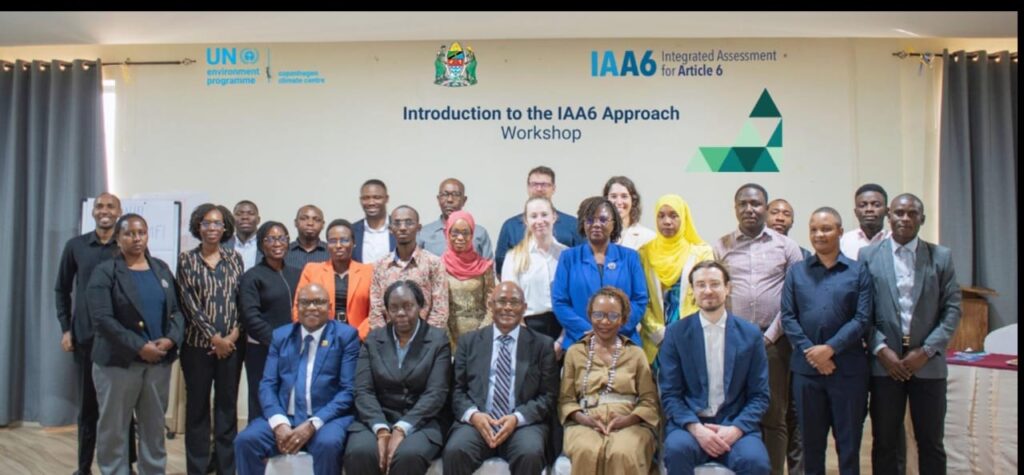
The commitment was underscored on December 3, 2025, in Dodoma, where the Vice President’s Office (VPO), in collaboration with local and international stakeholders, convened a one-day technical workshop to enhance Tanzania’s capacity and develop a robust strategy for utilising Article 6 of the global climate agreement.
The workshop formed part of the project titled “Implementation and Application of the IAA6 Framework in Tanzania,” funded by the European Union and implemented by the UNEP Copenhagen Climate Centre (UNEP-CCC) in partnership with several institutions, including Perspectives Climate Research, Climate Analytics, and the Climate Action Network Tanzania (CAN-Tanzania).
The IAA6 framework is a modern tool designed to support governments in engaging effectively in carbon markets through transparency, efficiency and structured planning. It provides strategic guidance, practical tools and methodologies to ensure that climate policies are aligned with national sustainable development goals.
Speaking during the opening session, former Deputy Permanent Secretary for Environment, Prof Peter Msoffe, said Tanzania is committed to ensuring that its participation in carbon market mechanisms delivers real, measurable and transparent outcomes, while contributing to national targets outlined in the Nationally Determined Contributions (NDCs).
He stressed that credible participation in carbon markets would enable the country to mobilise financial resources for climate action, strengthen institutional capacity and enhance national resilience.
On his part, UNEP-CCC representative Denis Machnik said Tanzania needs a science-based strategy to fully tap into opportunities available under Article 6 of the Paris Agreement.
During the workshop, stakeholders from various ministries were trained on how the IAA6 framework can be applied within Tanzania’s policy context. The session, led by Alicia Schmid from Perspectives Climate Research, demonstrated how the framework can align national development priorities with climate action strategies.
Participants also held in-depth discussions on how to tailor the framework to suit Tanzania’s priorities. They were introduced to a new data analysis tool known as SiSePuede, which helps forecast greenhouse gas emissions across sectors.
Presenting the tool, Climate Analytics expert Marie-Charlotte Geffray said it would enable Tanzania to conduct accurate assessments of emission reduction strategies and support informed decision-making in the implementation of Article 6.
Closing the workshop, Boniventure Mchomvu from CAN Tanzania urged participants to reflect on their roles in implementing Article 6, emphasising the importance of strategic planning, cross-sector collaboration and a clear understanding of national priorities.
In his closing remarks, Dr Fredrick Manyika from the Vice President’s Office said the workshop marked an important step in strengthening national capacity, coordinating institutions and ensuring Tanzania fully benefits from carbon market opportunities while advancing sustainable development.
He thanked all stakeholders who supported the project and reaffirmed the government’s commitment to continued collaboration to ensure its success.