

Dar es Salaam. Africa’s fastest-ever growth in solar energy deployment is offering new hope for a continent disproportionately bearing the brunt of climate change.
Yet, despite the surge, a widening financing gap and policy misalignment threaten to slow momentum at a time when reliable, clean energy is increasingly viewed as a frontline defence against climate-related loss and damage.
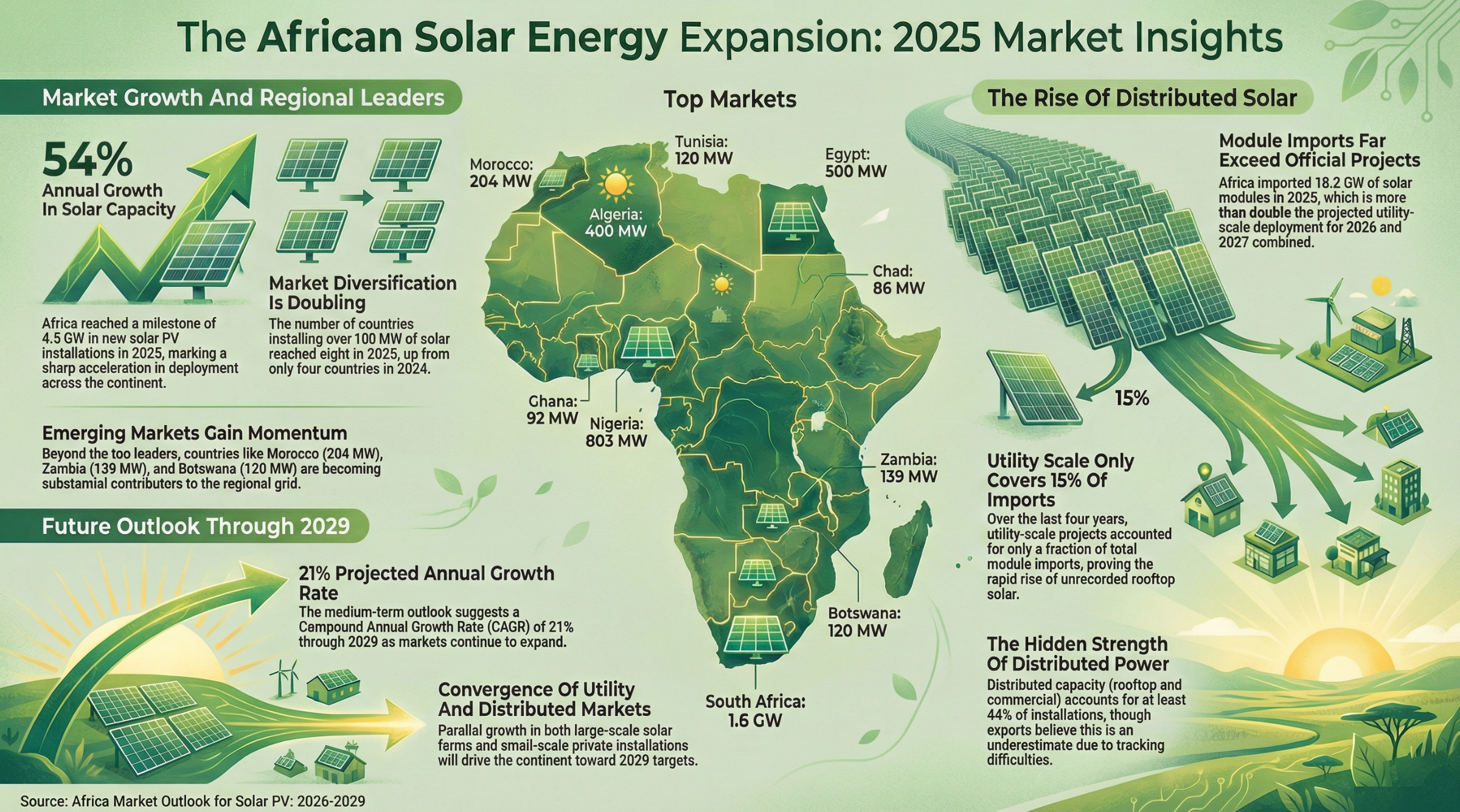
A new report by the Global Solar Council (GSC) shows Africa recorded a historic 54 percent increase in solar installations in 2025, marking the continent’s strongest year of solar expansion.
While the figures signal accelerating energy transition efforts, they also highlight deeper structural challenges in ensuring that solar growth translates into climate resilience and economic protection for vulnerable populations.
Solar growth as a climate adaptation tool
The rapid expansion of solar energy comes as African countries face escalating climate-related losses — from floods destroying infrastructure to droughts disrupting food production and livelihoods.
Reliable and decentralised solar energy systems are increasingly being recognised not only as a clean energy solution but as a critical adaptation tool that can reduce vulnerability to climate shocks.
According to the GSC report, Africa installed approximately 4.5 gigawatts (GW) of new solar photovoltaic capacity in 2025. The increase surpassed the previous record set in 2023 and exceeded earlier projections, signalling a faster-than-expected energy transition trajectory.
Experts say solar energy plays a crucial role in reducing loss and damage by strengthening essential services that often collapse during climate disasters.
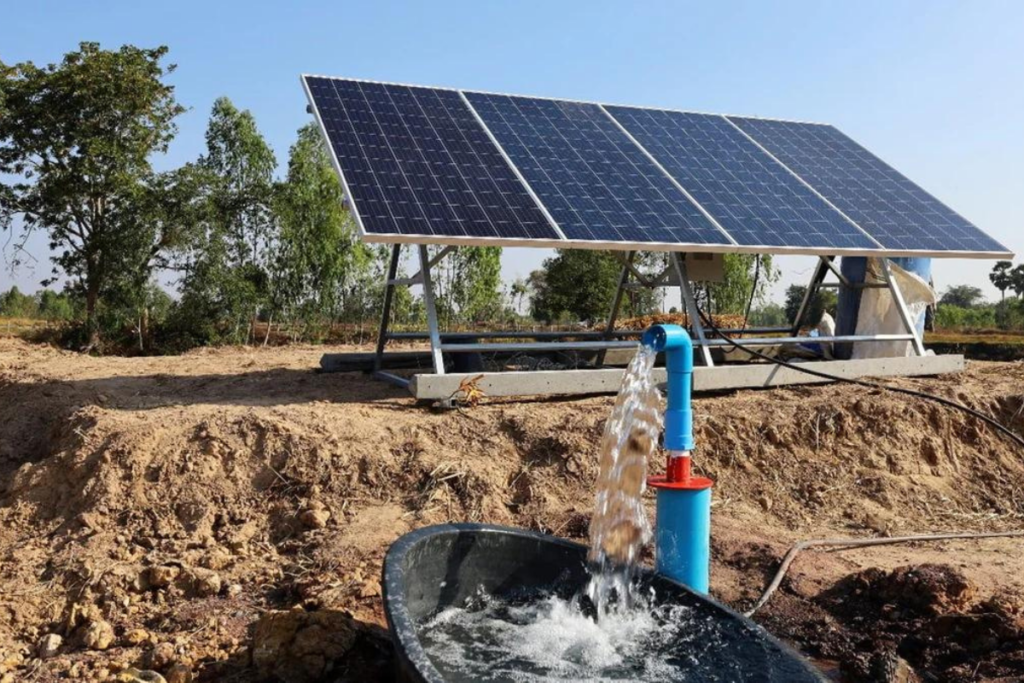
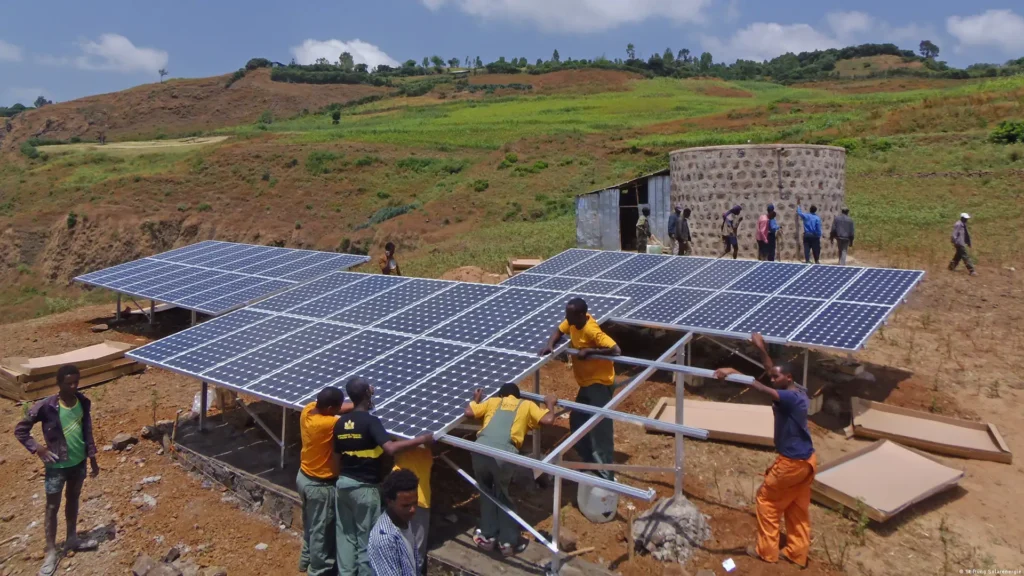
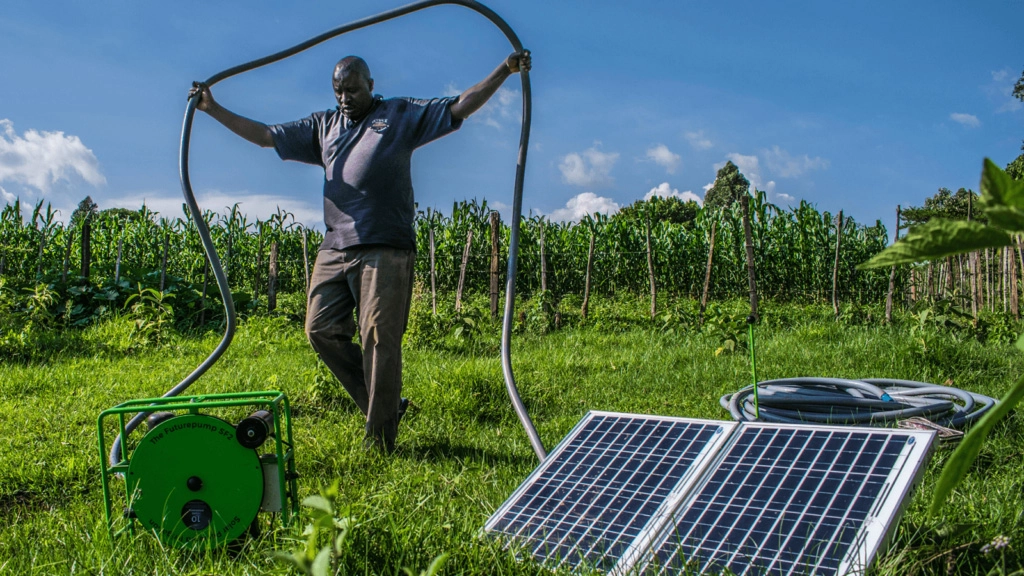
Solar-powered irrigation systems, for example, can protect farmers from drought-related crop losses, while solar mini-grids and rooftop systems can maintain electricity supply during extreme weather events that disrupt national grids.
“Solar plus storage is the hope of Africa. This is the technology that can bring energy access, sustainable development, green growth and resilience to natural disasters and extreme weather,” said Global Solar Council Chief Executive Officer Sonia Dunlop.
Across the continent, increasing electricity demand, rising tariffs and unreliable grid supply are driving households and businesses toward solar solutions. For many communities already suffering climate impacts, decentralised solar is becoming both a survival strategy and an economic lifeline.
Two parallel energy transitions shaping Africa’s climate resilience
The report reveals that Africa’s solar expansion is being driven by two parallel transitions. The first is a government-led shift toward large-scale solar projects connected to national grids. These projects are largely financed through public investment and development finance institutions.
The second, and increasingly significant, transition is being driven by private investment in rooftop, commercial and distributed solar systems adopted by households and businesses. This distributed model is particularly important in addressing climate loss and damage because it enables communities to access energy independently of vulnerable centralised grid systems.
Data from the report shows that while utility-scale projects accounted for 56 percent of reported installations in 2025, distributed solar systems contributed an estimated 44 percent although this share is believed to be significantly underreported due to limited tracking mechanisms.
Import trends reinforce the growing importance of distributed solar. Africa imported 18.2 GW of solar modules in 2025, yet projections suggest only 14.3 GW of mainly utility-scale capacity could be installed across 2026 and 2027 combined. This mismatch suggests a substantial portion of solar equipment is being deployed in smaller, decentralised systems.
Such systems are especially critical in climate-vulnerable regions where extreme weather frequently damages national electricity infrastructure. Distributed solar allows essential services such as health facilities, water supply systems and communication networks to continue operating during disasters, reducing the scale of humanitarian and economic losses.
Solar expansion spreads beyond traditional leaders
The GSC report also highlights a growing geographical diversification of solar deployment across Africa, strengthening continental resilience. While established solar markets continue to dominate installations, more countries are rapidly joining the transition.
In 2025, South Africa led solar installations with 1.6 GW of new capacity, followed by Nigeria with 803 megawatts (MW), Egypt with 500 MW and Algeria with 400 MW. However, emerging markets such as Morocco, Zambia, Tunisia, Botswana, Ghana and Chad also recorded significant new installations.
Notably, eight African countries installed 100 MW or more of solar capacity in 2025, double the number recorded the previous year. Analysts say this expansion reduces reliance on a small group of early adopters and strengthens the continent’s overall energy security and climate adaptation capacity.
Financing gap threatens climate resilience potential
Despite strong growth, the report warns that financing systems remain poorly aligned with Africa’s evolving solar market posing a major risk to long-term climate resilience efforts.
Although distributed solar is expanding rapidly, approximately 82 percent of clean energy financing in Africa continues to be directed toward large utility-scale projects funded by public and development institutions. This leaves smaller consumer-driven solar systems facing higher financing costs and limited access to capital.
Private clean energy investment in Africa has increased from about USD 17 billion in 2019 to nearly USD 40 billion in 2024. However, financing models remain unsuitable for distributed solar, which requires smaller loan sizes, shorter repayment periods and financing in local currencies.
Without accessible financing, many households, small businesses and climate-vulnerable communities remain unable to adopt solar solutions despite strong demand and falling technology costs. Experts warn that this financing mismatch could slow solar deployment and weaken Africa’s ability to reduce climate-related loss and damage.
A critical decade for climate and energy security
Africa’s solar growth is occurring against a backdrop of rapidly rising energy demand. The continent’s electricity demand is projected to increase eight-fold by 2050, while Africa holds nearly 60 percent of the world’s best solar resources.
Sustainable Energy for All Chief Executive Officer and United Nations Special Representative Damilola Ogunbiyi emphasised that solar energy, particularly when paired with battery storage, will be essential in delivering affordable and reliable power while strengthening climate resilience.
However, she noted that attracting adequate clean energy investment remains a major challenge, requiring new financing mechanisms that combine public, private and philanthropic capital.
The GSC report projects that Africa could install more than 33 GW of solar capacity by 2029 if financing, regulatory and planning systems are aligned with market realities.
This would represent more than six times the solar capacity added in 2025 and significantly enhance the continent’s capacity to withstand climate shocks.
Policy reforms key to reducing climate loss and damage
To unlock solar energy’s full climate resilience potential, the Global Solar Council is calling for targeted reforms.
These include developing financing models tailored to distributed solar, improving data collection systems to accurately track deployment trends, increasing investment in battery storage and electricity grids, and creating stable regulatory environments to attract private investment.
For African countries already experiencing escalating climate losses, such reforms are increasingly urgent. Solar energy is no longer simply an environmental priority but a strategic tool for safeguarding livelihoods, protecting infrastructure and strengthening economic resilience.
As climate disasters intensify across the continent, the pace at which Africa can expand equitable access to solar energy may determine how effectively it can limit future loss and damage and whether the energy transition can become a cornerstone of sustainable development rather than another missed opportunity.