


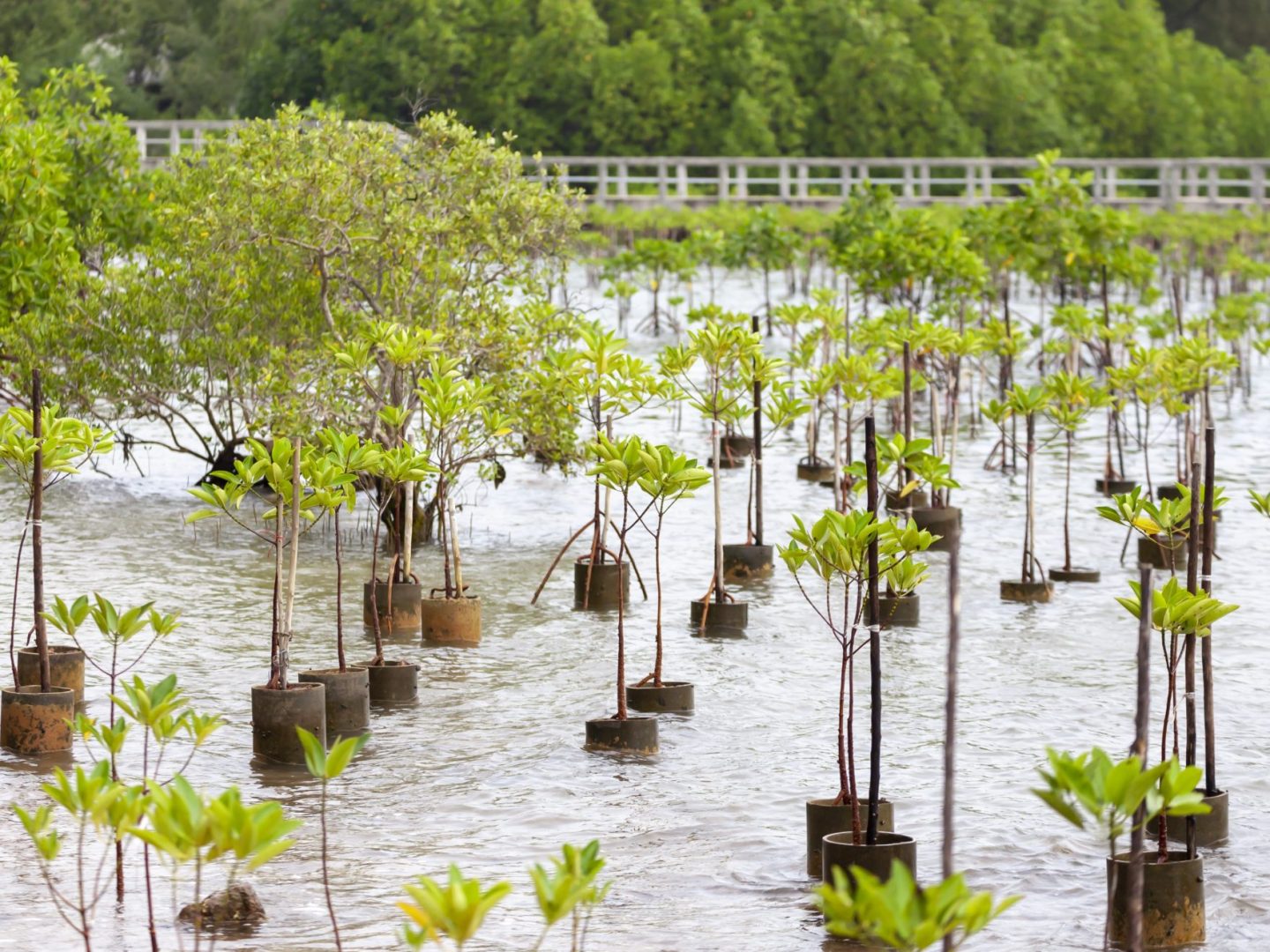
Nairobi, Kenya. The United Nations has recognised three new World Restoration Flagships in Australia, Canada and South Africa, highlighting initiatives rooted in Indigenous knowledge and community-led solutions that are restoring degraded ecosystems.
The recognition made on December 4, 2025, announced ahead of the seventh session of the UN Environment Assembly (UNEA-7), honours projects that support sustainable agrifood systems, biodiversity protection and climate action. The awards are jointly led by the UN Environment Programme (UNEP) and the Food and Agriculture Organization (FAO) under the UN Decade on Ecosystem Restoration (2021–2030).
The World Restoration Flagships represent some of the most ambitious and inclusive ecosystem restoration initiatives globally, grounded in science and local participation.
“One hectare at a time, governments, communities and partners are restoring forests, grasslands, shrublands, coastlines and marine environments,” said UNEP Executive Director Inger Andersen. “By combining lessons from Indigenous Peoples with modern science, we are restoring damaged ecosystems.”
FAO Director-General QU Dongyu stressed that real progress starts from the ground up.
“With Indigenous Peoples and local communities at the centre, these new Flagships demonstrate the power of partnerships that bridge ancient wisdom with modern innovation, while strengthening agrifood systems, biodiversity and climate resilience,” he said.
Australia: Shellfish reef building programme
In Australia, the Shellfish Reef Building Programme is working to revive once-abundant oyster and mussel reefs that have been severely damaged by overharvesting, pollution and sedimentation.
Between 2021 and 2023, The Nature Conservancy, in partnership with the Australian Government and local communities, restored shellfish reefs at 13 sites along the southern coastline. The programme now aims to restore native shellfish reefs across 30 per cent of their original range by 2030.
“Shellfish reefs are natural solutions to some of our greatest conservation challenges. Restoring them at a national scale is not only possible — it’s transformative,” said Australia’s Minister for the Environment and Water, Senator Murray Watt.
Since its launch, the programme has helped remove nearly 15 tonnes of nutrient pollution from the ocean, boosted fish stocks and enhanced biodiversity. It has also created more than 425 jobs and generated over USD 10 million by supporting more than 50 small and medium-sized businesses, while reconnecting coastal communities with their environment.
The initiative involves close cooperation between Indigenous Traditional Owners, fishers, scientists, restaurants and local communities.
Canada: Respectful returns – restoration of salmon ecosystems
In Canada, the “Respectful Returns” initiative focuses on restoring rivers and streams that are vital for salmon populations, which have been in steady decline.
Since 2010, Parks Canada has worked with Indigenous Peoples and local communities to restore waterways in seven national parks along the Pacific and Atlantic coasts.
“Guided by Indigenous knowledge and science, Respectful Returns demonstrates the power of collaboration to restore ecosystems and renew relationships with Indigenous communities whose cultures and livelihoods are tied to salmon,” said Canada’s Minister of the Environment, Climate Change and Nature, Julie Dabrusin.
The project has so far restored over 65,000 hectares of land and 228 kilometres of waterways, created more than 100 jobs and supported research at three universities. It has also built partnerships with 32 organisations and communities.
In six of the seven project sites, salmon numbers have already begun to rise, offering hope for the recovery of a species that is deeply tied to Canada’s cultural and ecological identity.
South Africa: Thicket restoration movement
In South Africa, the UN recognised the Thicket Restoration Movement, which brings together more than 60 initiatives across the Eastern and Western Cape provinces.
The subtropical thicket is one of the country’s most biodiverse but most degraded ecosystems. The movement aims to restore about 800,000 hectares of land by 2030.
Restored thicket improves soil health, stores carbon and provides critical fodder during droughts in a region that experienced its worst dry spell in a century in 2023/24. It also offers a safe habitat for wildlife such as black rhinos and African elephants.
The initiative is expected to create more than 1,000 rural jobs and improve the livelihoods of nearly two million people. At full scale, it could sequester up to eight million tonnes of carbon dioxide annually equivalent to the emissions of about 20 gas-fired power plants.
“The efforts that have been put into spekboom restoration will benefit future generations. We are banking for the long term,” said Luyanda Luthuli of Living Lands, one of the organisations involved in the initiative.
A growing global movement
The three new recognised projects join 27 other World Restoration Flagships already underway around the world. Together, they are restoring more than 18 million hectares of land and marine ecosystems, with a target of exceeding 68 million hectares in the coming years.
Globally, countries have pledged to restore one billion hectares of degraded land — an area larger than China, as part of commitments under the Paris Agreement, the Kunming-Montreal Global Biodiversity Framework, the Bonn Challenge and Land Degradation Neutrality targets.
Through the World Restoration Flagships programme, the UN Decade on Ecosystem Restoration is identifying and monitoring the best examples of large-scale, long-term restoration initiatives, using a transparent global monitoring framework.
As UNEA-7 approaches, the message is clear: restoring ecosystems is central to strengthening resilience for nature and for the communities that depend on it.