


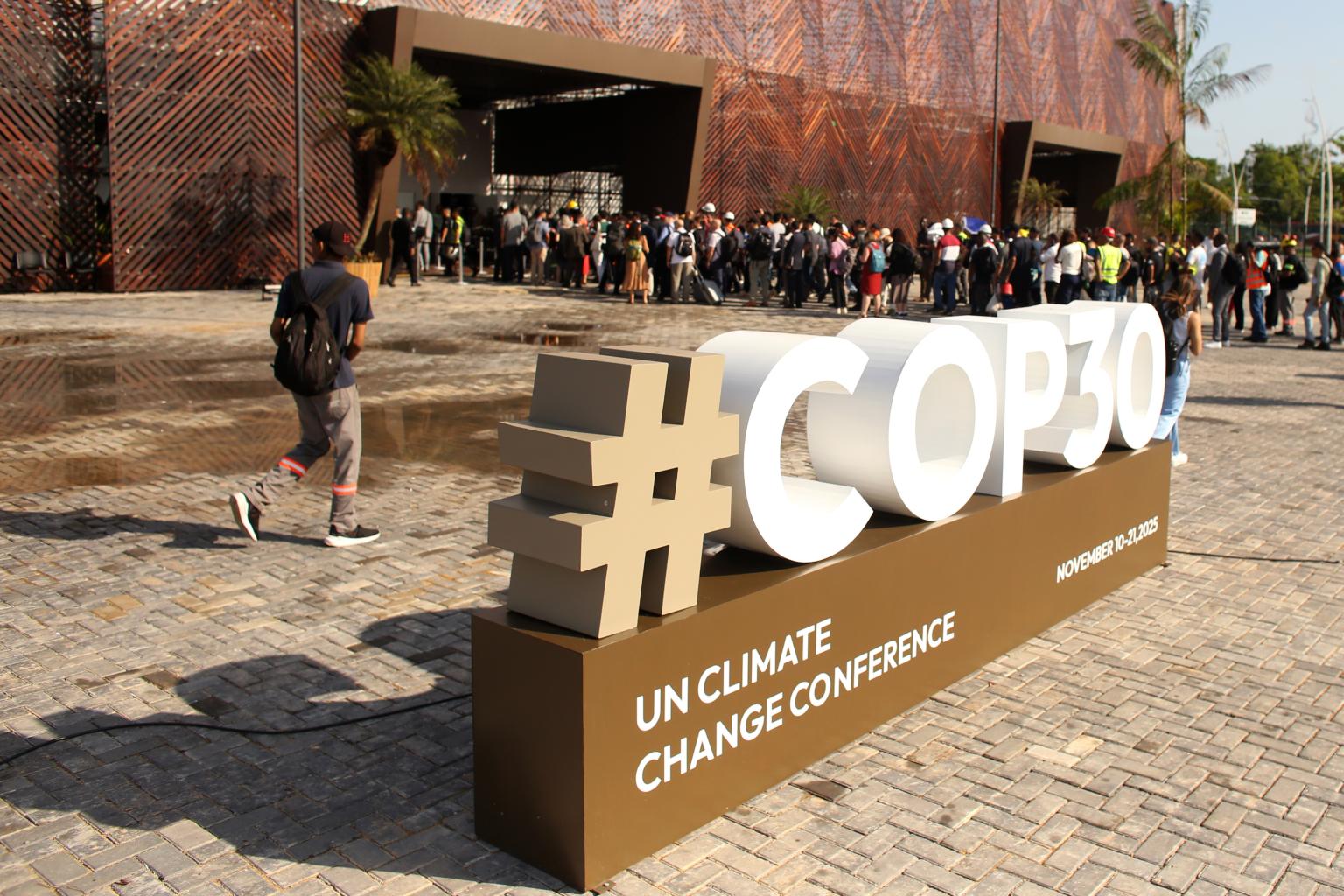
Dar es Salaam. The UN Climate Change Conference held in Belém, Brazil, ended with a mix of fragile progress and deep frustration, as vulnerable countries and climate campaigners warned that the slow pace of action on loss and damage is failing communities already facing the worst impacts of climate change.
While the conference reaffirmed commitments to multilateralism and adaptation, it was overshadowed by divisions over finance, fossil fuel transition pathways and accountability from developed nations for historic emissions.
Mohamed Adow, Director of Power Shift Africa, described the outcome as a moment of “baby steps in the right direction,” but far from the scale required to confront the climate crisis.
“With an increasingly fractured geopolitical backdrop, COP30 gave us some baby steps in the right direction, but considering the scale of the climate crisis, it has failed to rise to the occasion,” he said.
For countries experiencing irreversible climate damage, such as floods, droughts, sea-level rise and food insecurity, this failure translates into prolonged suffering without reliable international support.
One of the few positive signals was the creation of a Just Transition Action Mechanism, which Adow called a recognition that the move away from fossil fuels should not abandon workers or frontline communities.
However, he stressed that progress on paper will mean little unless it is matched by tangible finance and action.
“COP30 kept the process alive — but process alone will not cool the planet. Roadmaps and workplans will mean nothing unless they now translate into real finance and real action for the countries bearing the brunt of the crisis.”
Loss and damage, which refers to irreversible harms that cannot be adapted to, remained largely underfunded and under-prioritised. Adow criticised developed countries for failing to present science-aligned emissions reduction plans and for blocking key finance discussions.
“Despite calling themselves climate leaders, developed countries have betrayed vulnerable nations by both failing to deliver science-aligned national emission reduction plans and also blocked talks on finance to help poor countries adapt to climate change caused by the global north,” he stated.
In a powerful metaphor, he added: “Rich countries cannot make a genuine call for a roadmap if they continue to drive in the opposite direction themselves and refuse to pay up for the vehicles they stole from the rest of the convoy.”
Adaptation, a critical line of defence against further loss and damage, was one of the conference’s main themes. COP30 restored integrity to the Global Goal on Adaptation by removing indicators that could have unfairly penalised poorer nations simply for being poor.
However, promises to triple adaptation finance were delayed to 2035 and lacked clarity on a baseline year. This delay has alarmed many developing nations that are already struggling to respond to escalating climate impacts.
As Adow noted, “As it stands, this outcome does nothing to narrow the adaptation finance gap.”
European countries, which had been expected to play a major role in boosting adaptation and loss-and-damage funding, were accused of undermining talks.
Adow argued that Europe, which industrialised through carbon-intensive growth and colonisation, is now working against efforts to support those bearing the consequences.
This tension highlighted a wider frustration among Global South countries, who feel the burden of climate destruction is being carried by those least responsible for causing it.
The World Meteorological Organization (WMO) welcomed the reaffirmation of international cooperation and the focus on adaptation finance and early-warning systems.
It emphasised that the “Early Warnings for All” initiative is not a luxury, but a lifeline, with every dollar invested in warning systems capable of saving far more in economic and human losses. However, it also issued a stark warning that the world is moving dangerously off track.
According to its latest State of the Climate Update, 2025 is set to be among the warmest years ever recorded, with greenhouse gas concentrations at their highest levels in 800,000 years. These trends mean it will soon be virtually impossible to stay within the 1.5°C limit without temporarily overshooting the target set by the Paris Agreement.
Patricia Fuller, President and CEO of the International Institute for Sustainable Development (IISD), observed that while divisions were visible in Belém, there was still strong ambition to advance a transition away from fossil fuels beyond COP30.
Meanwhile, IISD’s Anne Hammill highlighted that adaptation gained more visibility a positive development even as political conflicts diluted stronger technical outcomes.
A new two-year climate finance work programme was also launched to follow up on the climate finance goal adopted in Baku, which aims to mobilise at least USD 1.3 trillion per year by 2035 for developing countries.
While this signals renewed political attention, many countries remain sceptical about whether pledged funds will actually materialise. Without predictable and accessible finance, communities facing permanent loss of land, livelihoods and homes will remain trapped in a cycle of vulnerability.
One major disappointment was the failure to adopt a fossil fuel transition roadmap, despite support from 88 countries. Language on reforming fossil fuel subsidies was also removed from the final text.
Instead, new initiatives such as the “Belém Mission to 1.5” and the Global Implementation Accelerator were introduced, but without clear enforcement mechanisms. Although a just transition mechanism was agreed upon, many activists caution that delay is a form of denial for countries losing territory, crops and cultural heritage today.
In the end, COP30 was described by some as a “COP of Truth” exposing the gap between political promises and scientific reality.
As WMO concluded, “We can’t rewrite the laws of physics, but we MUST rewrite our path.” For loss and damage, the message from Belém is clear: recognition without resources is meaningless, and delay only deepens the wounds already carved into the planet’s most vulnerable regions.
I’ve been browsing online greater than 3 hours these days, but I never found any interesting article like yours. It’s beautiful price enough for me. In my opinion, if all website owners and bloggers made excellent content as you probably did, the web will be a lot more helpful than ever before.