


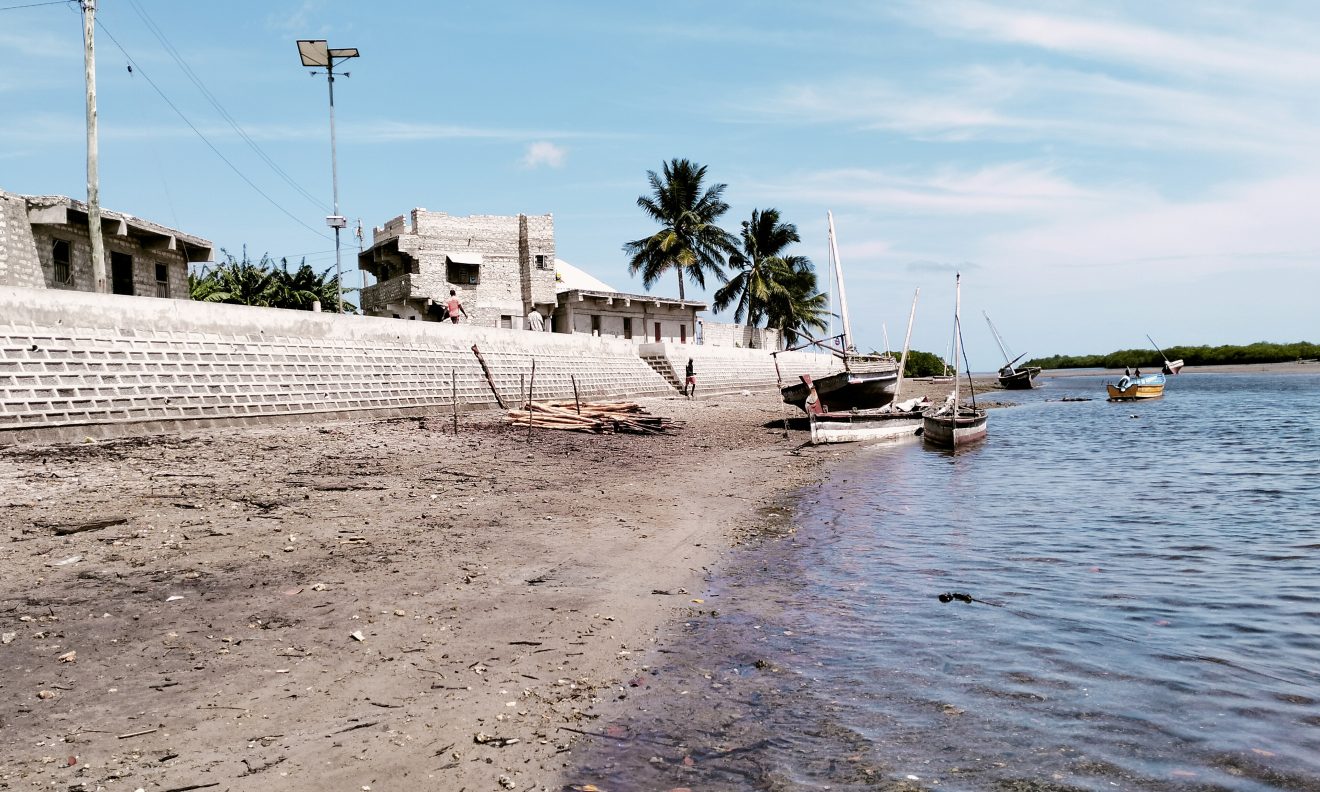
Tanga, Zanzibar. Rising sea levels linked to climate change are steadily reshaping Tanzania’s coastal communities, swallowing land, destroying livelihoods and exposing ancestral graves.
But beyond the environmental shock, emerging evidence points to weak enforcement of environmental laws as a factor that has accelerated the loss and damage already facing vulnerable islands and coastal villages.
From Pangani in Tanga Region to the islands of Panza, Madauni and Ufunguni in Pemba, residents are witnessing a slow but persistent erosion of land. The destruction has left homes abandoned, farms submerged and cultural heritage sites—including graveyards—collapsing into the sea.
The Environmental Management Act of 2004 and the Local Government (District Authorities) Act of 1982 assign responsibility to government institutions to protect sensitive ecosystems such as islands, shorelines and river systems. However, experts and community leaders say implementation of these laws has been limited, exposing fragile coastal zones to climate-driven impacts.
Under the Environmental Management Act, Sections 76 to 81 require authorities to protect coastal zones and sensitive environmental areas. Section 104 requires preparation of disaster management plans to address environmental threats. The law also restricts harmful activities near the shoreline, including permanent developments within 60 metres of the highest water mark.
The Local Government Act, under Section 114(2)(c), obligates district councils to work with communities and institutions to implement environmental protection strategies and prevent disasters.
Despite these provisions, areas such as Maziwe Island in Pangani and Panza Island in Pemba have continued to suffer extensive environmental degradation.
According to findings cited in the National Environmental Policy 2021, Maziwe Island has been classified as “critically threatened” after losing natural vegetation and submerging seasonally. Updated field assessments conducted between 2022 and 2024 by the Western Indian Ocean Marine Science Association (WIOMSA) and the Tanzania Meteorological Authority (TMA) have documented accelerated shoreline retreat in northern Tanzania and Zanzibar, with tidal surges reaching previously unaffected areas.
The situation in Panza Island illustrates the scale of vulnerability. A sea wall constructed in 2017 has reportedly deteriorated due to poor maintenance and inadequate design to accommodate rising sea levels, raising questions about the effectiveness of adaptation investments.
Director of Conservation in Zanzibar, Dr Makame Omary Makame, says climate change has intensified coastal threats, particularly in low-lying islands.
“Increasing global temperatures are causing sea levels to rise. Islands and coastal areas are among the most vulnerable, and the rate of change is increasing each year,” he says.
Research conducted by his office indicates that more than 30 percent of small islands in Zanzibar are showing signs of coastal erosion, with some losing up to 20 metres of land within a decade.
Experts argue that failure to enforce environmental laws has worsened the impact of climate change. According to Dr Makame, proper implementation of coastal protection regulations, mangrove conservation and community awareness programmes could have slowed erosion in affected areas.
“If these laws had been properly enforced, coastal buffer zones, mangrove restoration and community education could have prevented the destruction of graves and settlements,” he says.
Local authorities also acknowledge the scale of the challenge. Ali Abdi Mohamed, Head of the Climate Change Unit in Pemba, says efforts are underway to protect coastal communities, including construction of sea walls and restoration of mangrove forests.
“We have constructed three sea walls—two measuring 25 metres and one measuring 70 metres—and we are planting mangroves and coastal vegetation. However, the problem remains large,” he says.
He notes that blocking seawater in one location often shifts erosion pressure to another area, highlighting the need for integrated coastal management.
Meanwhile, Mayasa Hamad Ali, Chief Officer in the Department of Fisheries and Marine Products Development in Pemba, says the government has introduced participatory marine conservation programmes and encourages communities to plant mangroves. However, she says the pace of environmental change is exceeding available financial resources.
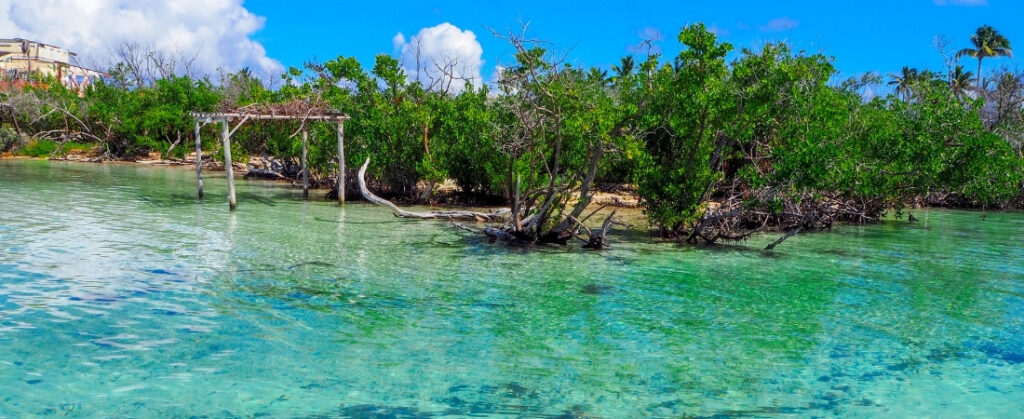
Evidence from coastal communities suggests that environmental degradation is being intensified by unregulated activities. Juma Ali Mati, Secretary of the Pemba Forest Conservation and Development Association, says overharvesting of mangroves, coral destruction and unsustainable seaweed farming have weakened natural coastal protection systems.
“We are an island, but sometimes years pass without any environmental monitoring or support projects. When communities lack alternative income sources, they rely on activities that degrade the environment,” he says.
He explains that mangroves are often cut for lime production and seaweed farming pegs, removing natural barriers against waves and storm surges.
Similarly, coral reef destruction by fishermen searching for fish has reduced fish breeding habitats and exposed coastal farmland and settlements to stronger ocean currents.
The erosion has had visible consequences in Madauni and Ufunguni, where Mati says approximately 200 metres of land previously used for farming and settlements has been lost to the sea. In 2012, the affected area measured approximately 9.6 hectares.
Community leaders are calling for stronger enforcement of environmental regulations. Haji Ali Shaame, Sheha of Kisiwapanza, says local communities lack authority to enforce environmental compliance among residents.
“We educate and advise each other, but without enforceable laws people may ignore warnings. Strong legal enforcement would help control environmental destruction,” he says.
The economic stakes are also significant. A study titled Economics of Climate Change in Zanzibar highlights that the region’s economy heavily depends on climate-sensitive sectors such as agriculture, fisheries and tourism. The report warns that increasing temperatures, shifting rainfall patterns, stronger winds and rising sea levels are already causing economic losses and threatening long-term development goals.
The study further notes that Zanzibar’s development strategies, including the MKUZA II Implementation Plan, have not sufficiently integrated climate change risks into investment planning.
Audits and expert reviews suggest that early enforcement of environmental regulations—particularly coastal setback rules, vegetation protection and integrated coastal management—could have reduced current damage.
Sheha Mjaja Juma, Chief Inspector of the Zanzibar Environmental Management Authority (Zema), says accountability mechanisms must be strengthened to ensure institutions fulfil their environmental responsibilities.
Without coordinated enforcement, climate change impacts are expected to intensify, threatening livelihoods, cultural heritage and infrastructure along Tanzania’s coast.